
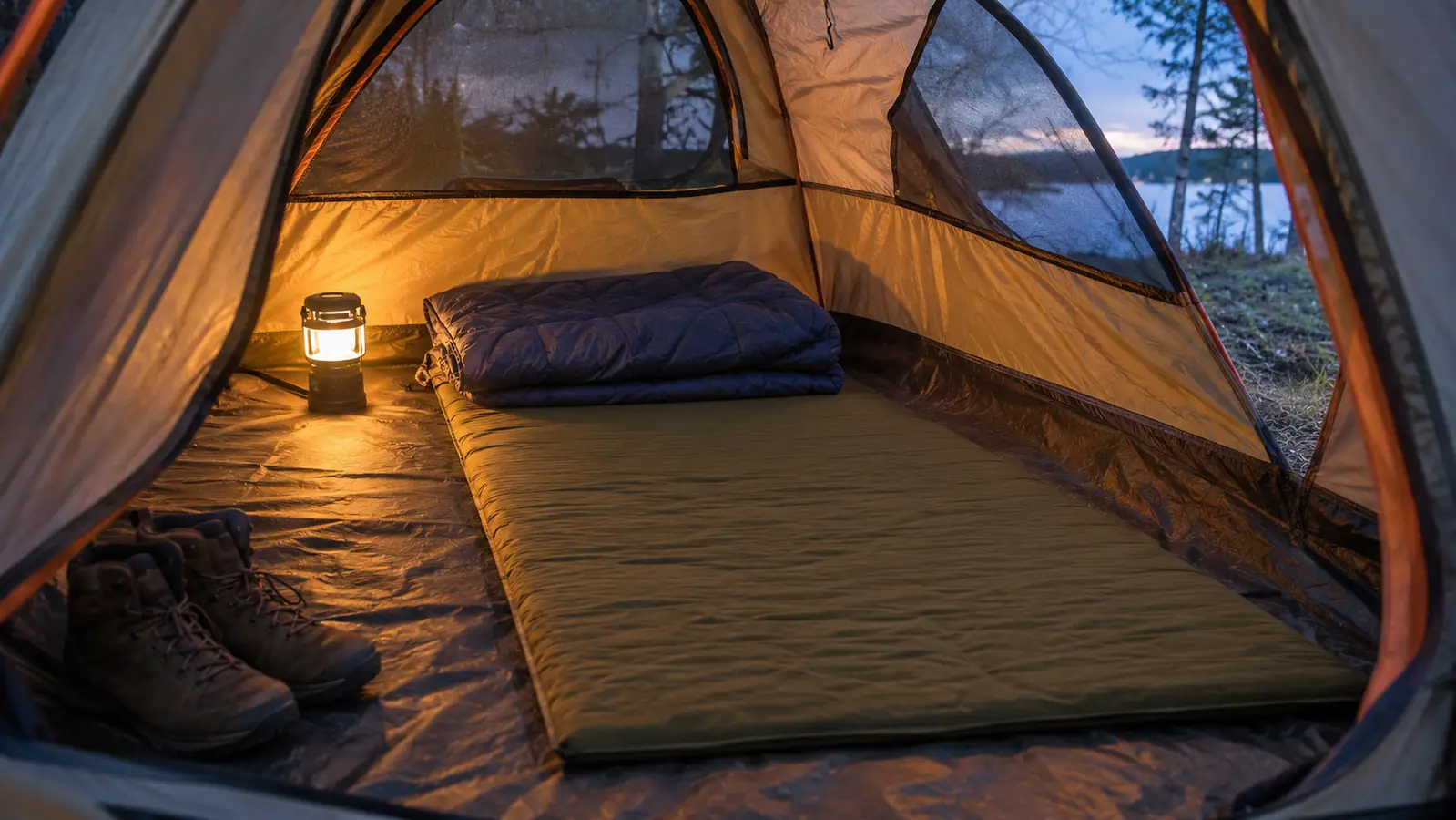
I bought the Gear Doctors Oxylus in the summer of 2023, six days after a night on a thin closed-cell foam pad left my lower back sore for the better part of a week. I am 58 years old. My back stiffens if I sit too long in the truck and my left knee complains on every long descent, and that summer I finally admitted something I had been avoiding for years: sleeping badly was spoiling trips I only get a couple of nights of. A pad is not a glamorous purchase. It is the one that decides whether the other sixteen hours of the trip are any good.
What follows is not the version of this review where a sleeping pad changes a man's life. It is the version I wish I had read in the aisle of the sporting goods store, with the box in one hand and my phone in the other. I have slept on this pad for about three and a half seasons now, mostly in the Wasatch above Ogden and along the Mirror Lake Highway, with one October trip down near Moab. Some of it has been very good. Some of it has been a compromise I made on purpose. You should know about both before you spend anything.
The Quick Verdict
A warm, honest 1.5-inch foam-core pad for people who value a full night's sleep over pack weight, with the compromises every self-inflating pad carries.
Amazon Check Today's Price →The pad that is still in my truck after three and a half seasons
A 4.3 R-value foam core, 72 by 22 inches, 1.5 inches thick, 2.2 pounds. It will not silently deflate on you at two in the morning. Check today's price and availability on Amazon.
Amazon Check Today's Price on Amazon →What the Oxylus Actually Is
The Gear Doctors Oxylus is a rectangular pad, 72 inches long and 22 inches wide, 1.5 inches thick, weighing 2.2 pounds. It carries a 4.3 R-value, a capacity of 250 pounds, medium firmness, and it is described as water resistant. It ships with a carry bag and a repair patch. Those are the numbers, and they are accurate. What the numbers do not tell you is the thing that matters most: this is a slab of open-cell foam with air in it, not an air chamber with a little foam stuffed inside for looks.
That distinction is the entire argument. An inflatable air pad holds you up on pressurized air and nothing else. Lose that air through a pinhole you will never find in the dark, and you are on the ground, cold and awake and furious. The Oxylus holds you up on foam that has pulled air in through an open valve, and the air is there to firm up what the foam is already doing. I have never once woken up on the ground with this pad. I have woken up on a pad that was softer than I wanted, which is a completely different and much less dramatic kind of problem.
It is also not a mattress, and it is not pretending to be one. If you are picturing the inflatable thing somebody pumps up in the back of an SUV, this is not that. It is a tent-floor pad, and like every pad in its class it is happiest on ground that is already reasonably flat. Set it up on a root and you will feel the root. That is not a flaw in the design, it is the design.
How I've Used It
The pattern of my trips has not changed in three and a half seasons, and neither has my routine with this pad. I leave Ogden on a Friday afternoon, drive up the Mirror Lake Highway, and walk in far enough that I cannot hear somebody else's generator. I get the tent up before I do anything else, because the pad needs time. Then I unroll it, crack the valve open, and leave it alone while I filter water and get dinner going. Sunday morning I am back at the truck and headed home.
Carla comes along on the car camping trips and does not backpack, so on those nights the pad goes in the tent and the tent goes about twenty feet from the tailgate of the Tacoma. On the backpacking nights it is me and Ray, and the pad goes in the bottom of my pack under everything else. Two very different ways of using the same object, and it has handled both without complaint.
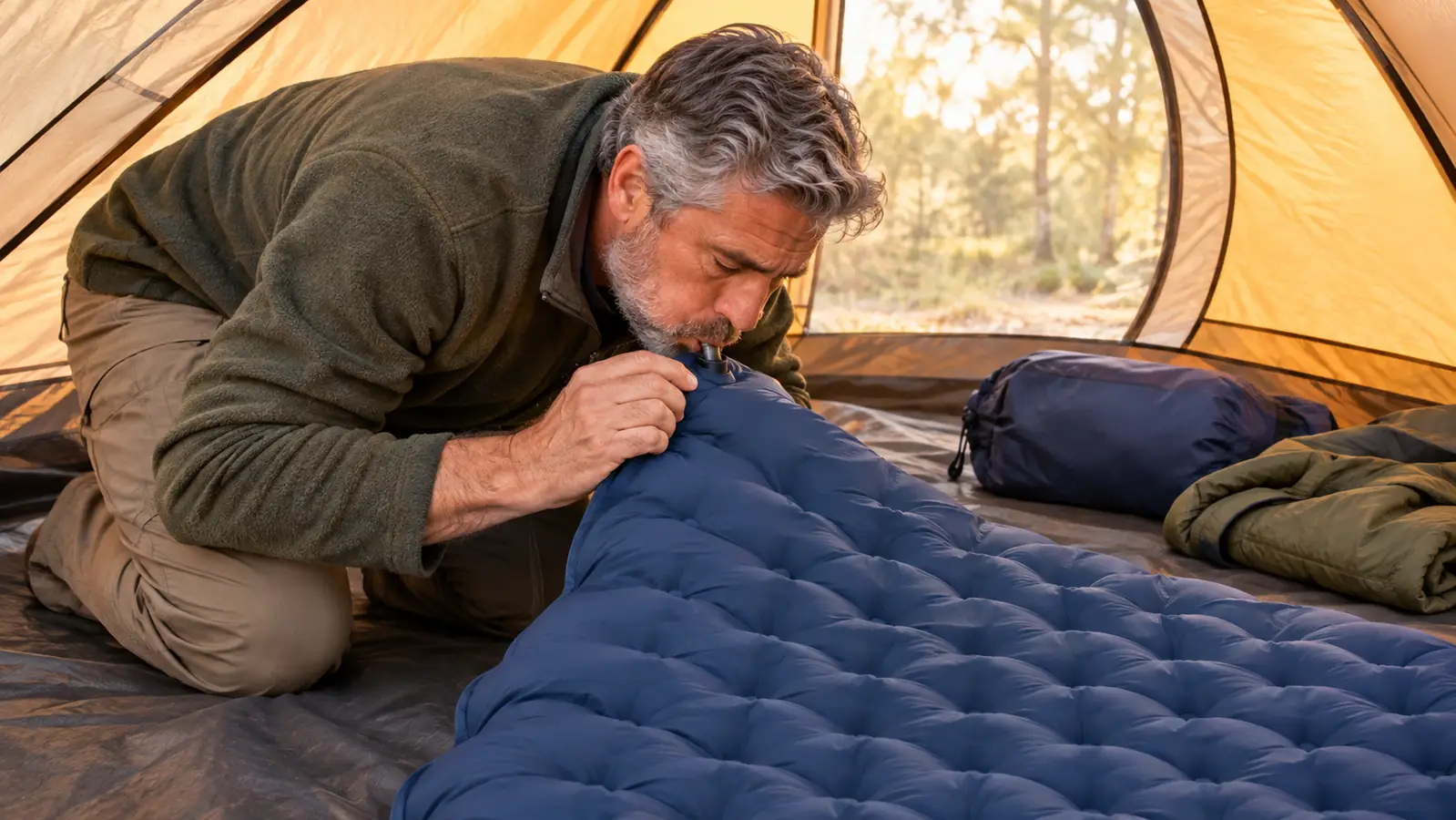
The routine itself takes less time than boiling water. Unroll it as soon as the tent is standing. Open the valve. Let it sit while you do everything else. By the time you crawl in, it has taken most of its shape on its own. Then you close the valve, add three or four breaths, and close it again. That is the whole ritual. The people who end up disappointed with this pad are almost always the people who skipped that last part and expected the foam to do all the work.
One thing I did not expect to care about: it is silent. The air pad I borrowed from Ray crinkled every time I shifted, and in a quiet canyon at night that sound is enormous. This one makes almost no noise when you roll over. When you are sharing a tent wall with a friend who wakes easily, that matters more than a couple of ounces ever will.
What Nobody Tells You About Self-Inflation
The name oversells the experience. Every self-inflating pad does this, so it is not a knock on Gear Doctors specifically, but you should hear it before you buy rather than after. Unroll a pad that has been stored flat and open the valve, and it will pull air in and thicken up on its own. It will not reach full firmness. The foam relaxes, the air comes in, and you still finish the job with your lungs. Two or three breaths on a warm evening. Five or six on a cold one.
Cold is the part nobody warns you about. Foam stiffens as the temperature drops, so the pad opens more slowly on a frosty night, and slower still if you unroll it after dark when the tent has already chilled. My habit is to unroll it the moment the tent is up, even if I am not going to bed for two hours. That one change made more difference to my sleep than anything else I have tried, and it costs nothing.
The payoff for all that fiddling is what happens when something goes wrong. A baffle failure on an air pad ends your night. A slow leak on this pad means you wake up on something firmer than you wanted and softer than the floor, and you go back to sleep. For a man my age on a one-night trip, that reliability is worth more than the weight savings I gave up to get it.
A self-inflating pad is not a pad that inflates itself. It is a foam pad with air in it, and that difference is the whole argument.
The 1.5-Inch Question
Here is where I have to be straight with you. An inch and a half is not much. I am 5 feet 11 inches and about 190 pounds, and when I sleep on my side my hip presses down and I can feel the ground through the pad. Not sharply, and not painfully, but I know it is there. On my back it is genuinely fine, and I sleep on my back more than I used to. If you are a committed side sleeper with a heavier build, this pad on its own will not solve your night.
What solved mine was stacking it. For most of the first season I put the Oxylus on top of a thin closed-cell foam pad, which is the oldest trick there is and still the best one. That combination is warmer, softer, and about as failure-proof as sleeping gear gets, because neither layer can take the whole night down with it. The foam layer underneath weighs almost nothing. If your back is the reason you are shopping, budget for two layers, not one.
Twenty-two inches of width is the other number worth thinking about. It is a standard width and it is enough for me, but if you have broad shoulders and you roll around, part of the night will involve an elbow resting on the tent floor. The rectangular cut helps here in a way the spec sheet does not capture. You get the full 22 inches down at your feet, where a tapered mummy pad narrows to something you can barely keep a heel on. I notice that difference every single night.
Warmth, Weight and Pack Size
The 4.3 R-value is the number I care about most, because cold ground is what wakes me up. On a late September night in the Uintas that dropped to about 28 degrees, I slept in base layers and a beanie inside my 20-degree bag and never felt the ground pulling heat out of me. The pad was not the weak link that night. The bag was, and I have since started treating its rating as a survival number rather than a comfort number. Three-season ground is well within this pad's range. Real winter is not, and I would not pretend otherwise.
At 2.2 pounds it is not a light pad, and I am not going to insult you by calling it one. An inflatable air pad of similar warmth can weigh half that. I know it, I have looked at them, and I have picked this one back up anyway. What I am buying with those ounces is that I sleep on foam better than I sleep on air, and that a pad which deflates at two in the morning costs me the entire next day of feeling like a human being. I am 58. I am not shaving grams off my sleep.
Packed, it rolls into the included carry bag and takes up noticeably more room than an air pad. Think of a rolled yoga mat with a bit more girth. In the Tacoma that is nothing at all. In a pack it is a real item, and mine rides on the outside straps rather than buried in the main body, which is a trade I make without grumbling. On the car camping nights with Carla it just goes in the bin with the rest of the kit.

Durability After Three and a Half Seasons
Nothing has failed. The valve still seats properly, the seams are intact, the foam has not crumbled or delaminated, and the repair patch that came in the bag is still in the bag, unused. I put a small scuff in the surface one night by setting it down on gravel without a groundsheet, and in two years that scuff has not grown into anything. For a pad that lives in a truck bed most of the summer, that is a better record than I expected.
Storage matters more with a foam pad than with an air pad, and this is where people quietly ruin theirs. Mine lives unrolled on the floor under the guest bed with the valve open, which lets the foam stay open and lets any moisture escape. If you leave it compressed in the carry bag in a hot garage for eight months, do not expect it to come back the same shape. That is not a defect in the Gear Doctors pad. That is how foam behaves, and it is true of every pad in this category.
The water resistance has held up on damp ground. I would not call it waterproof, and I would not float it, but a wet tent floor after a night of rain has not soaked through to my bag. The fabric surface wipes down and dries fast in the morning sun.
What I Liked
- Foam core means a leak is an inconvenience, not a ruined night
- 4.3 R-value handles three-season cold ground without complaint
- Rectangular 72 by 22 inch cut keeps full width at your feet
- Medium firmness with a 250 pound capacity holds up well for bigger sleepers
- Silent when you roll over, unlike most air pads
- Carry bag and repair patch both included
Where It Falls Short
- 2.2 pounds and a bulky pack size next to an equivalent air pad
- 1.5 inches is thin for committed side sleepers
- Needs a few breaths to reach full firmness, more on cold nights
- 22 inches of width is tight for broad shoulders
- Slower to set up than an air pad with a built-in pump
What I'd Change If I Could
I would make it a little thicker, and I would accept the weight that came with it. An extra half inch would put the side-sleeping question to bed for a man my size, and I would happily carry the difference. I would also widen it by an inch or two for the same reason. Everything else about the design I would leave alone, because the parts that annoy me are the parts that make it dependable.
Who This Is For
This pad is for the camper who has decided that sleep is the point of the trip. If you are over 40, if your back has opinions in the morning, if your trips are one or two nights and you want to spend them asleep rather than lying awake and cold, the Oxylus makes a strong case for itself. It suits car campers who do not care about pack size at all. It also suits backpackers like me who will carry an extra pound to stop waking up at three in the morning.
It also suits anyone who has been burned by an air pad. If you have spent a night listening to your own pad hiss itself flat, the foam core is the answer to a question you have already asked. That peace of mind is the real product here, and it is the reason mine is still in the truck.
Who Should Skip It
Skip it if you are counting ounces. There are pads half this weight, you already know it, and no argument I make will change the math you are doing. Skip it if you are a heavy side sleeper who wants one pad to do all the work and refuses to stack a thin foam layer underneath. Skip it if what you actually want is an air mattress for the back of the truck, because this is a tent-floor pad and it will disappoint you there. And skip it if you will not spend sixty seconds topping it off with your lungs, because a self-inflating pad left entirely to its own devices will always let you down a little. Buy it for what it is, not for what the name suggests.
Three and a half seasons later, it still goes in the truck first
Rectangular, 72 by 22 inches, 1.5 inches thick, 4.3 R-value, 2.2 pounds, 250 pound capacity, with a carry bag and repair patch in the box. If a dependable night's sleep beats a lighter pack, this is the one. Check today's price on Amazon.
Amazon Check Today's Price on Amazon →