
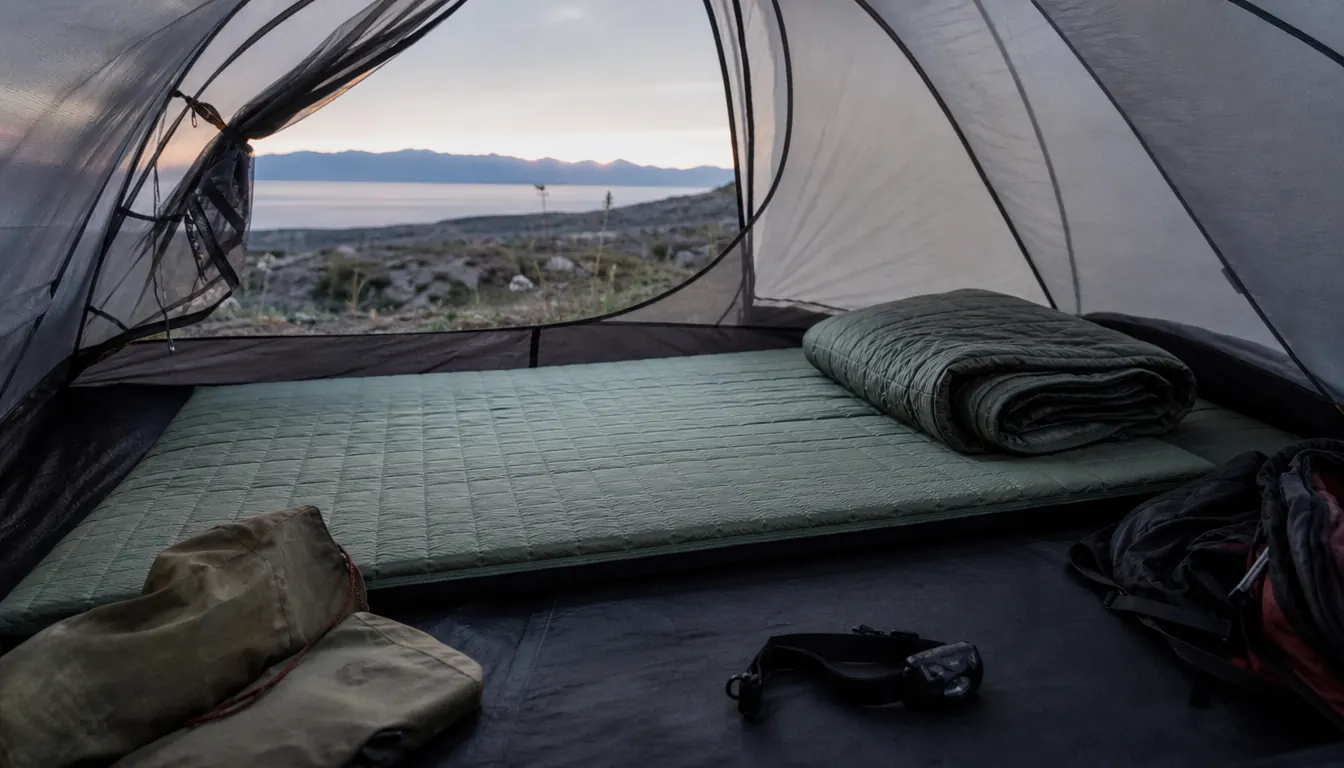
If you have been shopping for a sleeping pad for more than twenty minutes, you have already run into the argument. Half the internet says a plain inflatable air pad is the only sensible choice. The other half says foam is the only thing that will not leave you on the ground at 2 a.m. Both sides are selling something.
I have slept on both. My current pad is the Gear Doctors Oxylus, a self-inflating foam-and-air pad I bought in summer 2023 after a night on a thin closed-cell foam pad left my lower back sore for four days. Before that I spent plenty of nights on borrowed basic inflatable air pads, the kind with no foam inside, just a few inches of trapped air. The short answer: the Gear Doctors pad is the better choice for anyone who car camps, sleeps on their side, or has a back that files complaints. A plain air pad still wins on pack weight if you are carrying it more than a few miles. Here is the longer version.
| Gear Doctors Oxylus | Inflatable Air Pad | |
|---|---|---|
| Thickness | 1.5 inches of foam and air, with a foam core that will not bottom out under a hip | Two to four inches of air, comfortable until it is not, and a hip bone can find the floor |
| Warmth | 4.3 R-value from the foam core | R-value depends entirely on the model, the cheapest ones are barely above 1 |
| Weight | 2.2 pounds | Often 1 pound or less for a comparable-length pad |
| Packed size | Rolls to roughly the size of a two-liter bottle and does not compress further | Packs to the size of a large water bottle or smaller |
| Setup | Unroll, open the valve, wait, add a few breaths. Under five minutes and nothing to count | Fully manual, twenty to thirty breaths or a pump sack, and you must get it firm or you will feel the ground |
| Puncture risk | Foam core keeps a slow leak from becoming a nights sleep on bare ground | One thorn ends the night unless you carry a patch kit and find the hole in the dark |
| Noise | Quiet, the foam absorbs movement | Crinkles and rustles with every turn, which matters if you share a tent |
| Durability | Foam holds its shape for seasons, the shell is the only wear point | Air chambers delaminate and seams fail over time |
| Back support | Medium firmness at 1.5 inches supports a stiff lower back without sinking | Soft and hammock-like, comfortable for some, rough on a bad back |
| Best for | Car camping, short backpacking trips, side sleepers, anyone over 40 | Long-mileage backpackers counting ounces |
Where the Gear Doctors Oxylus Wins
The Oxylus wins on the things that actually keep you asleep. It is 1.5 inches thick, which sounds thin next to a four-inch air pad, but the 1.5 inches is foam and air together, not air alone. Foam does not compress the way trapped air does. When I roll onto my side, my hip does not sink until it finds the tent floor. That was the whole reason I bought it. On the borrowed air pads, I could sleep fine for two hours and then wake up with my hip aching because I had slowly sunk through the pad.
It is also warm in a way that does not depend on the model number you happened to buy. The 4.3 R-value comes from the foam core, and foam holds warmth whether or not the valve is perfectly seated. I have slept on it in the Uintas in late September, with frost on the tent in the morning, and never felt cold come up through my back. On those borrowed air pads, cold was a constant negotiation. I would put a foam sit pad under my hips as insurance. I do not carry that anymore. The night that convinced me was in early October, a pullout off the Mirror Lake Highway, thermometer in the tent pocket reading 31 when I turned in. Thin wool base layer, the 20F bag, the Oxylus. I woke once around four to the sound of the creek and nothing else. No cold spot under my shoulder blades. That had never happened on a borrowed air pad.
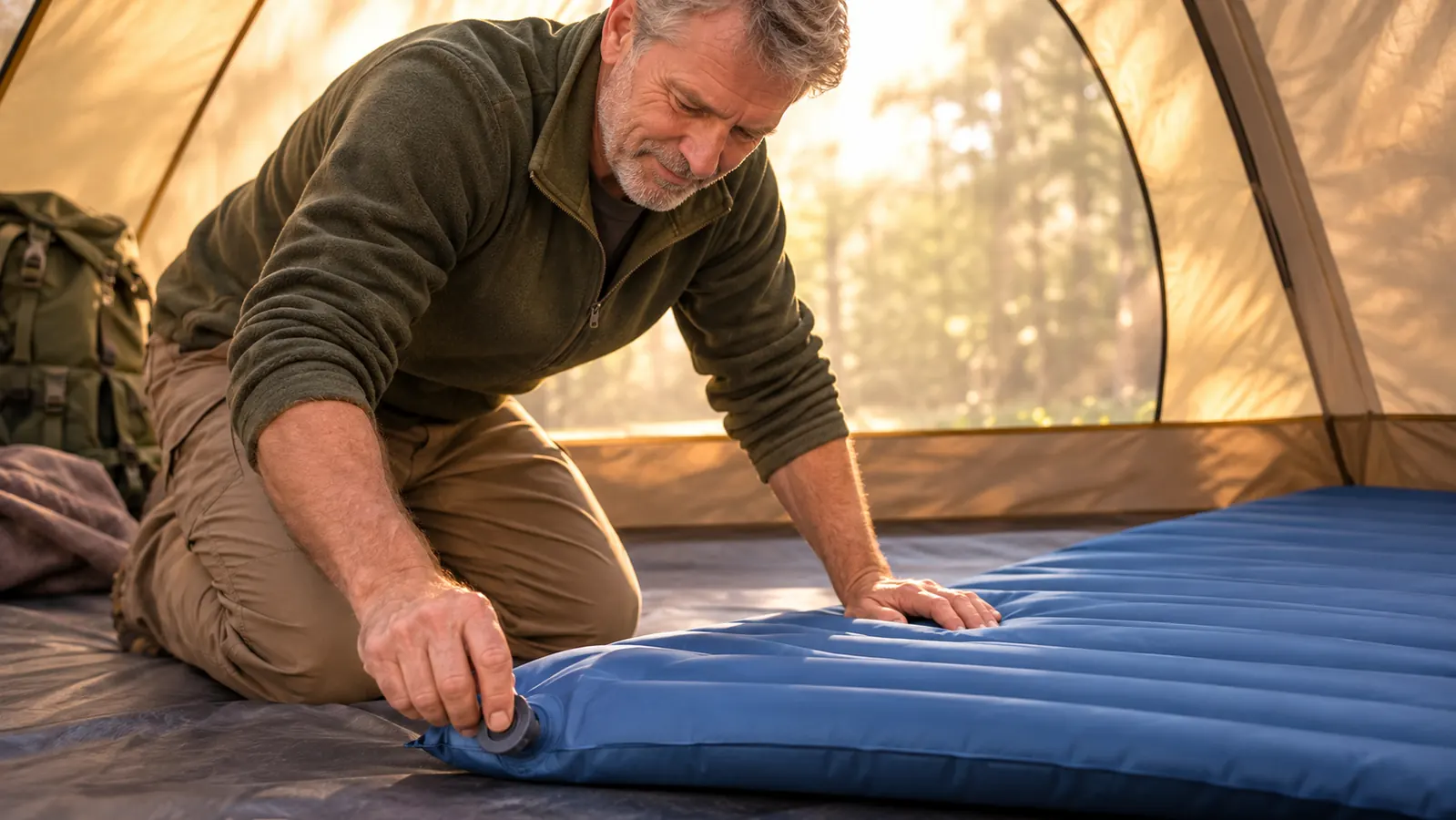
The setup is the other thing I have come to appreciate. Unroll it, open the valve, go filter water or set up your bag, come back, and it has done most of the work itself. I top it off with maybe four or five breaths and close the valve. The listing says pack to sleep-ready in under five minutes and that matches what I see. There is nothing to count and no pump sack to wrestle in the dark. After a day of driving to the Mirror Lake Highway and setting up before the light goes, that matters more to me than it used to.
One more: it does not pop. Foam inside means a small puncture degrades the pad instead of ending the trip. I have never punctured it, but I have watched a friend spend forty minutes hunting for a leak in an air pad by headlamp while the rest of us were already in our bags. I would rather carry the extra pound than do that. The repair patch that came with it is still in the carry bag, unopened, three and a half seasons on.
The Gear Doctors Oxylus is 1.5 inches thick, and that 1.5 inches is foam and air together. Foam does not compress the way trapped air does. When I roll onto my side, my hip does not sink until it finds the tent floor.
Where an Inflatable Air Pad Wins
The weight and pack size gap is real and I am not going to pretend otherwise. The Oxylus is 2.2 pounds and rolls to about the size of a two-liter bottle. It does not compress further than that because the foam has to go somewhere. A decent air pad of similar length runs closer to a pound and packs down to roughly a large water bottle, sometimes smaller. If you are walking fifteen miles a day for a week, that difference is not nothing. It is the difference between a pack that sits right on your hips and one that drags on your shoulders by the afternoon. I noticed it the one time I borrowed Ray's air pad for a two-night loop off the Mirror Lake Highway. The pack felt a pound lighter all day, and I noticed it most on the climb out, the one where my left knee usually starts talking. That is a genuine advantage and I will not pretend otherwise.
The other honest point is thickness. A four-inch air pad is luxurious. If your back is fine and you sleep on your stomach or your back and you do not mind a soft surface, an air pad is genuinely more comfortable to lie on for the first hour. It is cushioned in a way foam is not. Some people find the Oxylus too firm, particularly at 1.5 inches, and I understand that. It took me a few nights to stop wanting it softer. The current price on the air pad side is often lower too, especially on the cheap models, though the cheap ones are also the ones that leak and sleep cold.
And a plain air pad is simpler to own. No foam to eventually flatten, no long dry-out. Wipe it, roll it, put it away. If you are the kind of person who wants equipment they never have to think about between trips, that has value.
The pad I stopped waking up sore on
Gear Doctors Oxylus, 4.3 R-value, 1.5 inches of foam and air, 72 by 22 inches. Self-inflates in under five minutes and does not leave your hip on the tent floor. It is the one that stays in my Tacoma.
Amazon Check Today's Price on Amazon →How I Compared Them
I am 58, 5 feet 11 inches, about 190 pounds, with a lower back that has opinions and a left knee that complains on descents. My testing is not laboratory testing. It is three and a half seasons of the Gear Doctors Oxylus on trips in the Wasatch above Ogden, the Uinta trailheads off the Mirror Lake Highway, and a couple of spring desert nights near Moab. Most of those are one or two nights, because weekdays I am taking care of my mother and the window is short. The air pad side is a dozen or so nights on borrowed pads when someone in camp had a spare.
I judged both on the same four things: whether I slept through the night, whether I woke up with my back worse than when I went to bed, how long setup took in the dark, and whether I had to baby the thing. Weight and packed size I noted but did not let them dominate, because I am not thru-hiking and I never will be. Two of the borrowed pads were the modern kind with a pump sack built into the stuff sack. Filling one takes thirty or forty squeezes of a bag in the dark, and if you quit early to save your hands, you sleep on a soft pad with your hip an inch from the floor. The third was an older one with foam inside, and I liked it, which should have told me something two years before I bought the Oxylus.
The Gear Doctors pad is a rectangular 72 by 22 inch single, medium firmness, rated to 250 pounds, and it comes with a carry bag and a repair patch. I store it unrolled with the valve open under the guest bed, which is what the manufacturer suggests and what has kept the foam from taking a set. Three and a half seasons in, it still inflates to full thickness on its own.
What I Liked
- Foam core means a hip or shoulder does not bottom out on the tent floor
- Warm from the foam itself, no cold creeping up through the pad
- Self-inflates in under five minutes, with only a few breaths to top it off
- Quiet, no crinkling when you turn over at night
- A slow leak degrades the pad instead of ending the night
- 1.5 inches of medium-firmness support suits a stiff lower back
Where It Falls Short
- 2.2 pounds, which is heavy if you are counting ounces
- Rolls to about the size of a two-liter bottle and will not compress smaller
- Firmer than a thick air pad, and some sleepers will want more cushion
- Foam requires storing it unrolled and dry, which takes space at home
The Cold Night Test
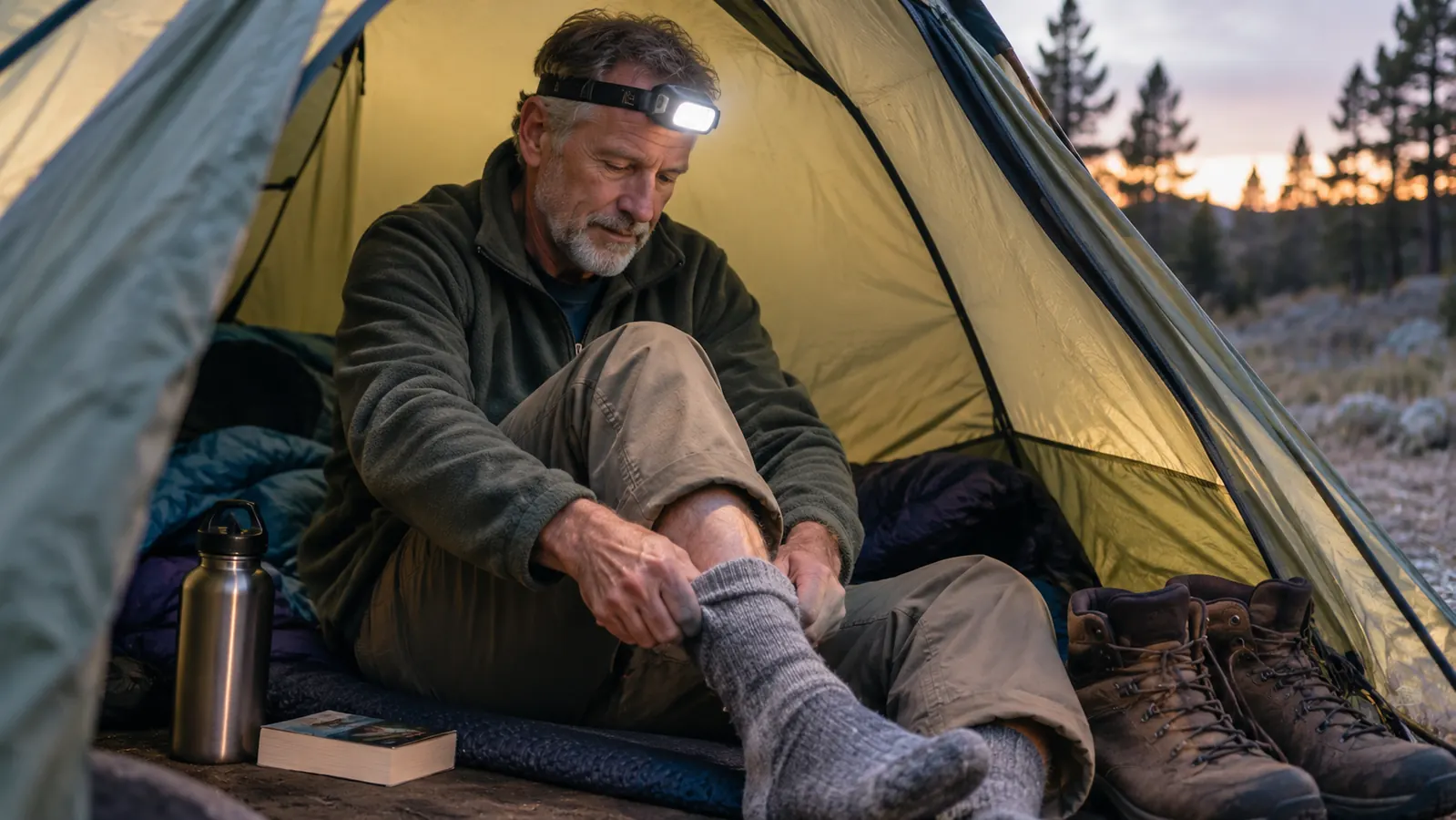
Cold is where the two pads separate most, and it is the thing I would tell a friend to think about first. Air is a poor insulator. An air pad keeps you warm only because of what the manufacturer put inside it, and on the cheap end there is not much inside. The basic air pads I borrowed had R-values that were, charitably, a mystery. I slept cold on one in September in the Uintas in a 20F bag with base layers on, and I blamed the bag for a year before I figured out the pad was the problem. A sleeping bag loses warmth from below through compression, and whatever the pad does not replace, you feel. The ground in the Uintas in late September is not warm. It is a heat sink, and it pulls warmth out of you all night no matter how good the bag is. That is the part people miss when they shop for a bag first and a pad second.
The Oxylus is rated 4.3, and the warmth comes from foam, which does not need to be inflated to work. Even if the valve is not perfectly seated or the pad is a little soft, the foam is still there. That is the part I trust. I have not been cold on it, including a late September night where I could see my breath in the tent. I would still not call it a four-season pad for real winter, and I would not take it out in deep snow, but for three seasons in the Utah mountains it has been enough. I keep a cheap thermometer in the tent pocket now, mostly out of curiosity. The coldest night I have logged on the Oxylus was 27 degrees, in a drainage above Ogden in mid-October, and I slept from ten until a little after five without waking. On a borrowed air pad I would have been up at two, rearranging.
Who Should Buy Which
Buy the Gear Doctors Oxylus if you car camp mostly, if you backpack one or two nights at a time, if you sleep on your side, if you are over 40 with a back that has started talking to you, or if you have ever woken up at 3 a.m. because your hip found the ground. That is most of the people I camp with, and it is me. The 2.2 pounds is a fair trade for sleeping through the night, and if your longest carry is a few miles from the truck, the weight is not worth optimizing.
Buy a plain inflatable air pad if you are genuinely covering long miles, if you are under 40 and your back is fine, if you sleep on your back or stomach and like a soft surface, or if pack volume is the constraint that decides your trips. If that is you, an air pad is the right tool and the Oxylus will feel like carrying a spare tire. There is no shame in either answer. The mistake is buying for the trip you imagine instead of the trips you actually take, which for most of us are short, close to the truck, and built around a narrow window.
My friend Ray carries an air pad. He is lighter than me, walks farther than me, and complains about his shoulders when he carries too much. I keep the Gear Doctors pad in the Tacoma and he keeps his air pad in his pack, and neither of us has ever tried to convert the other. That is roughly how this argument should end.
Sleep through the night, then decide about the weight
The Oxylus self-inflates in under five minutes, holds a 4.3 R-value from its foam core, and keeps your hip off the tent floor. Three and a half seasons in mine and it still inflates to full.
Amazon See the Gear Doctors Oxylus on Amazon →