
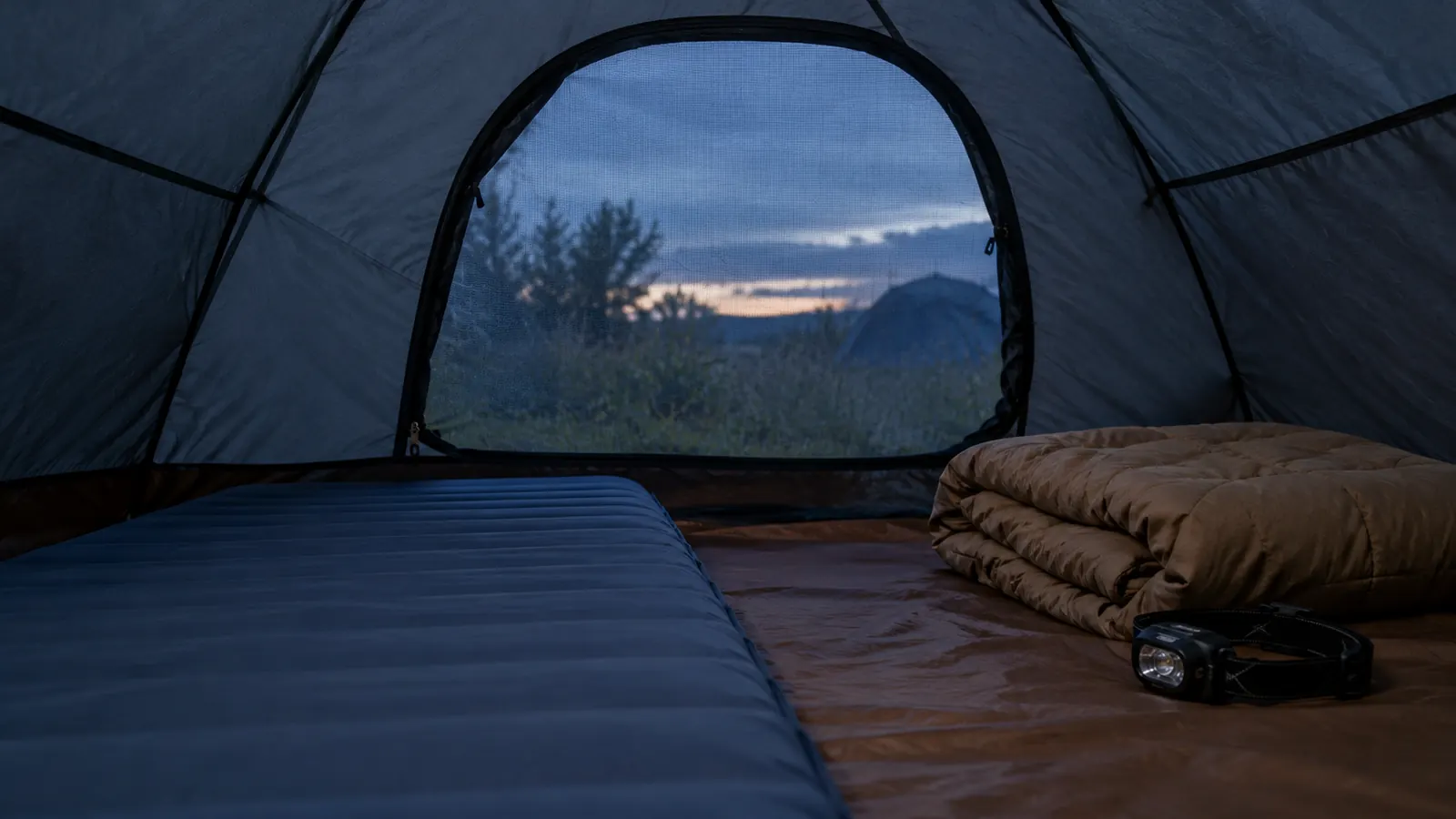
I bought the Gear Doctors Oxylus in the summer of 2023, the week after one night on a thin closed-cell foam pad left my lower back locked up for four days. I am 58, I live in Ogden, and I camp because the Uintas are two hours from my driveway, not because I enjoy suffering. A sore back turns a two-night trip into a two-night mistake. What I found, after three and a half seasons of unrolling this thing, is that the pad matters more than the tent, more than the bag, and a lot more than whatever the forums are arguing about this month.
These ten reasons are not features copied off a listing. Each one is something I noticed on a real night, usually at 2 a.m., which is when a pad either does its job or does not. I will also tell you where it falls short, because it does.
The pad that ended my 2 a.m. wake-ups
The Gear Doctors Oxylus is 1.5 inches of foam and air with a 4.3 R-value, 2.2 pounds in the bag, and mine has held up for three and a half seasons. If your back is the reason you stopped camping, start here.
Amazon Check Today's Price on Amazon →The 1.5 inch foam core keeps your hip off the hard ground
Most bad nights on a camping trip start with one pressure point. A hip. A shoulder blade. A spot where a root sits under the tent floor. Thin closed-cell foam is roughly three eighths of an inch of nothing, and you feel everything through it. The Gear Doctors Oxylus is 1.5 inches thick with a foam core inside, and at about 190 pounds I can tell the difference by the second hour. I still know the ground is there. I just do not feel it in my hip joint anymore.
It holds its firmness from lights out to first light
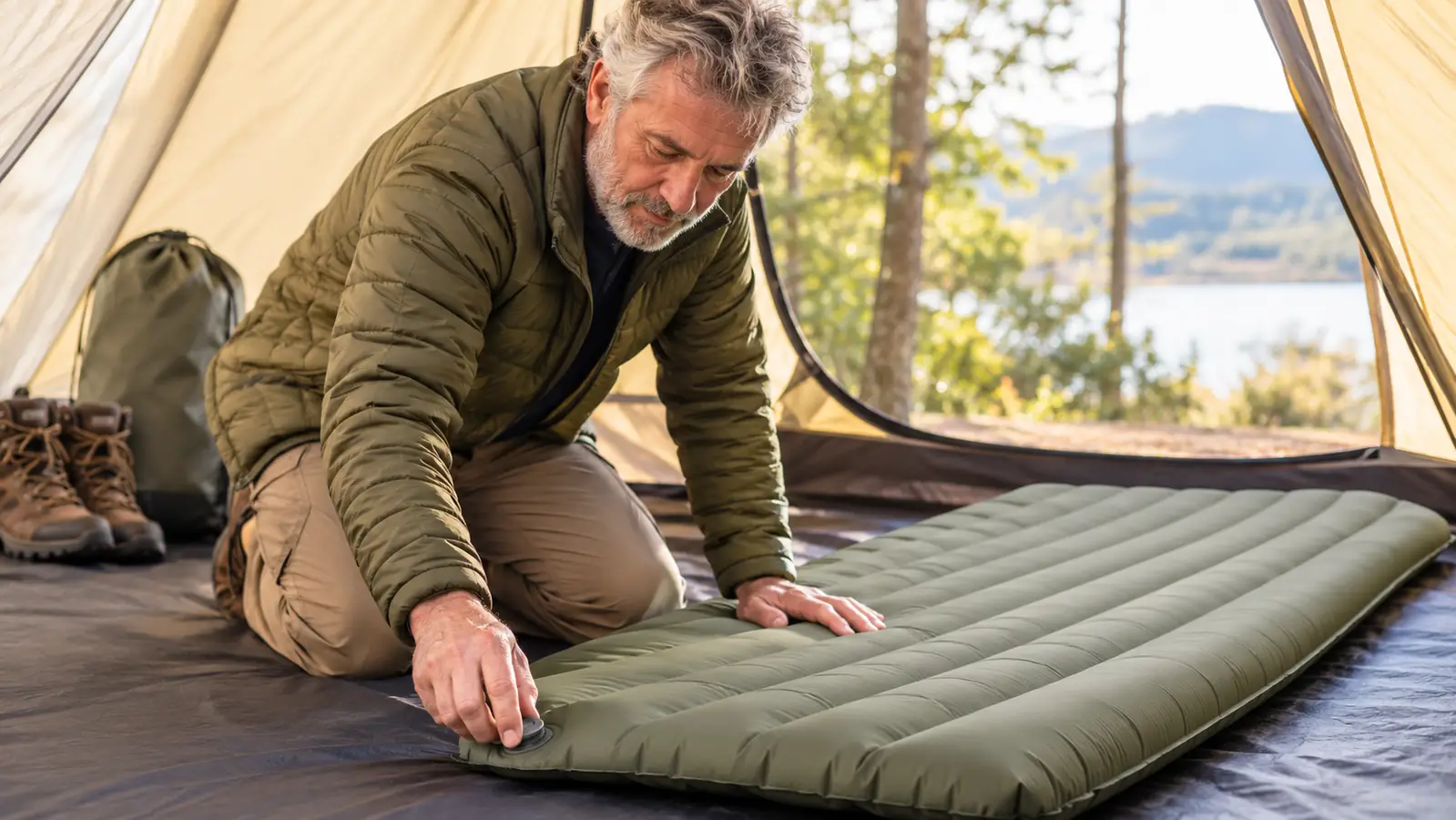
The classic failure is slow deflation. You fill a cheap air pad at nine, you are on the ground by two, and you spend the rest of the night curled around a cold spot with your back twisted. A self-inflating pad has foam inside that wants to stay expanded, so as long as the valve is shut it keeps its shape. Three and a half seasons in, my Gear Doctors pad is as firm at dawn as it was when I went to sleep. That consistency is the whole point.
Medium firmness is the setting a stiff lower back tolerates
The listing calls the firmness medium, and medium is the right word for it. Too soft and your hips sink and your spine bends sideways for six hours. Too firm and your shoulders and hips take all the load and you wake up stiff anyway. Medium keeps you roughly level. If you want it harder you leave more air in, and if you want it softer you bleed a little out. The point is that you get to choose, and you get to change your mind at 3 a.m. without leaving the tent.
Self-inflation gets you flat and off your feet in under five minutes
After a climb out of the Mirror Lake Highway trailheads, the last thing my back wants is ten minutes of blowing up a mattress while my head spins. You unroll it, open the valve, and the foam pulls most of its own air. Mine gets most of the way by itself and I finish it with three or four breaths. Gear Doctors lists it as under five minutes from pack to sleep ready. That matches what I see, and I am not hurrying.
The 4.3 R-value keeps cold ground from tightening your back
Cold does two things to a bad back. It makes the muscles clamp down, and it makes you curl, and curling is what puts you in a bad position for six hours. This pad carries a 4.3 R-value, which is a solid three-season number in the Uintas. I have slept on it in the low thirties in late September, in base layers and a beanie, and I did not wake up with a cold spot under my hips. That is the whole test.
2.2 pounds is a trade I will make every single time
It weighs 2.2 pounds and rolls into its own carry bag. I know men who will tell you that is heavy. Those men sleep on a cracker, get up at five with a back that sounds like a zipper, and then complain about the drive home. I carry a little more and I sleep. My left knee is the reason I care about pack weight at all, and 2.2 pounds is not the thing that hurts it.
The 250 pound capacity means it does not squirm like a pool toy
I am about 190 pounds, so I am not testing the limit. But capacity matters for how a pad behaves underneath you. A pad rated at 250 pounds holds its shape when you roll over, when you push up on one elbow to find your water bottle, and when you kneel on it in the doorway getting your boots off. Mine has taken that kneeling with my full weight more times than I can count, and it has not bottomed out or torn.
The valve lets you tune it for the night you are having
Some nights my back wants a firmer surface. Some nights, usually after a long descent, it wants a little give. One valve does both. Open it and the pad takes in air, shut it and the pad holds, crack it and you bleed off a bit. There is no pump to lose and nothing to plug in. It is one moving part, and after three and a half seasons that one part still seats and still holds. That is more than I can say for most things I own.
It comes with the carry bag and a repair patch, so nothing is missing
The pad ships with a carry bag and a repair patch, and the surface is water resistant, which matters when the tent floor has a damp patch in it after a wet afternoon. I have never needed the patch. I carry it anyway, because a pinhole at 9 p.m. ten miles from the truck ends a trip faster than rain does. Everything the pad needs is in the box, and nothing else has to be bought to make it work.
It turns a two-night trip back into something you can recover from
I do not have a week to spend recovering from a weekend. I take care of my mother on weekdays, so the window is short and it does not stretch. If a night on the ground costs me four days of a locked-up back, I quit going, and that is exactly what was happening before this pad. Now I drive home stiff from the seat of the truck, not from the ground. That is the entire argument, and it is the reason I stopped shopping around.
What I'd Skip
Three things I would skip. First, closed-cell foam as your only pad, unless you are 25 and made of rubber. Second, the pump sacks and battery inflators people haul around for air pads. The Gear Doctors Oxylus does not need one, and I would rather carry a spare pair of socks. Third, and this is the one that starts arguments, I would skip the idea that the pad is where you save weight. Save it on the stove you never use. Your back is not the place to find grams.
Two honest complaints. The pad is 22 inches wide and 72 inches long, which is fine if you sleep on your back and tight if you thrash around. And it does take a few breaths to top off after it self-inflates, so it is not quite zero effort. Neither has ever cost me a night's sleep. The foam pad cost me every single time. If you are wider through the shoulders than I am, measure your sleeping bag before you order anything from anyone, not just Gear Doctors.
I drive home stiff from the truck seat now, not from the ground. That is the whole argument.
Your back is not going to get more forgiving with age
Twenty two inches wide, 72 inches long, 1.5 inches thick, 250 pound capacity, and about five minutes from the pack to sleep ready. I would buy the Gear Doctors Oxylus again tomorrow, and I say that as a man who complains about everything.
Amazon Check Today's Price on Amazon →