
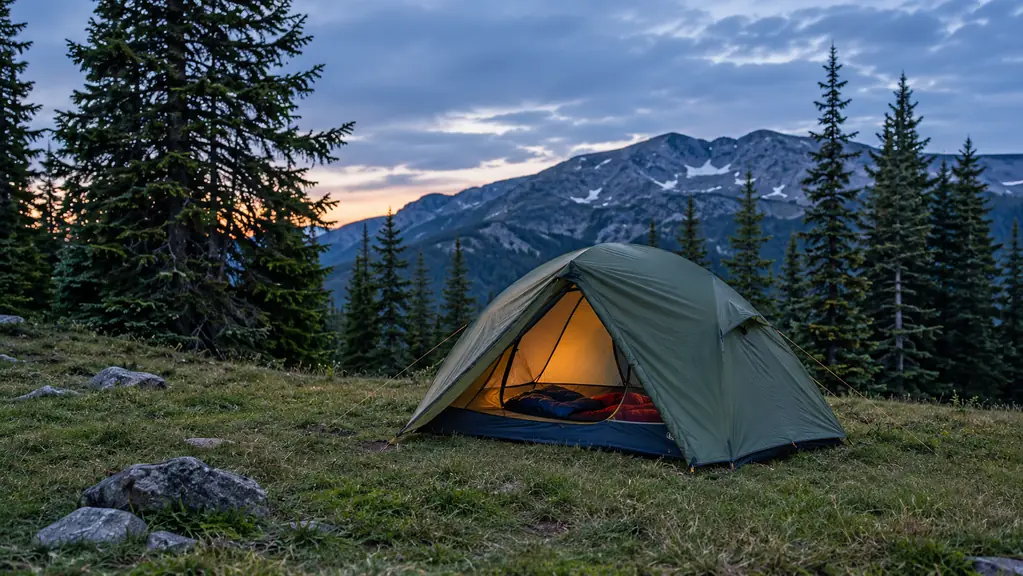
I bought the Naturehike Cloud-Up 2 in the spring of 2024 because I was losing too many nights of sleep to a tent. The one it replaced was a dome I had owned since the early 2000s, close to seven pounds with the poles, and it had exactly enough room for me and my regrets. I am 58, my lower back has opinions, and my left knee files a report every time I walk downhill. A bad night on the ground now costs me two days, not one.
So when I say I have used this tent for about three seasons, I mean twenty-some nights out of the Mirror Lake Highway trailheads in the Uintas, a handful in the Wasatch above Ogden, and two car-camping weekends with my wife Carla. That is enough time for the shine to wear off. What follows is not a first-night impression, and it is not written for people counting grams.
The Quick Verdict
A well-built freestanding shelter for one person and a pack, or two people who genuinely like each other. It goes up in four minutes, it has kept me dry in real rain, and the 49.2 inch floor width is the one number you need to think hard about.
Amazon Check Today's Price →Three seasons in, I would buy this tent again
It is freestanding, it packs to 15.7 by 5.1 by 5.1 inches with the footprint, and it has held up to Uinta weather that had no business being called a forecast. Check the current price and specs before your next window opens.
Amazon Check Today's Price on Amazon →How I've Used It
Most of my trips are one or two nights, because I spend weekdays caring for my mother and the window closes fast. That is not the profile of a thru-hiker, and it is not the profile the gear forums write for. It is the profile of a lot of people reading this. You get a Friday and a Saturday, you drive ninety minutes, you walk in a few miles, and you want to sleep well enough to enjoy the morning.
Solo, the Cloud-Up 2 is a palace. I am 5 feet 11 and about 190 pounds, and I can sit up, change clothes, and lay out my pad, my bag, and a dry sack of clothes without wrestling anything. I sleep on my side, so the 82.7 inches of floor length matters more to me than the weight on the label. My feet do not touch the wall, which means my bag does not get damp from the fly.
I pitch it with the footprint that comes with it. I have set it on duff, on gravel, and once on a slab of granite near Trial Lake that took me fifteen minutes to find a clean line across. It is freestanding, so once the poles are clipped in I can pick the whole thing up and slide it two feet left when I realize I am on a root.
I store it loose in a plastic bin in the garage, not stuffed in the carry bag. That is not a ritual, it is laziness plus a little common sense. The coating lasts longer when it is not crushed into a ball for eight months at a time. I have also shared it with Carla on two car-camping weekends, and that is where this review gets less friendly.
What 4.3 Pounds and the Rest of the Numbers Actually Mean
The listing says 4.3 pounds. That is the packed weight, and it is close to what my own scale says with the footprint, the poles, the fly, and the five wind ropes in the bag. For a freestanding two-person tent with a full-coverage fly, that is a reasonable number. It is not a remarkable one. If you are chasing a two-pound shelter, this is not that tent and Naturehike does not pretend it is.
It packs to 15.7 by 5.1 by 5.1 inches. That is a long, thin bundle, roughly the size of a loaf of bread stretched out. In my pack it goes in horizontally at the bottom, next to the sleeping bag, and it leaves room for a stove and food above it. It is not so small that you forget it is there. It is small enough that you stop thinking about it, which is the real goal.
The floor is 82.7 inches long, 49.2 inches wide, and 41.3 inches high at the peak. Read that width a second time. Four feet and one inch is plenty for one person and a pack. For two adults it is a negotiation, and I will get to that in a minute.
The shell is 210T polyester with a waterproof coating rated at 3000mm and above. That rating is the number I care least about on paper and the one I have tested most in practice, because the Uintas in July will throw an afternoon storm at you that behaves like it holds a grudge. Three seasons in, that coating has held. It is also a three-season tent, and I treat that label as a promise about summer and shoulder season, not about snow.
Pitching It: Pole Clips, Wind Ropes, and One Front Door
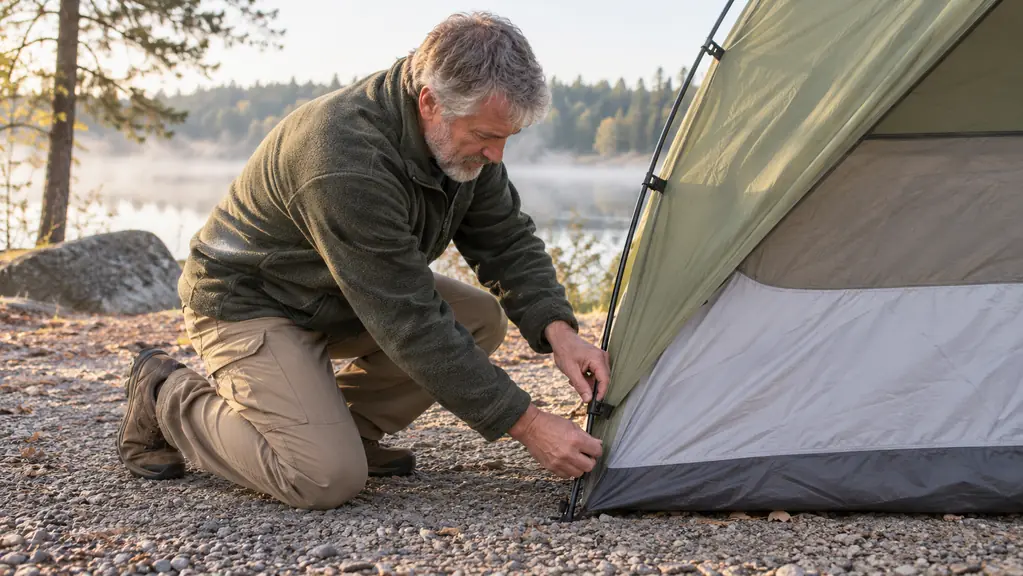
Setup took me about six minutes the first time and about four now, with old knees and no particular hurry. The poles clip to the body instead of threading through sleeves, and I like that more every year. On a windy evening at a trailhead, clipping is a one-handed job and threading is a two-handed argument with a fabric tube that is winning.
You set the inner first, then throw the fly. That order matters if it is already raining. You will get some water inside the inner while you are draping the fly, and there is no way around that on this design. It is not a flaw unique to this tent, but it is real. If I expect weather, I stand with my back to the wind and work fast and dry the rest with a bandana.
There is a vent window above the front door. On a still night it is the difference between waking up with a dry bag and waking up with a bag that feels like it was washed and never dried. It is not magic. I still get condensation on the underside of the fly when the temperature drops hard and no air is moving. I wipe it down in the morning and go on with my day.
There is a single front entry. Whoever is on the far side of a shared night climbs over whoever is on the near side. Between me and Carla after thirty-odd years, fine. Between two friends sharing this tent every weekend, it would wear thin by August. When the wind picked up above Ogden I ran all five wind ropes, and that is the reason they live in the bag and not in the garage bin.
Three Wet Nights and One That Was Worse
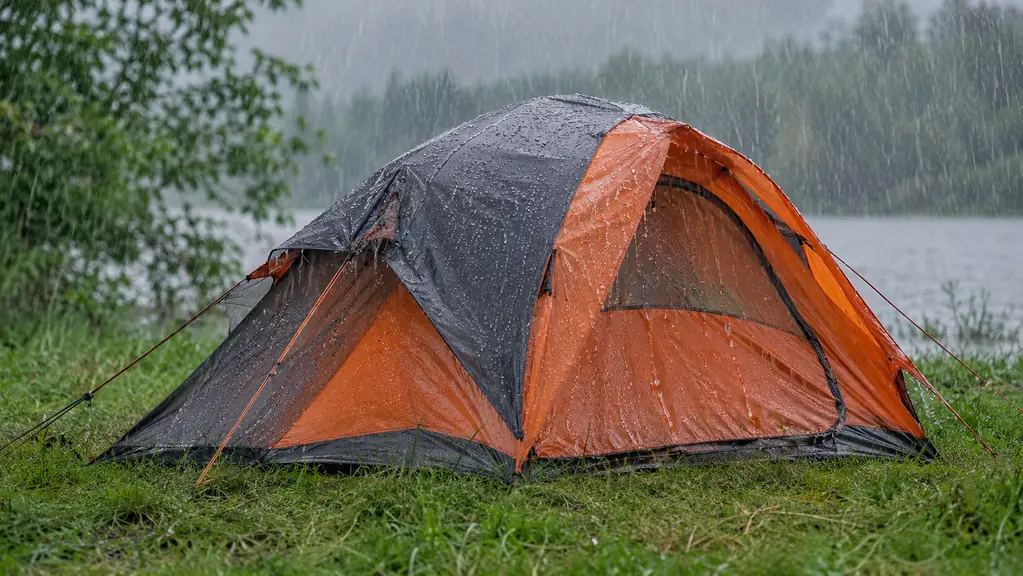
The first real test was a September night in the Uintas where the rain started at nine and quit at four. I had the fly set and the wind ropes out. I woke twice and put a palm against the ceiling. Cool and dry both times. In the morning there was a puddle under the tent and nothing inside it, and the floor stayed dry when I rolled my bag off to one side to pack.
The second test was wind, not rain. I was camped above Ogden on a ridge that looked sheltered at four in the afternoon and did not at ten. The frame flexed and leaned and did not fold. I would not call this a winter shelter and I would not want to find out. It is a three-season tent, and that night it behaved exactly like one, which is all I ask.
The third was just cold, somewhere around 30 degrees, and the tent's job there was to keep the breeze off me. It did. The 41.3 inches of peak height means I can sit up to pull on a jacket without headbutting the ceiling. That sounds like a small thing until you have done the other version at five in the morning with a stiff back.
The Two-Person Question
Two people fit in this tent the way two people fit in a small car. Everyone is inside, nobody is comfortable, and the trip works because you like each other. The 49.2 inch floor width is the number that decides it. Two standard 20 inch pads side by side use 40 inches and leave you nine to split between the two walls, and both sleepers will brush the sides of the tent all night.
With Carla on a car-camping weekend, that is fine. We are not carrying the tent and our duffels stay in the truck. The two nights we spent in it during a cold snap in the Wasatch were warm and dry and neither of us complained. I would still not plan a five-day trip with another adult inside this footprint, and I would not buy it expecting to.
Solo, it is a one-person tent that happens to have a second sleeping spot. That is how I would buy it, and that is how I have used it. If you are a couple that backpacks together and you both move around at night, look at something wider. If you are a couple that wants a light shelter for a quick overnight and can leave the extras in the vehicle, this will do the job for years.
What Has Worn and What Has Not
After about three seasons, the pole set is still straight and the clips still snap without fuss. The zippers, which take the most abuse on any tent, have not skipped or separated. The floor has no pinholes that I have found, and I have not been gentle with it.
The coating is the part I watch. A 3000mm rated shell on a three-season tent is a working number, not a lifetime number. I have not seen it wet out, meaning the fabric has not started to soak through and sag, but I also have not spent a solid week in steady rain. I store it dry, which is the only maintenance I do, and I expect several more seasons before I think about anything else.
What I have replaced on the tent itself is nothing. What I would change is small. The carry bag takes a second try on a wet morning. The single entry is the one design choice I would pay to change. And if Naturehike ever widened the floor by six inches, they would sell this tent to every backpacking couple in the state of Utah.
What I Liked
- Freestanding frame clips together in about four minutes and can be lifted and moved once it is up
- 4.3 pounds packed, and that is with the included footprint in the bag
- Full-coverage fly with a 3000mm+ coating has kept me dry through real Uinta rain
- 82.7 inches of floor length means a 5 foot 11 side sleeper does not touch the walls
- Packs to 15.7 by 5.1 by 5.1 inches and slides in at the bottom of a pack
- Vent window above the front door cuts condensation on most nights
Where It Falls Short
- 49.2 inch floor width is tight for two adults, and both will brush the walls
- One front entry means climbing over your partner to get out
- Condensation still forms on the fly on cold, still nights
- Inner pitches first, so draping the fly in rain puts some water inside
- 4.3 pounds is respectable, not light, if weight is your main concern
- Three-season only, and I would not push it into snow
The rain came at nine and quit at four. I put a palm against the ceiling twice in the night and it was dry both times.
Who This Is For
This is for the solo backpacker who takes one or two nights at a time and cares more about sleeping well than about shaving ounces. It is for anyone with a back or a knee that makes a bad night expensive. It is also for the car camper who wants a small, quick shelter instead of dragging out a heavy cabin tent for a single overnight. If you are 5 feet 11 with a stiff lower back, this tent was sized for you.
It is a good fit if you want a freestanding shelter you can set up alone in the wind, if you want a footprint included instead of sold separately, and if you mostly go out between late spring and early fall. Naturehike built this for that window and did not overreach.
Who Should Skip It
Skip it if you are a couple that backpacks together more than once a season. The 49.2 inch width will be the thing you remember about the trip. Skip it if you want two doors, or if you want to sit up and play cards with someone at night. Skip it if you are counting grams, because there are lighter shelters and you already know that.
Skip it if you camp in snow or expect sustained winter weather. It is a three-season tent with a 3000mm coating and a mesh inner, and asking it to be something else is how people end up cold and blaming the tent. Buy the right tool for the trip you actually take, not the trip you daydream about in February.
If your next window is one night and you want to sleep through it
This is the tent I keep going back to for short trips, and the reason is simple: it goes up fast, it stays dry, and my back does not pay for it the next day. Check the current price and the full spec list on Amazon.
Amazon Check Today's Price on Amazon →