
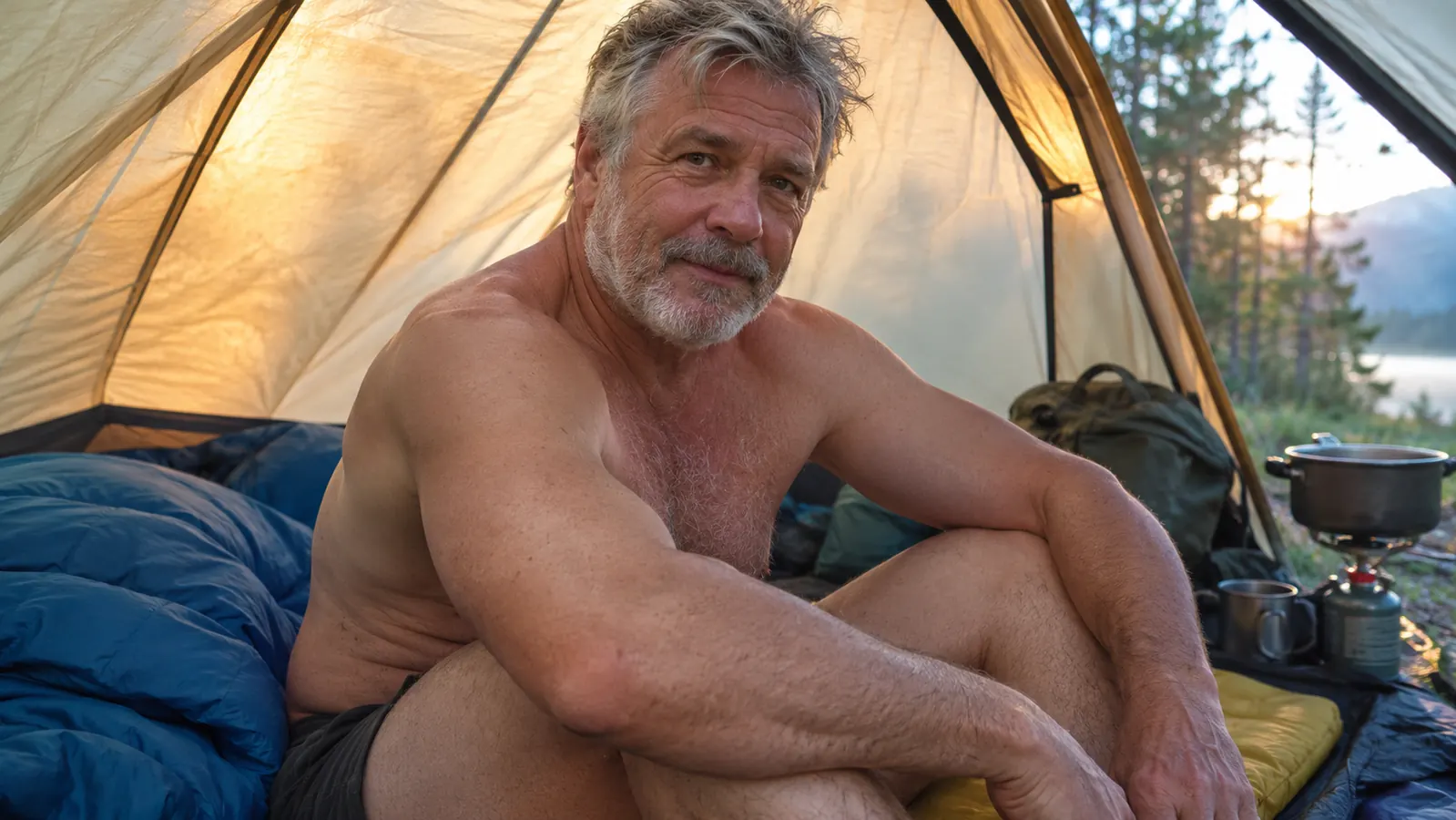
Ground sleep goes bad in a predictable order. First your hip finds a root you missed. Then the cold comes up through the floor. By two in the morning your lower back is stiff enough that rolling over takes a plan. I have a cranky lower back and a left knee that aches after descents, so I stopped treating a sleeping pad as an accessory and started treating it as the foundation of the trip. The Gear Doctors Oxylus sleeping pad is the one I bought in summer 2023 after a night on thin closed-cell foam left me sore for days.
I am 58, I live in Ogden, and most of my trips are one or two nights in the Uintas or the Wasatch above town. I am not trying to set a mileage record. I want to wake up without a back spasm, pack up in the cold, and drive home still able to help my mother with her week. That is the standard I used for this guide. The Gear Doctors pad is not magic and it will not fix a bad site or a bag that is too thin, but it gives you a repeatable base to work from.
Fix the ground first, then fix everything else
The Gear Doctors Oxylus is a self-inflating foam pad with a 4.3 R-value, 72 inches of length and 1.5 inches of thickness. Start with a base that holds its shape and your bag, pillow and temper all have a chance.
Amazon Check Today's Price on Amazon →Step 1: Pick a site that will not fight the pad
A pad can only do so much with a bad bed. I walk the tent area before I set anything up, first with boots on, then on my knees. I move the obvious rocks, pine cones and sticks. I look for the flat spot, not the scenic spot. A slight slope is fine for drainage, but a slide that sends you to the corner by midnight is not. I also note which way the ground drains, because a low corner in a rainstorm is its own kind of bad night. On the Mirror Lake Highway I have passed up a pretty site because the only tent pad was a root shelf, and I slept better for it.
Once the tent is up, I put the pad inside and lie on it before I unpack anything else. This is the cheap test. If I can feel a lump through the pad, the lump will be worse at 2 a.m. I shift the tent or move the pad. The Oxylus is 72 inches long and 22 inches wide, which fits my 5-foot-11 frame with a little room at the ends. It is rectangular, so there are no tapered corners to fall off when I roll. That sounds small until you have spent a night fighting a mummy-shaped pad for space.
I also keep the ground cloth tight. A bunched ground cloth under a self-inflating pad creates wrinkles and pressure points. I stake the corners, brush off grit, and set the pad down with the valve side up. That last part matters when you need to adjust firmness in the dark. I do not want to be hunting for a valve by feel at midnight, and I do not want to wake Carla while I fumble around.
Step 2: Let it self-inflate, then top it off with your breath
Self-inflating does not mean it inflates itself while you set up the stove. Open the valve and give the foam time to pull air in. I unroll the Oxylus as soon as the tent is up, open the valve, and leave it alone while I sort my bag and water. In cool weather I give it longer. The listing says pack to sleep-ready in under five minutes, and that is about right if you start the pad before you start fussing with everything else. If you wait until you are ready to lie down, it will feel half done.
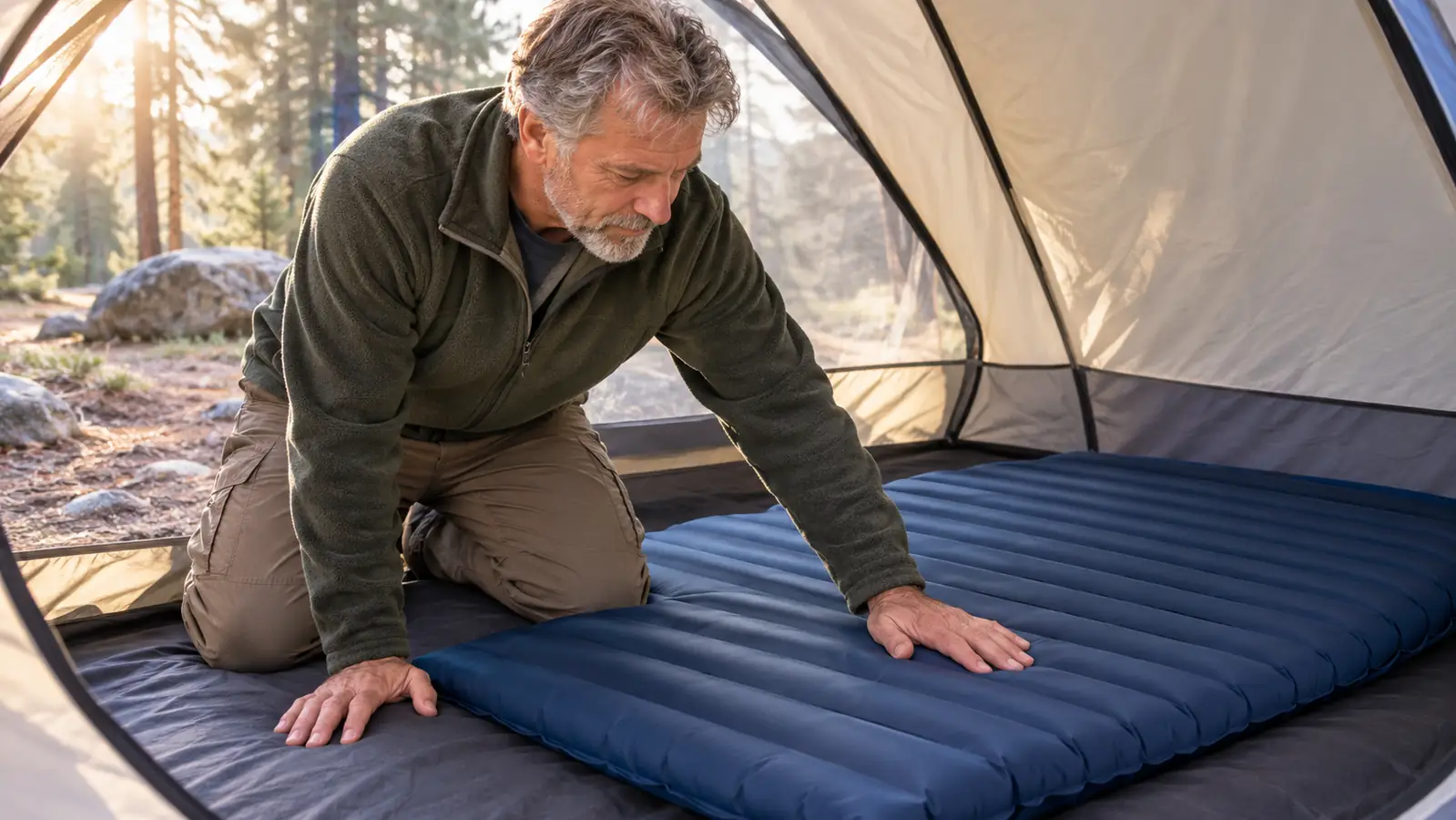
When the foam has done its work, I close the valve and check the firmness with a flat hand. Then I add a few breaths. Not a lungful contest. A few breaths, close the valve, press with my palm, repeat if needed. The pad is 1.5 inches thick. That is not a hotel mattress, and if you overinflate it you get a firm slab that can feel tippy at the edges. I want support, not a drum. The medium firmness in the specs is a good starting point, not a rule you have to live with.
The 4.3 R-value is the reason I stopped carrying a separate foam mat for three-season trips. R-value is a measure of resistance to heat loss, and 4.3 is a real number, not a marketing sticker. It does not make a 20F bag into a zero-degree bag. It does keep the cold ground from pulling heat out of my hips and shoulders while the bag does its job. I still bring a thin closed-cell mat for deep cold or for sitting on snow at lunch. The Oxylus handles the night. The thin mat handles the edges.
Step 3: Set firmness for your back, not for the showroom
The right firmness is the one that lets your hips sink a little without letting your lower back sag. I start firmer than I think I want, lie on my back for a full minute, and then let a little air out if my heels and shoulders are taking all the pressure. The Oxylus is listed as medium firmness, and that is where mine settles after a few breaths. It is adjustable at the valve, so I can change it without getting out of the tent. I can also change it in the dark, which matters more than it should.
Side sleepers usually need a softer pad than back sleepers. If you sleep on your side, let out enough air that your shoulder can drop in. If you sleep on your back, keep it firmer so your hips do not ride high. I am a back sleeper with a stiff lower back, so I keep mine on the firm side and put a small clothing stuff sack under my knees. That one trick does more for my back than any pillow I have tried. It also keeps me from waking up with a knot under my shoulder blade.
Do not judge the pad on the first two minutes. Lie on it in the position you actually sleep in, not the position you use to test a mattress in a store. Give it five minutes. If your arm goes numb or your hip feels pressure, change the air. I also check the edges. A rectangular pad gives you more usable width than a tapered one, but you can still roll off if you set it too close to the tent wall. The listed capacity is 250 pounds, and I am about 190, so I am not testing the limit. I still keep the pad away from sharp zipper pulls and stove parts.
Step 4: Build warmth from the ground up, not from the bag down
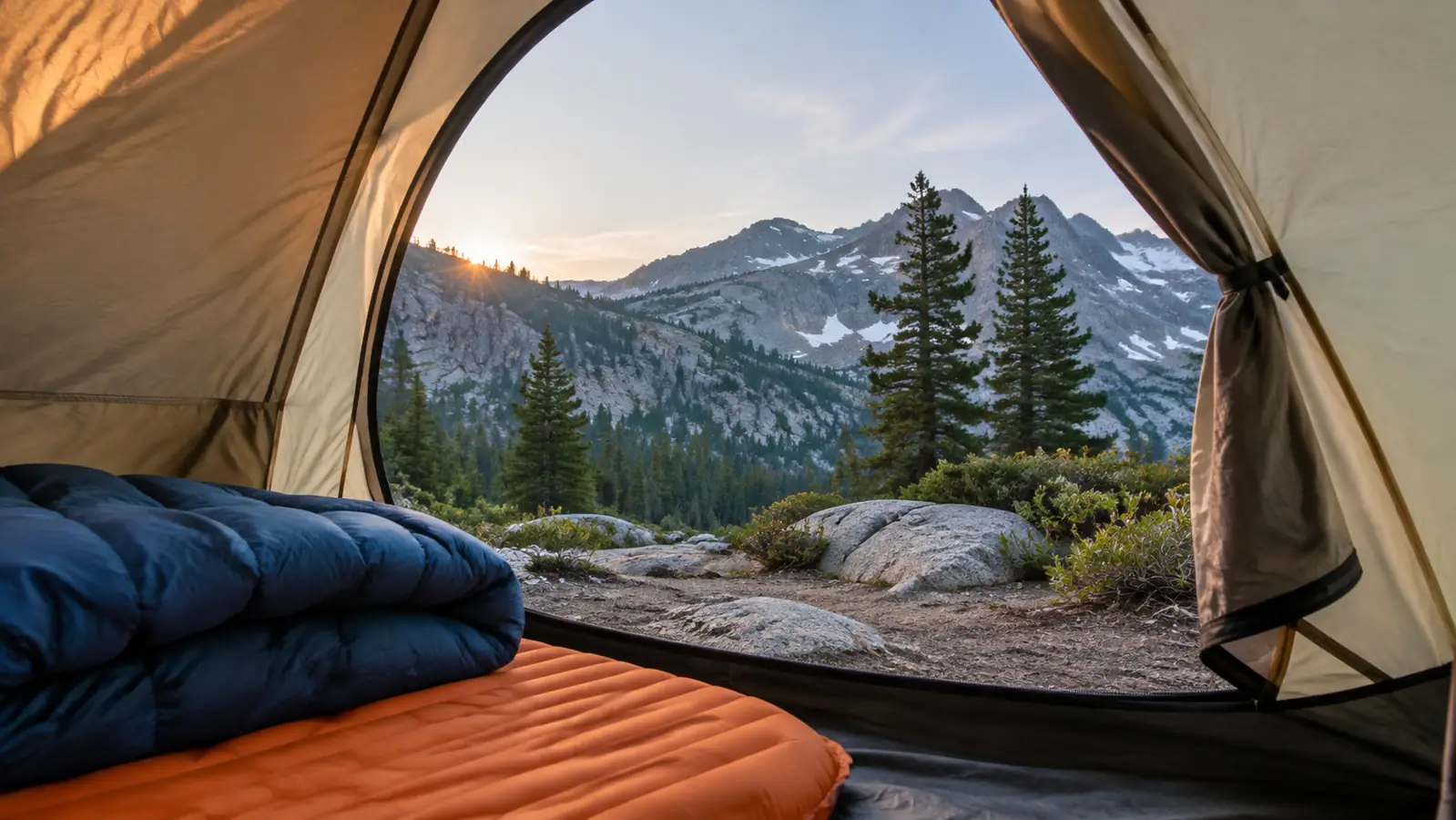
A common mistake is to buy a warmer bag when the real leak is under you. The ground pulls heat out of whatever is compressed under your body, and the bag's insulation does not help much there. The Oxylus has a 4.3 R-value and a foam core, so it insulates differently than a plain air pad. Air pads can be warm, but they can also feel cold when the air inside cools. The foam in this pad gives me a more stable surface in cold weather. I do not have to fight the pad to stay on top of it.
I still manage the rest of the system. I wear dry base layers, a beanie and dry socks. I keep my next day's clothes in the bag so they are not cold in the morning. I vent the tent a little to keep condensation down. On a late September trip in the Uintas, the overnight low was around 28F. I was not warm in a t-shirt and shorts, but I was not shivering either. The pad did its part under my 20F bag. The bag did its part over the top.
If you sleep cold, add a thin closed-cell foam pad under the Oxylus. It adds a little weight and a lot of margin. I do this on snow or when the forecast is below freezing. It also protects the pad from sharp ground. The combination is not ultralight, but I am not hiking 20 miles a day. I would rather carry a few extra ounces and sleep through the night. The best pad is the one you do not think about at 3 a.m.
Step 5: Protect the pad and stop wake-ups before they start
A sleeping pad fails at the worst possible time, usually on the second night when you are already tired. I clear the tent floor before I put the pad down. I keep my knife, keys and stove parts in a stuff sack, not loose on the floor. I use the included repair patch if I get a puncture, and I carry a small piece of tape as backup. The Oxylus comes with a carry bag and a repair patch, which is not exciting, but it is the difference between a fix and a ruined trip. The Gear Doctors pad has held air for three and a half seasons with no drama.
At home, I store the pad unrolled with the valve open under the guest bed. Self-inflating foam lasts longer if it is not compressed in a stuff sack for months. I also keep the carry bag in the same bin so I am not hunting for it before a trip. The pad weighs 2.2 pounds, which is not the lightest option, but it is reasonable for the comfort. I have carried it on short backpacking trips with no regrets. I have also handed it to Ray to try, and he stopped borrowing my old foam mat.
The other wake-up is your bladder or your brain. I stop drinking a lot of water an hour before bed, but I do not dehydrate myself. I keep a headlamp and a bottle where I can reach them. If I wake up, I do not check the time. I roll over, adjust the pad if I need to, and go back to sleep. A pad that is set up right makes that easier. A pad that is too soft or too firm makes every wake-up feel like a problem. The goal is not a perfect night. The goal is a night you do not have to fight.
What Else Helps
The pad is the base, but it is not the whole bed. My tent is a Naturehike Cloud-Up 2, which I pitch with the footprint. It is freestanding and has enough room for me and my kit at the head. Carla uses it with me on car-camping trips, and she does not backpack. When I go with Ray, I take the tent solo and keep the pack inside. A tent that blocks wind and keeps condensation off the bag is worth more than a fancy pillow. It also gives the pad a stable floor, which is half the battle.
A pillow is the next small thing. I use a stuff sack with a fleece jacket inside. It is not a real pillow, but it keeps my neck in line. I also bring earplugs, because a loose tent flap can sound like a bear. And I bring a thin sit pad for the morning, so I am not kneeling on cold ground while I make coffee. None of this is complicated. It is just a series of small decisions that let the pad do its job. The pad cannot fix a neck that is bent at a bad angle all night.
The last item is a dry pair of socks and a dry base layer. I change out of the clothes I hiked in before I get into the bag. Damp fabric pulls heat away from you, and no pad can make up for that. I also keep my water bottle upside down so the cap does not freeze. These are not clever tricks. They are the habits I have built after too many nights of shivering and too many mornings of packing up stiff. A good pad makes those habits easier to keep.
The Oxylus is 72 inches long, 22 inches wide and 1.5 inches thick. At 5 feet 11 and about 190 pounds, I finally had a pad that did not leave me on the tent floor by morning.
A better night on the ground starts with one decision
If you are tired of waking up sore, start with the Gear Doctors Oxylus and build the rest of your sleep system around it. Check today's price, measure your tent floor, and read the specs before you buy.
Amazon Check Today's Price on Amazon →