
Every sleeping bag on the shelf is sold by a single number, and almost everybody reads that number wrong. A guy buys a bag rated to 20 degrees, takes it into the mountains in June, wakes up at four in the morning with cold shoulders, and decides the bag is junk. It is not junk. It did exactly what the label promised. He just did not understand what the label was promising, and nobody at the store explained it to him.
I bought the TETON Sports 20F mummy bag in the fall of 2022 for shoulder-season trips and I have used it about four seasons now. The coldest night I have spent in it was around 28 degrees in the Uintas in late September, wearing base layers and a beanie, and I was fine. I was not cozy. That gap between fine and cozy is the whole subject of this article. What follows is the order I would work through the decision now, having already made most of these mistakes once.
The bag I reach for when the valley forecast says 40 and the trailhead says something else
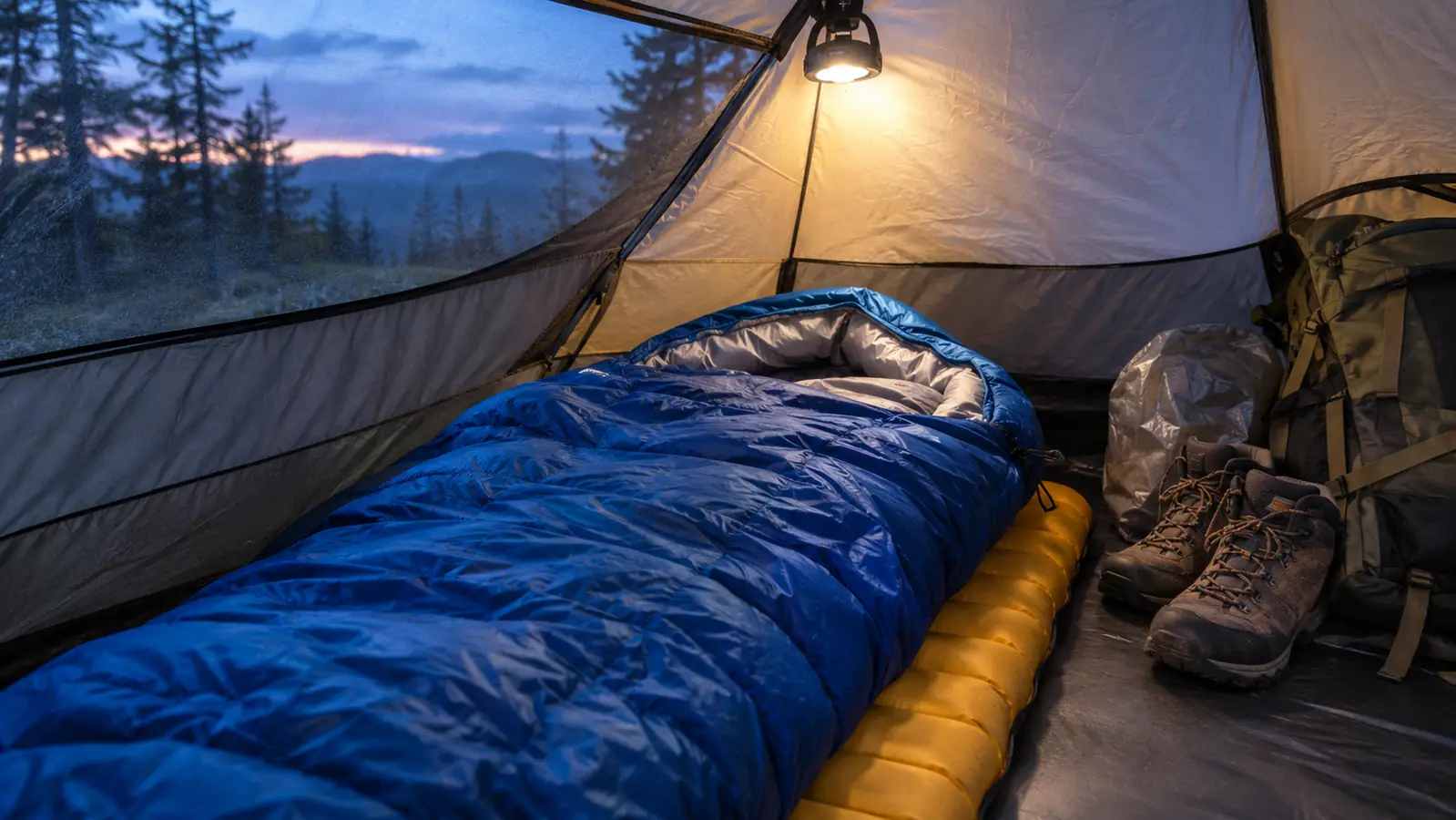
The TETON Sports 20F is a synthetic mummy bag with a hood, a zipper draft tube and a vaulted footbox, survival rated to +20F and comfort rated 20 to 30 degrees higher. It is not the lightest bag you can buy. It is the one I have taken out four seasons running because I know exactly what it will and will not do.
Amazon Check Today's Price on Amazon →Step 1: Read the Rating as a Survival Number, Not a Comfort Number
Look at how TETON Sports describes this bag on its own listing. It is survival rated to +20F, and comfort rated 20 to 30 degrees higher. That is the most honest sentence in the whole product description, and plenty of sleeping bag listings will not say it at all. Read it twice, because it changes how you shop.
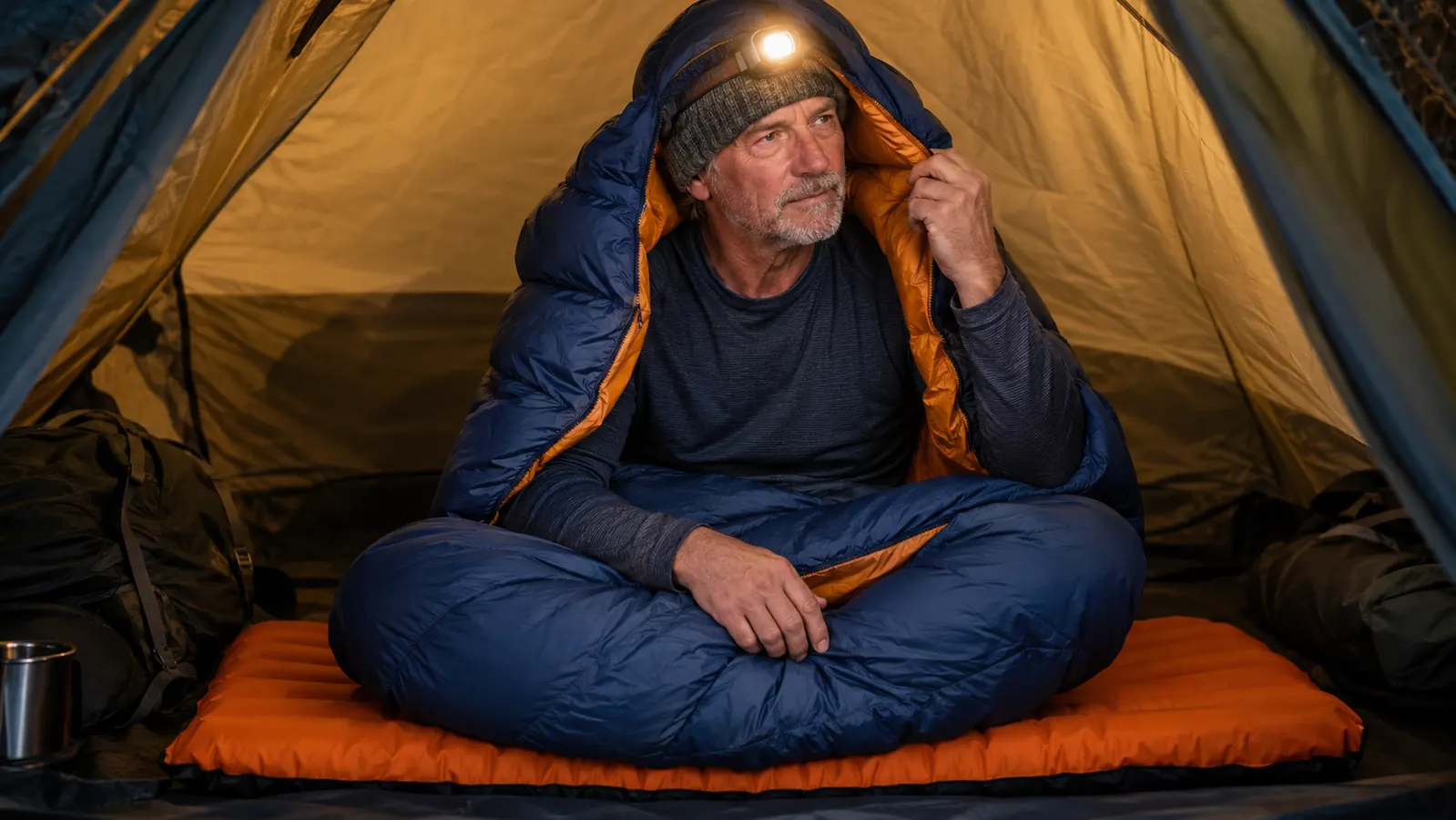
What it means in practice: a 20 degree bag is a bag that keeps you alive at 20 degrees, and a bag you sleep comfortably in somewhere around 40 to 50. The rating assumes you are on a pad with insulation under you, out of the wind, wearing something dry, and fed. It assumes a sleeper of average build who does not run cold. I am 58 and I run cold in the shoulders, and half the people reading this are over 40 and will run colder than whoever signed off on that number.
So my working rule is simple. Take the number on the bag, add 20 degrees, and that is roughly where I will sleep well. The TETON Sports 20F is my comfortable-down-to-40 bag. Below that I am in base layers and a beanie, and I am honest with myself about what is happening. The number printed on the bag is a starting point, not a promise, and treating it as a promise is how a good bag earns a bad review.
Step 2: Find Your Real Coldest Night, Not the Forecast From a Week Out
Before you shop, write down the coldest night you have actually slept outside in the last two seasons. Not the coldest night you have heard about, and not the lowest number on somebody else's chart. The one you were in. Mine is 28 degrees, off the Mirror Lake Highway in late September, and I remember it because I woke up twice.
Then adjust for where you are going, because the forecast you are reading is probably not for the place you are sleeping. A forecast for Ogden is not a forecast for a trailhead at 9,000 feet, and cold air sinks into the drainages overnight. I figure 10 to 15 degrees colder than the valley number is a reasonable starting point for a high trailhead. Frost on the grass at the trailhead in September is normal, not unusual, and if it surprises you then you skipped this step.
If your real number is 40, a 20 degree bag gives you room to spare and you will sleep well almost every night you take it out. If your real number is 25 and falling, you either move up to a warmer bag or you accept that you are layering and going to bed early. Buying a 20F bag and expecting 20F comfort on a 25 degree night is how people end up writing one-star reviews of a product that worked exactly as designed.
Step 3: Get the Shape and Length Right Before You Worry About Anything Else
The TETON Sports 20F is a mummy bag, 87 inches long and 32 inches wide, and the listing says it fits people up to 7 feet tall. At 5 feet 11 inches and about 190 pounds I have room to turn over without wrestling the fabric, and not much more than that. That is the point of a mummy cut. Less dead air around you means less air your body has to heat before you can fall asleep.
Three details on this bag matter more to me than the temperature number, and I would check for all three on any bag I bought. The hood wraps around your head, and an uncovered head is where a lot of heat leaves you at three in the morning. There is a draft tube behind the zipper, which matters because a zipper is a cold seam running the length of the bag. And the footbox is vaulted, cut with extra room at the bottom, so your toes are not pressed flat against a wall of fabric all night. I have slept in cheap bags where all three of those were afterthoughts, and I woke up with cold feet and a cold line down my chest.
One honest tradeoff. If you are a side sleeper who hates feeling closed in, a mummy bag will annoy you, and you should look at something wider instead of buying this one and complaining about it later. I would rather carry a slightly wider bag and a warmer pad than a snug bag and a thin pad. But if you are trying to stay warm in a small tent on a cold night, the mummy cut does real work and it is not decoration.
The coldest night I have spent in this bag was 28 degrees in the Uintas in late September, and what saved it was the hood, the draft tube and a dry beanie.
Step 4: Weigh the Bag Against the Rest of Your Load, Not Against a Spreadsheet
The TETON Sports 20F weighs 2.9 pounds and comes with a compression sack. The shell is ripstop polyester over microfiber synthetic insulation, and the bag is built to compress. It is not the lightest bag in its class and it does not pretend to be. A comparable down bag will be lighter and pack smaller, and it will cost more and lose its loft if it gets wet.
I have a stiff lower back and a left knee that complains on long descents, so I care about pack weight more than I used to. What I have figured out is that shaving a pound off the bag and then carrying a heavier pad to make up for it is not a trade, it is a shuffle. The weight has to go somewhere. Synthetic insulation keeps working when it is damp, and in the Uintas in September damp is a real possibility. I will take that over a lighter bag I have to baby.
I have also used a down bag on a couple of cold trips, and on a dry night it is a genuinely nicer experience. It is lighter, it packs down smaller, and it lofts faster in the morning. I still take the synthetic bag on shoulder-season trips where the forecast has any chance of rain or snow, because a wet down bag is a heavy bag that does not keep you warm. Compare the two for the weather you actually camp in, not the weather in the photos.
Two habits keep the bag performing. Use the compression sack for the trail and store the bag loose at home. Mine lives in a large cotton storage sack in the hall closet, and has since the day I bought it. Compressing synthetic insulation for months at a time is how you teach it not to loft back, and then you will blame the bag for being cold when you did it to yourself.
Step 5: Build the Sleep System Around the Bag
The bag is one part of four, and the part people skip is the pad, and then they blame the bag. I bought a Gear Doctors Oxylus pad in the summer of 2023 after one night on a thin closed-cell foam pad left my lower back sore for days. The insulation under you inside a sleeping bag is compressed flat by your body weight, so it does almost nothing. The pad is what stops the cold ground from pulling heat out of you all night.
Sleep in dry layers. Not the shirt you hiked in, even if it feels dry, because it is not. Change into a fresh base layer, put on a beanie, and put on dry socks. On cold nights I drop the Sawyer Mini water filter into the foot of the bag so it cannot freeze. I eat something before bed as well. Your body is the furnace in this system and it needs fuel, and a bag is only insulation wrapped around a heat source.
Then manage the tent, because the tent is part of the bag's job whether you think of it that way or not. Ventilate it, even when it is cold. Condensation will soak a bag from the inside, and wet insulation is cold insulation, synthetic or not. And give the bag ten minutes before you decide it failed. Every bag feels cold at first. You are the heat source and the bag has to catch up to you.
What Else Helps
If you are choosing between a warmer bag and a better pad, buy the pad first. It costs less than a new bag, it helps in every season, and it fixes the part of the system your body compresses into nothing. I wish somebody had told me that at 35 instead of letting me find out at 50 with a sore back in a tent.
If you are choosing between a 20F bag and a 0F bag, count the nights first. How many nights a year do you actually sleep below freezing? For me it is one trip, maybe two. I would rather own the 20F bag, carry less, and layer up for those two nights than haul a heavier bag around all season for them. That math changes if you are a winter camper, and it changes the other way if you mostly camp in July.
The last thing that helps is knowing your own habits. I go to bed cold and wake up warm. Carla is the opposite, though she does not backpack, so it does not come up often. If you are the kind of person who is cold at nine at night in a 65 degree living room, no rating printed on a bag will fix that. Plan for layers and a warmer pad instead of spending more on a bag and hoping. That is not a knock on the bag. That is just the system working the way systems work.
And read the fine print on whatever you buy. Some bags publish a comfort rating, some publish a lower limit and call it a rating, and those are not the same number. TETON Sports puts both ideas in the listing, which is one of the reasons I trust the rest of the description. A company that tells you the bag is comfortable 20 to 30 degrees above its rating is not trying to trick you into a cold night.
A 20F bag that does what a 20F bag is supposed to do, and says so up front
Synthetic mummy cut, hood, zipper draft tube, vaulted footbox, 2.9 pounds, and a compression sack in the box. Read the rating as a survival number, put a real pad under it, and it will carry you through three seasons in the Uintas without drama.
Amazon Check Today's Price on Amazon →