
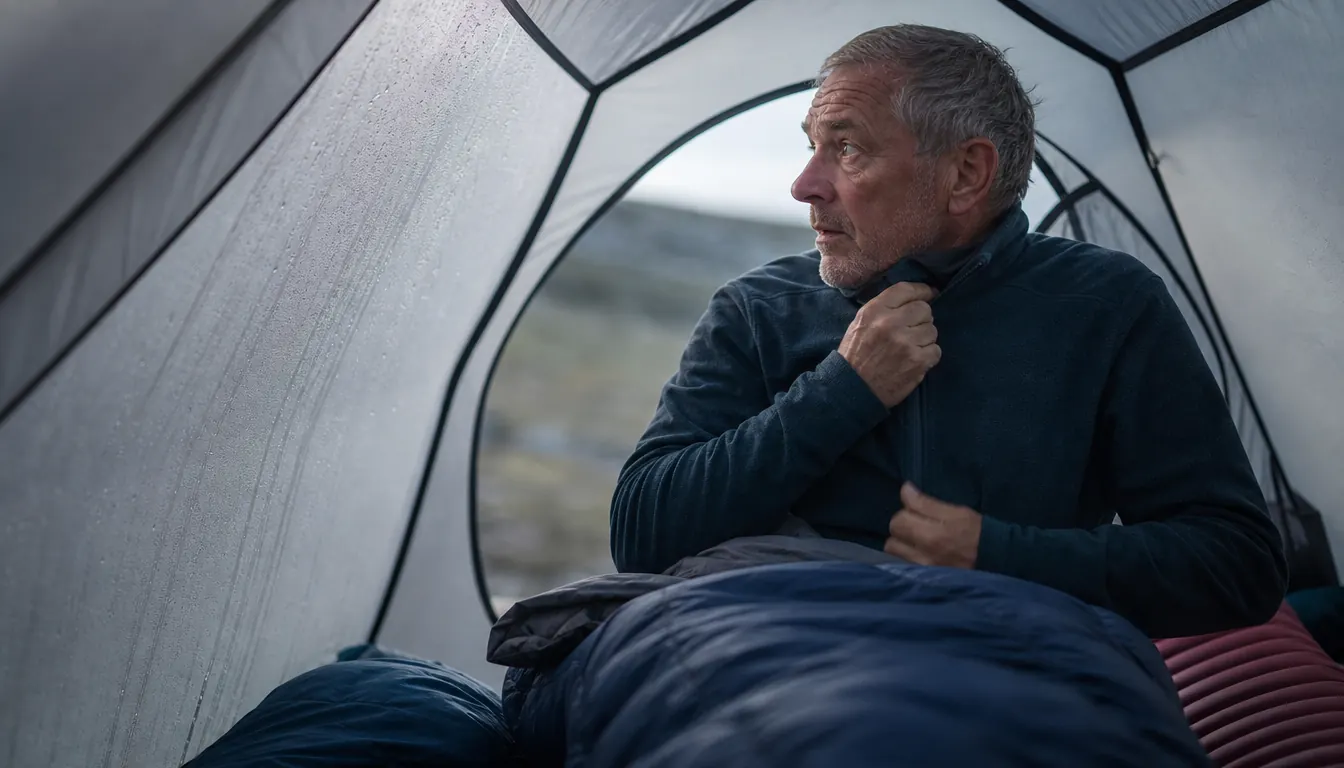
The short answer: if you camp the way I camp, the TETON Sports 20F sleeping bag is the one I would buy first. I have slept in it for about four seasons, mostly in the Uintas along the Mirror Lake Highway and on the Wasatch above Ogden, and it has never let me down in weather I should not have been out in anyway. A down bag is genuinely better at one thing, and that one thing matters if you are carrying your shelter on your back for ten miles. It is worse at two things that matter more to me, and one of those things is money.
I am 58 with a lower back that lets me know when I have overdone it, so I am not chasing grams. I want to sleep, wake up dry, and not spend the drive home doing math about what the bag cost. Here is how the two actually compare after real nights out.
| TETON Sports 20F | A down sleeping bag | |
|---|---|---|
| Insulation | Synthetic microfiber fill, survival rated to +20F | Goose or duck down, usually rated by fill power |
| Weight | 2.9 pounds | Often 1.5 to 2 pounds for a comparable rating |
| Packed size | Compression sack included, still bulky | Packs to roughly half the bulk or less |
| Performance when damp | Synthetic fill keeps loft when it takes on moisture | Down clumps and loses warmth when wet |
| Shape and coverage | Mummy cut, hood, zipper draft tube, vaulted footbox, 87 by 32 inches | Varies by bag, hood and draft collar common |
| Height fit | Maximum height recommendation of 7 feet | Usually sold in regular and long, and you must pick right |
| Care at home | I wash mine in a front loader on low heat and hang it dry | Needs careful washing and a slow dry, or the fill clumps |
| Price | Budget tier | Typically several times more |
| Best for | Car camping and one or two night backpacking trips | Long trips where every ounce is carried |
Where the TETON Sports 20F Wins
The first win is damp. Synthetic fill, and that is what the TETON Sports bag uses, does not collapse the way down does when it takes on moisture. I have packed that bag away on a morning when the tent wall was running with condensation, and I have slept in it after a day where my shell never fully dried. It was not glamorous. It was still warm. Two Septembers ago I walked out of a trailhead off the Mirror Lake Highway in a light drizzle, pitched wet, and crawled in that evening with the bag still slightly clammy from the hike. I shook it out, let it sit for an hour while I made dinner, and it lofted back up enough that I slept fine. A down bag in that same situation is a bag you have to babysit, and I do not want to babysit gear at 6 a.m. in September.
The second win is the fit and the forgiveness. The TETON bag is 87 inches long and 32 inches wide with a maximum height recommendation of 7 feet. I am 5 feet 11 and about 190 pounds, and there is room to turn over, which is the whole ballgame for a guy with a bad back. My first bag, a rectangular sack I bought in my twenties, had no hood at all and I finished every cold night with a jacket wrapped around my head. This one has a mummy hood that cinches down without pressing on my ears, a zipper draft tube that stops cold air running down the closure, and a vaulted footbox so I can pull my knees up to put on socks without the end going flat. Add a microfiber shell and synthetic fill that tolerate a home wash, and you have a bag you can own for years without treating it like an artifact.
The third win is honesty about what the number means. TETON rates this bag survival to +20F and comfort 20 to 30 degrees higher, and says so right on the listing. My coldest night in it was around 28F in the Uintas in late September, in base layers and a beanie, on an insulated pad, and I was fine. I woke once around 4 a.m. with a cold nose and pulled the hood in, and that was the extent of it. I would not want to push it to 20F and expect a warm night. But I knew that going in, because the company told me. That is worth something when you are buying gear you cannot test in a store.
The fourth win is that I do not worry about it. It gets stuffed into the compression sack on the trail and stored loose in a big cotton sack in the hall closet at home, and that habit has kept the loft decent through four seasons. Twice a year I run it through a front-loading machine on a low setting and drape it over the shower rod for a day. Nobody has to consult a care chart. If you have ever spent an evening reading forum threads about down detergent, you understand why that matters to me.
The bag that has kept me warm for four seasons
Mummy cut, hood, draft tube, vaulted footbox, survival rated to +20F, and a compression sack in the box. It is the bag I reach for when the forecast is uncertain.
Amazon Check Today's Price on Amazon →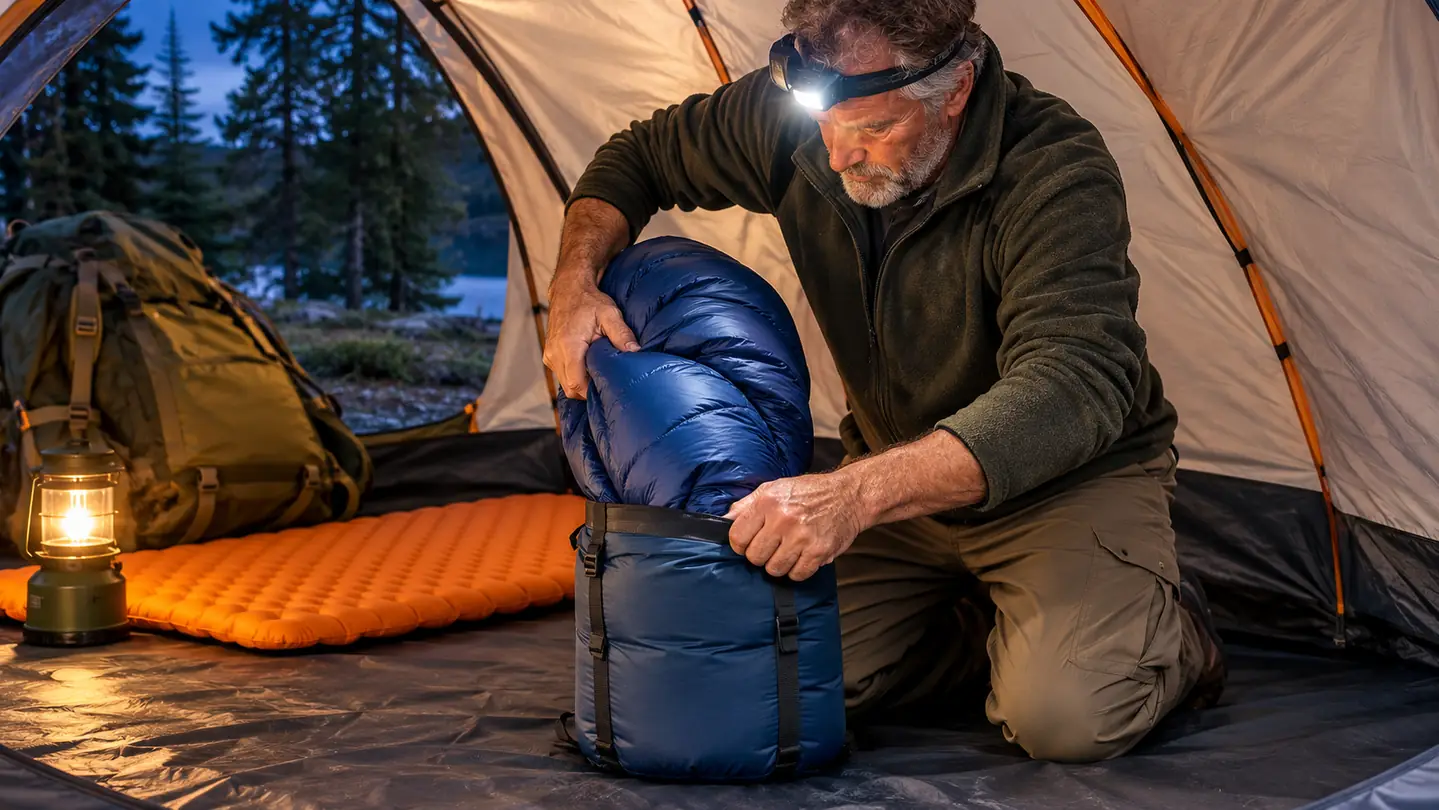
Where the Down Bag Wins
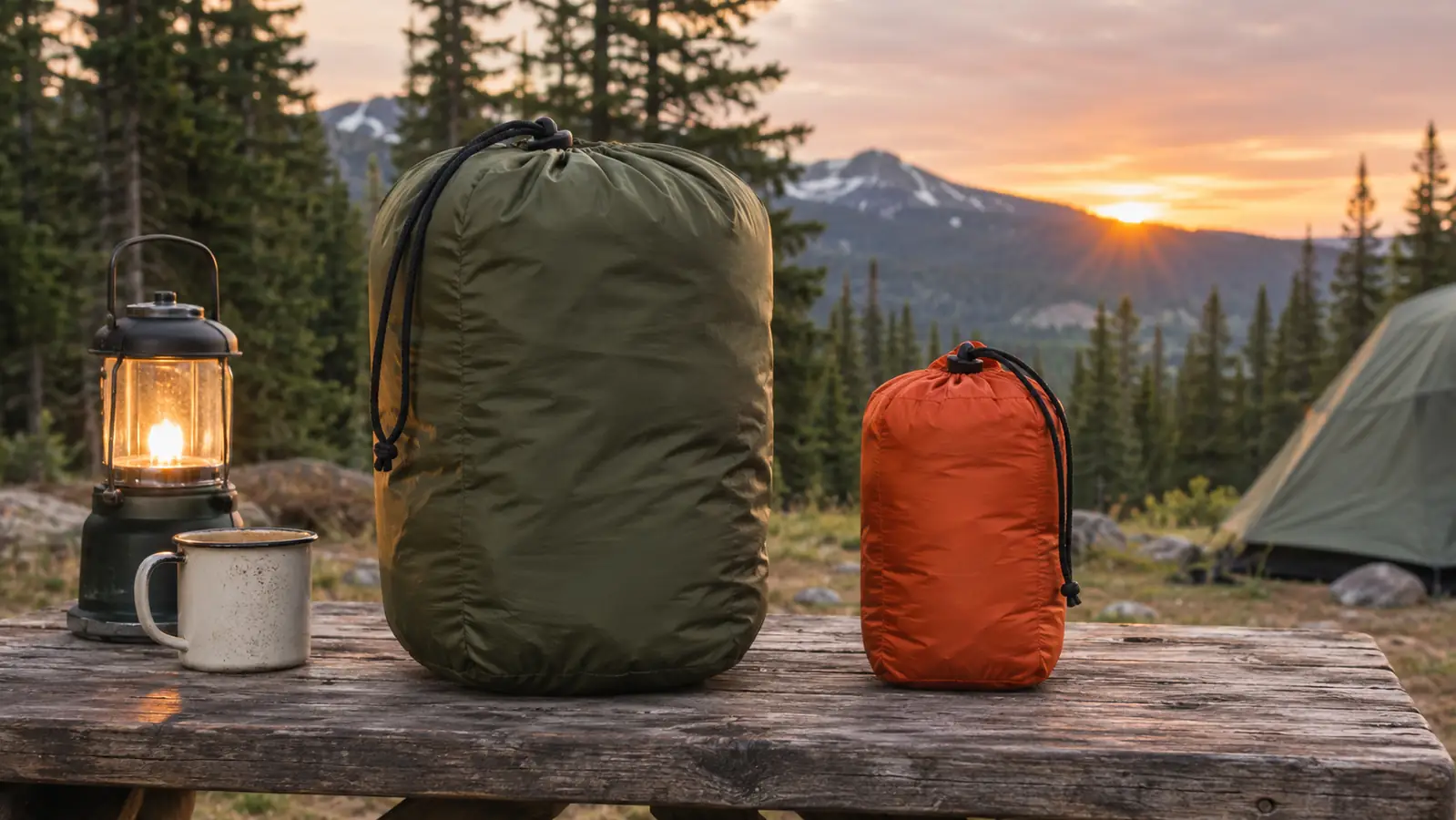
I will not pretend this is close on weight or bulk, because it is not. A comparable down bag often comes in around 1.5 to 2 pounds against the TETON's 2.9. If you are carrying your load for ten or twelve miles with elevation, that pound and a half is real, and it is the difference between a pack that rides well and one that grinds on your hips all afternoon. My friend Ray carries a down bag on our trips, and I have watched him stuff it into the bottom of a 45 liter pack in about forty seconds. My bag in its compression sack is a cylinder roughly the size of a gallon jug, and in a small pack it eats the space you wanted for food. On a two night trip I notice it. On a five night trip it would change how I packed everything else.
Down also lasts longer if you treat it right. A good down bag, cared for properly, can go fifteen or twenty years. Synthetic fill loses loft over time, and mine has softened a little after four seasons, though not enough to change how I use it. If you are 35 and backpacking twenty weekends a year, the longevity math changes. Buy the down bag, learn to wash it correctly, keep it in a cotton sack, and you will hand it to your kid. That is a real argument and I am not going to talk you out of it.
One more point in down's favor that gets undersold: at the same advertised rating, a good down bag usually feels warmer. The fill lofts higher, the draft collar sits closer, and you notice it in the first ten minutes when you get in cold and stiff. My TETON bag takes a while to come up to temperature on a cold night. I warm it with body heat and it gets there, but a down bag is quicker about it, and quicker is nice when you are tired.
My coldest night in it was around 28F in the Uintas in late September, in base layers and a beanie, and I was fine. I would not want to push it to 20F and expect a warm night.
How I Actually Use Both
My trips are short by design. Most weekdays I am caring for my mother, so a trip is one night or two, planned around a window that closes whether I am ready or not. That means I am usually out of the Tacoma at a Mirror Lake Highway trailhead with three or four miles to walk, not fifteen. At that distance, the TETON bag's bulk costs me almost nothing. I strap it under the lid or to the bottom of the pack and forget it. The last time out I was on the trail by 4 p.m., pitched by 6, and asleep before dark. That is the trip I take. A bag built around a 15 mile day is a bag built for someone else's life.
The rest of my system matters as much as the bag. My Gear Doctors Oxylus pad goes underneath, because a sleeping bag does not make warmth on its own, it traps what the pad and your body give it. I learned that one the hard way in summer 2023, on a thin closed-cell foam pad that left my lower back sore for three days afterward. I bought the Oxylus the next week and I have not had a bad night since. I sleep in a dry base layer, never the clothes I hiked in, even when it is cold and I am lazy. On cold nights the Sawyer Mini filter goes in the bag with me so it cannot freeze, and the beanie stays on. Those habits do more for a night's sleep than the difference between two bags with similar ratings.
For car camping with Carla, the calculation flips hard toward the TETON bag. Space is not a constraint in a truck bed, weight does not matter, and the bag gets used hard and washed afterward. She has a camp pillow and a book and no interest in hearing about fill power, and honestly she is right. A synthetic bag you can throw in a machine and hang over a chair is the right tool for that job. Nobody has ever had a bad night because their sleeping bag was not expensive enough.
Who Should Buy Which
Buy the TETON Sports 20F if you car camp, if your backpacking trips are one or two nights and under about six miles a day, if you camp in shoulder seasons where condensation and damp are normal, if you are a taller or broader person who wants room to turn over, or if you want a bag you can wash without a research project. Treat the +20F as a survival number, sleep in dry layers, use a real pad, and it will serve you for years. It is also the bag I would hand a teenager heading out on a scout trip, because it survives being treated like a duffel bag.
Buy a down bag if you are covering serious distance, if you backpack more than a handful of weekends a season, if you are counting ounces because your knees have opinions, or if you want one bag for the next two decades and will actually care for it. Those are good reasons. They are just not my reasons.
There is a middle path worth mentioning, since I get asked. Some people own both. They keep a synthetic bag for truck camping and wet forecasts, and a down bag for the longer trips they take once or twice a year. If you camp enough to justify it, that is the cleanest answer of all, and it is what Ray does. If you camp the way most of us actually camp, one bag is enough, and the budget synthetic one leaves room in the truck for a better pad.
One more thing. If you are new to this, do not buy a bag at the edge of its rating and expect a warm night at the number printed on the label. Whatever you choose, add a pad with some insulation value, sleep dry, and eat something before bed. That is most of the battle, and no bag will win it for you.
Four seasons, one bag, no surprises
Synthetic fill that handles damp mornings, a hood and draft tube that seal the cold out, and a mummy cut with room to move. Check the current price and read the reviews from people who camp like you do.
Amazon See Today's Price on Amazon →