
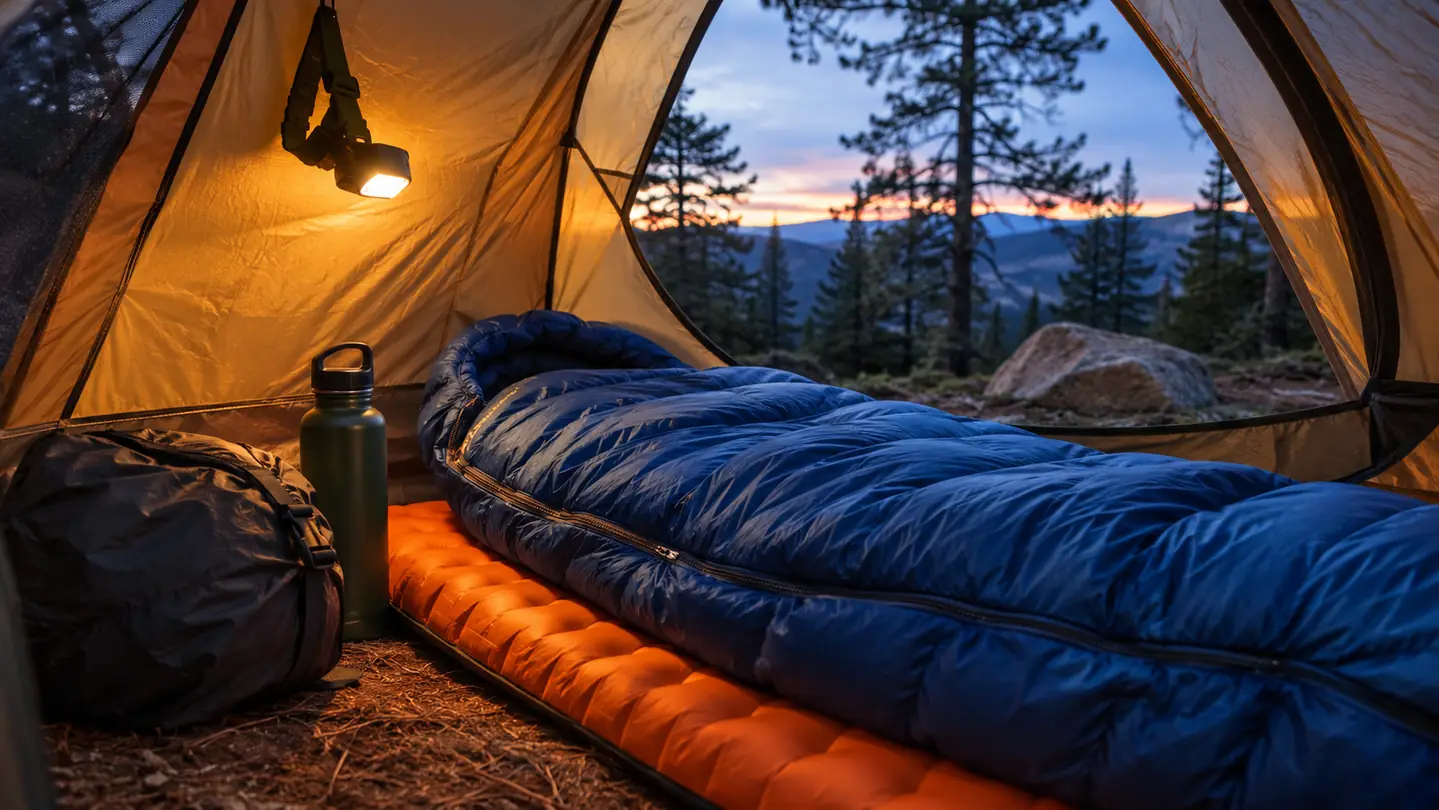
Most weekend trips do not fall apart on the mountain. They fall apart at two in the morning, when you are flat on your back in a tent listening to wind move through the pines, and you are cold. I have had that night. I have also had the drive home after it, telling Carla I was done buying camping gear for a while.
I bought a TETON Sports 20F mummy bag in the fall of 2022, mostly because I was tired of hauling a heavy rectangular bag up the Mirror Lake Highway and tired of being cold once I got there. Four seasons later it still lives loose in a cotton sack in the hall closet and still comes out for every shoulder-season trip. Here are ten reasons a synthetic bag like this one earns its place on short trips, and a few honest notes about where it does not.
The bag that got me through a 28-degree night in the Uintas
Synthetic fill, a mummy hood, and a 2.9-pound carry weight. Four seasons of short trips on the same bag.
Amazon Check Today's Price on Amazon →Synthetic fill keeps working after a damp night
The Uintas in late September are wet. Not pouring, just wet. Condensation on the inside of the tent, dew on the fly, a water bottle that leaked in the pack. Down loses loft when it takes on moisture and takes its time getting it back. The microfiber insulation in this bag does not care. A damp shell is an annoyance, not a ruined trip. I have packed up on a morning when the foot of the bag was clammy and slept in it again that same night without doing anything special to it.
A vaulted footbox means your toes are not jammed into a wall
Most mummy bags taper to nothing at the bottom and your feet end up pressed flat against the end of the bag all night. This one has a vaulted footbox, which is a small detail that matters more the older you get. I sleep on my back most of the night because of my lower back, and my feet want a little room to shift. The footbox gives them that. My old rectangular bag was roomier everywhere and colder everywhere. I would make that trade again.
The hood and draft tube do the work a beanie cannot
You lose heat through your head and neck, and cold comes in along the zipper. The mummy hood on this bag pulls in around your face, and the zipper draft tube runs behind the closure so the seam is not the weak point. On the coldest night I have spent in it, around 28 degrees in the Uintas in late September, I was in base layers and a beanie and I was fine. Not toasty. Fine. That is what I want from a bag at that temperature.
87 by 32 inches is room for an adult who rolls over
The listed dimensions are 87 inches long by 32 inches wide, and the manufacturer recommends it for people up to 7 feet tall. I am 5 foot 11 and about 190 pounds, so I am not testing the limit, but I can roll from my back to my side without the bag dragging me into a knot. That was not true of a tighter bag I borrowed from Ray once. If you are a bigger person, length and width matter more than fill type, and this bag has both.
2.9 pounds is a weight I will actually carry
The bag weighs 2.9 pounds. That is not ultralight and I am not going to pretend otherwise. But my trips are one or two nights, most of them under eight miles in, and I have a stiff lower back and a left knee that complains on descents. I will carry 2.9 pounds of sleep if it means I wake up able to hike out. The bags that weigh less are built for people who count grams on a spreadsheet, and I am not that person anymore.

The compression sack comes in the box
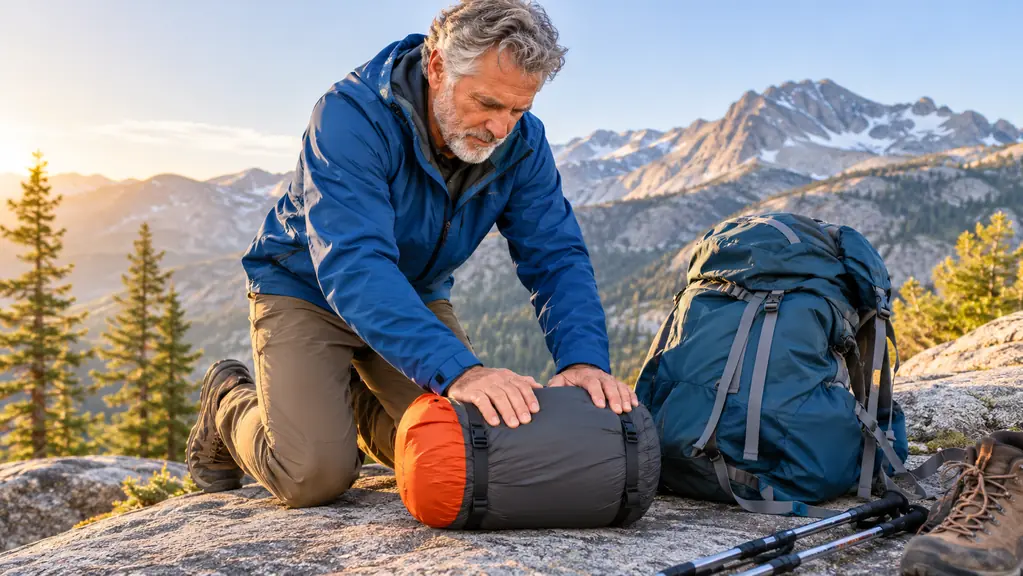
The bag ships with a compression sack, which sounds minor until you have bought a bag and then gone hunting for a sack that actually fits it. Mine straps to the bottom of my pack and rides there without much fuss. At home the bag stays loose in a large cotton storage sack in the hall closet and the compression sack stays with the pack. Loose at home, compressed on the trail. That split is how I have kept this bag lofting for four seasons.
The temperature rating tells you the truth if you read it right
TETON lists this bag as survival rated to +20F, with a comfort rating 20 to 30 degrees higher, and the listing says plainly that you will sleep warmer with a pad under you and a hat on your head. I treat 20 as the number where the bag keeps me alive, not the number where I am comfortable. Practically, that makes it a three-season bag in the Uintas if you plan. If you want to be warm at 20 degrees, this is not the bag, and buying it expecting that is how people end up cold and annoyed.
Storage does not require a ritual
Down needs to be kept dry and loose and checked on now and then. Synthetic fill is more forgiving. Mine sits in a cotton sack in the hall closet for eight months a year and gets stuffed into the truck for the rest of it. I shake it out when I pitch it and it lofts back up. I am not going to claim synthetic lasts forever, because it does not, and the loft will slowly go. But four seasons in, I have not seen the flat spots I expected to see.
It crosses over from backpacking to truck camping
Carla does not backpack, so our trips together are truck trips, and the TETON comes along in the Tacoma. It is a mummy bag, so it is not the roomiest thing to sit in by a fire with your boots off, but inside the tent it does the same job it does on the trail. One bag covering both kinds of trips means I am not storing two bags and standing in the garage on a Thursday night deciding between them.
Four seasons in, it is still the bag I reach for
I bought this bag in the fall of 2022. It has been up the Mirror Lake Highway more times than I can count, out toward Moab twice in the spring, and through a couple of cold nights I did not plan well. It is not perfect, and I will get to that. But when I am packing on a Friday afternoon with a two-night window before I need to be back with my mother on Monday, I do not think about the sleeping bag at all. That is the highest thing I can say about a piece of gear.
On the coldest night I have spent in it, around 28 degrees in the Uintas, I was in base layers and a beanie and I was fine. Not toasty. Fine.
What I'd Skip
What I would skip is buying a bag for a trip you take once a year. If you camp in July and August and nothing else, a 20F synthetic mummy is more bag than you need and you will sleep hot in it. I would also skip the idea that a warmer bag by itself solves a cold night. Insulation under you matters as much as insulation over you, and my back made that point to me in 2023 in a way I did not enjoy. And if you are covering long miles in real cold, a synthetic bag at this weight is the wrong tool. Borrow or rent a down bag for that trip instead of talking yourself into this one. The honest cons on this bag, for me, are that the mummy taper is snug if you sleep on your side with a knee drawn up, and it is bulky enough that I would not want to carry it on a trip longer than two nights. It is a weekend bag. It is very good at being a weekend bag.
If your trips are one or two nights, this is the bag that fits them
Synthetic fill, a mummy hood, 87 by 32 inches of room, and a compression sack in the box. Four seasons of use on the same bag, with the cons written down right above this.
Amazon Check Today's Price on Amazon →