
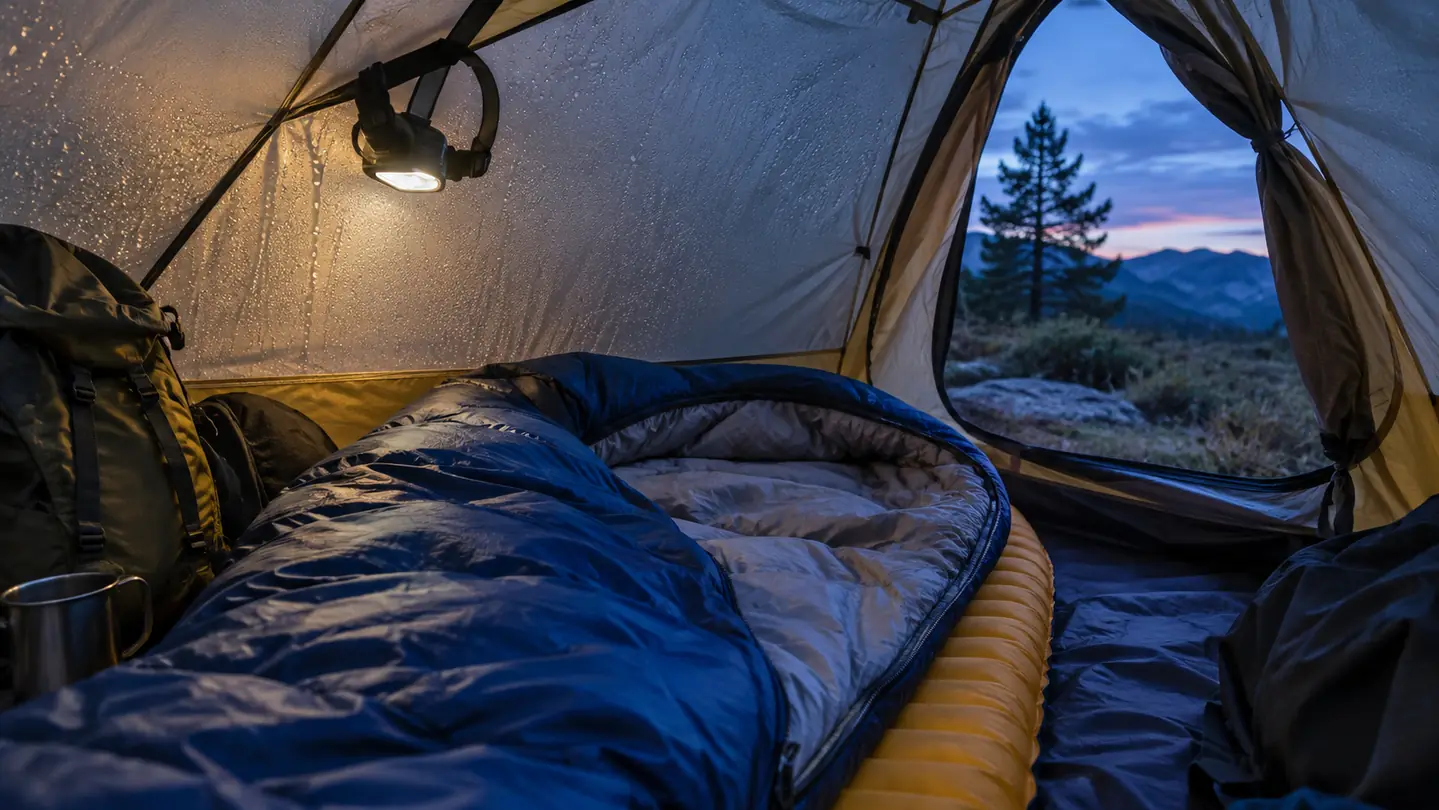
The first night I slept in the TETON Sports 20F mummy bag, I woke up at two in the morning with cold feet and tight shoulders. That part was familiar. What was different was that the bag had done its job and I had not. I crawled in wearing a t-shirt and shorts because the evening along the Mirror Lake Highway had been mild and pleasant, and 28 degrees does not care how pleasant the evening was. I pulled on the base layers I should have worn from the start, worked the hood down over my beanie, and slept until the alarm. That was late September, three seasons ago. I still have the bag, still pack it, and still think about that night every time somebody asks me whether a 20 degree bag is warm enough.
I bought the TETON Sports bag in the fall of 2022. My old bag was a heavy rectangular thing from the 1990s that weighed more than my tent and left my lower back sore from wrestling it back into its sack every morning. I wanted something for shoulder season in the Uintas, roughly June through early October, plus the occasional cold night in the Wasatch above Ogden. I am 5 feet 11 inches, about 190 pounds, I sleep cold, and my left knee complains on long descents, so I am not the guy shaving grams off his load. I am the guy who wants to sleep through the night and wake up with dry socks.
The Quick Verdict
A genuinely warm bag for cold shoulder-season nights, as long as you read 20F as a survival number and plan your layers around the comfort rating the listing actually prints.
Amazon Check Today's Price →The bag that stays packed in the truck from June through October
Four seasons on the same TETON Sports 20F bag and it still goes into the truck first for any Uinta trip. Check today's price and the current size options on Amazon.
Amazon Check Today's Price on Amazon →How I've Used It
Four seasons now, mostly in the Uintas along the Mirror Lake Highway corridor, a couple of trips in the Wasatch above Ogden, and two spring nights near Moab when the desert dropped faster than the forecast said it would. My trips are short. I spend most weekdays caring for my mother, so I get a one or two night window and I take it. That means I am not testing this bag on a thru hike. I am testing it the way most people reading this would use it: drive to a trailhead, walk in a few miles, sleep, walk out, go home and mow the lawn.
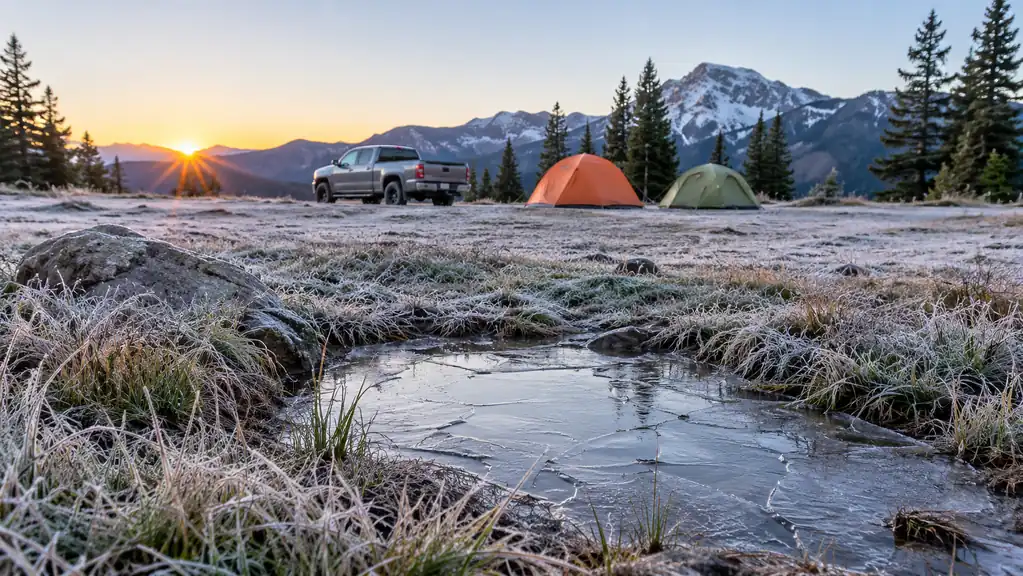
The coldest night I have spent in it was right around 28 degrees in late September, on a night where the puddles at the trailhead had skim ice on them by morning. I had a long sleeve base layer, a beanie, and wool socks on. I was comfortable enough to sleep, not exactly toasty. I woke once around four in the morning, pulled the hood tighter around my face, and went back under. That is the honest version of what a 20 degree bag does at 28 degrees for a 58 year old man who sleeps cold and has a back that files complaints.
The rest of the time it has been easy. I use it on top of the Gear Doctors Oxylus pad I bought in the summer of 2023, after a night on thin closed cell foam left my back sore for days. The two work together. The bag insulates above and around you, the pad insulates underneath, and anybody who tells you the bag does all of that work has never woken up at 30 degrees with a cold spot under his hip. On the Oxylus I sleep through the night in this bag down to about 32 or 33 degrees without much fuss, and for a man my age that is the whole point.
What a 20F Rating Actually Means
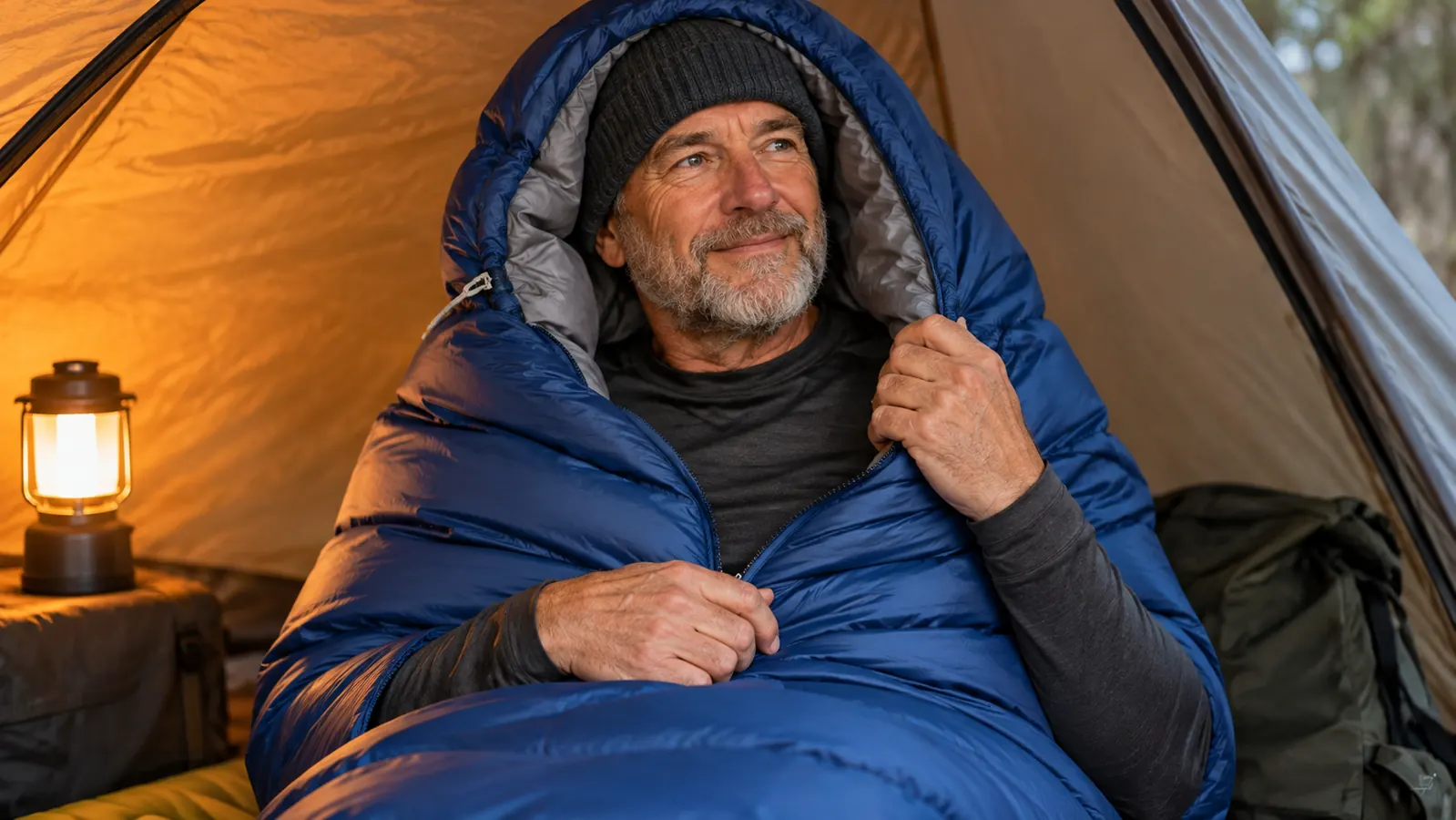
Here is the part the listing tells you and a lot of buyers skim right past. The TETON Sports bag is survival rated to plus 20F, and the comfort rating runs 20 to 30 degrees higher than that. Read it again. Survival rated is the number where you are probably not in danger. Comfort rated is the number where you actually sleep. TETON puts that in the product copy in plain language, which is more honesty than most sleeping bag listings give you, and it is the single most useful sentence on the page.
My experience matches it. At 28 degrees with base layers on, I slept. At 35 degrees in a t-shirt I slept fine. I would not want to be in this bag at 20 degrees in a t-shirt, and I would not want to be in it at 20 degrees at all without a plan, meaning long johns, a hat, a warm pad, and a full stomach. Treat the 20 on the label as the floor of the bag's ability, not the middle of its range, and you will be happy with it.
That is not a knock on TETON. It is how sleeping bag ratings work across the industry, and any bag that says 20 degrees means something roughly similar. The difference is that a company willing to print the comfort offset right there in the bullet points is telling you the truth up front. That is worth something when you are standing in a store aisle or scrolling a listing at eleven at night trying to decide whether to spend the money.
The Details That Matter at Two in the Morning
The hood is the part I notice most. It is a mummy hood with a drawcord that pulls down around your face, and on a cold night that is where a big share of your warmth comes from. I wear a beanie under mine and pull the opening down until it is roughly the size of my face. Leave it loose and you will feel the cold on your cheeks, and you will lie there awake, which is the exact problem you bought the bag to solve.
The zipper has a draft tube behind it, and that tube is the second thing you notice. Zippers are where cold air gets in on a cheap bag, right along the length of the opening. I have slept in bags where the draft tube folded the wrong way at three in the morning and I spent twenty minutes fighting it with cold hands. This one has stayed put for four seasons. I cannot tell you the engineering reason, only that it works.
The footbox is what TETON calls vaulted, meaning it is shaped and has some structure instead of tapering to a flat point, so your toes are not jammed into a corner all night. I am 5 feet 11 inches and the bag is 87 inches long, so I have room to spare, and the listing says it fits up to 7 feet. I believe it. The 32 inch width at the shoulders is snug on me at 190 pounds, which is how a mummy cut is supposed to feel, but if you are broad shouldered or you sleep on your side with your knees drawn up, go in knowing it is a mummy and not a rectangular bag.
What It Costs You in the Pack
It weighs 2.9 pounds. That is not ultralight and I am not going to pretend it is. If you are counting ounces for a long hike, this is not the bag you want, and there are down bags that weigh half as much. But I have carried it on two night trips with the Naturehike Cloud-Up 2 tent and the Oxylus pad, and my pack came in around 30 pounds with food and water, which my back can live with. That is the trade I made, and I would make it again.
The shell is ripstop polyester and the fill is synthetic microfiber. Synthetic does not pack as small as down and it is heavier for the same warmth, and there is no way around that. What it does do is keep working when it is damp. In the Uintas in September, damp is not a hypothetical. I have packed up in fog and rain more than once, and a synthetic bag that gets a little wet still holds some loft. A down bag that gets soaked is a bad afternoon turning into a bad night.
It comes with a compression sack, and compressed it lands roughly the size of a small watermelon, which fits fine in the bottom of my pack. The rest of the year it lives loose in a large cotton storage sack in the hall closet. That part matters more than people think. Leave a synthetic bag crammed in its compression sack for eight months and it will not loft back the way it should, and then you will blame the bag for something you did to it.
How It's Held Up After Four Seasons
Four seasons, somewhere around fifteen nights. No tears. The ripstop shell has a couple of scuffs from being dragged across granite at a lake camp, but nothing has opened up. The zipper still runs clean and I have never had to wax it. The insulation has not shifted or clumped, which is the failure that eventually kills synthetic bags, and I credit storing it loose for that more than anything else. If you take one thing from this review, take that.
The one thing I would change is the packed size. Even compressed it takes up more room than a comparable down bag, and on a trip where I am carrying food for two nights, the bag is the biggest single item in my pack. I also find it is more bag than I need in July. At lower elevation on a warm summer night I end up sleeping on top of it with the zipper open, which means I carried 2.9 pounds for nothing. That is not a defect. It is just a reminder to match the bag to the season you actually camp in.
What I Liked
- Comfortable down to roughly 32F for a cold sleeper using a proper pad
- Hood, draft tube and vaulted footbox all do real work once it drops below freezing
- Synthetic microfiber fill keeps some loft when the bag gets damp
- 87 inches long and rated to fit sleepers up to 7 feet
- Four seasons in with no tears, no shifted insulation and no zipper trouble
- Compression sack included, and it packs to a manageable size
Where It Falls Short
- 2.9 pounds is heavy for backpacking and it packs larger than down
- The 20F figure is a survival rating; comfort sits 20 to 30 degrees warmer
- The 32 inch mummy cut is snug for broad shoulders and committed side sleepers
- More bag than you need for summer camping at lower elevations
The 20 on the label is the floor of what the bag can do, not the middle of its range. At 28 degrees with base layers on, I slept. In a t-shirt, I would not have.
Who This Is For
This bag makes sense for a car camper or a short-trip backpacker who goes out in shoulder season and wants one bag that covers June through October without a lot of fuss. It makes sense if you sleep cold, if you are tall, and if you would rather carry three pounds and sleep than carry a pound and a half and shiver until dawn. It makes sense if your trips are one or two nights, planned around a tight window, and you want to spend that window unconscious instead of adjusting a hood all night.
It also makes sense if you are buying for a teenager or a young adult who is hard on gear. Synthetic fill and a ripstop shell forgive a certain amount of neglect, and the price is not what a down bag costs. I would still tell them to store it loose and keep the compression sack for the trail only, because that is the difference between four seasons and ten.
Who Should Skip It
Skip it if you are counting ounces for a long backpacking trip. 2.9 pounds and a bulky packed size will bother you every single day on the trail, and there are lighter options where the money is well spent. Skip it if you camp mostly in July and August at lower elevations, because you will end up sleeping on top of it and hauling the weight for nothing. Skip it if you are broad shouldered or a committed side sleeper, because a 32 inch mummy cut will feel tight and there is no shame in a wider bag.
And skip it if you are planning a winter trip at 10 degrees. This bag cannot do that, and no stack of base layers will make it do that. Buy a bag rated for the temperatures you will actually see, not the temperatures you imagine when you are excited about the trip. I have made that mistake with other gear and it always ends the same way, at two in the morning, cold, negotiating with myself.
Four seasons in and it still gets packed first
If your trips are short, cold and planned around a window, this is a bag that will get you through the night without a fight. Check today's price and the current size options on Amazon.
Amazon Check Today's Price on Amazon →