
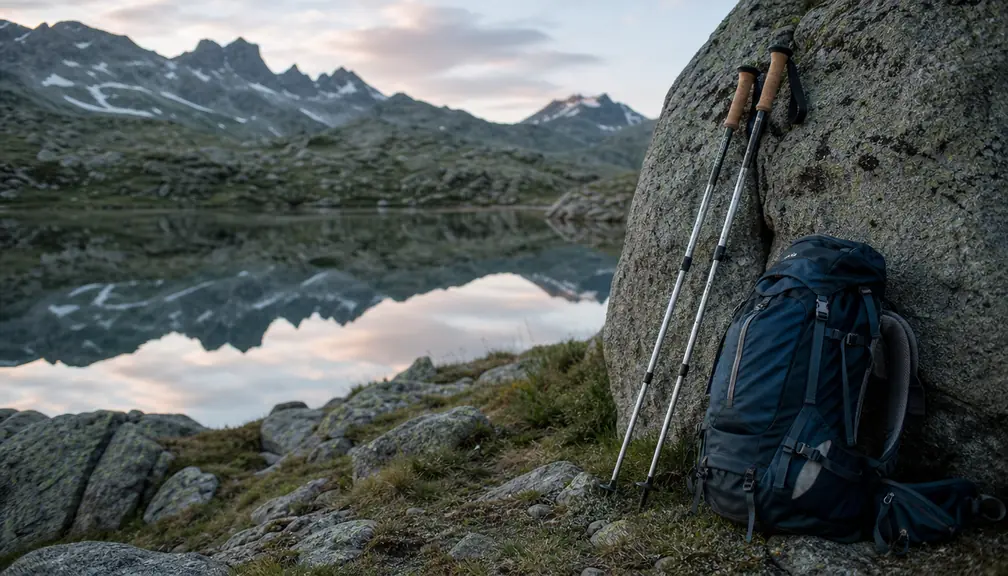
The short answer: I carry the Cascade Mountain Tech trekking poles and I have for three seasons. If you are over 40, hauling a loaded pack on one or two night trips, and your knees start negotiating with you on the way down, these are the pair I would hand you. They adjust from 26 to 54 inches, they lock without tools, and when a tip catches in a root they bend instead of exploding. Carbon fiber poles are lighter and they pack down smaller. That is not nothing. It is just not the thing that decides whether you enjoy Sunday morning.
Quick context on who is writing this. I am 58, I live in Ogden, Utah, and my camping is short: one or two nights in the Uintas off the Mirror Lake Highway, a few weekends on the Wasatch above town, and a spring trip to the desert near Moab when the timing works. I have a stiff lower back and a left knee that complains on long descents. In summer 2023 I bought the Cascade Mountain Tech poles after a descent in the Uintas left that knee swollen for a week. My friend Ray bought a carbon pair the same summer. I have borrowed his. So this comparison is not lab data. It is three seasons on one pair and a handful of trips on the other.
| Cascade Mountain Tech | Carbon Fiber Poles | |
|---|---|---|
| Shaft material | 6061 aircraft-grade aluminum | carbon fiber |
| Weight | 10.08 ounces per pole | lighter in the hand, and you feel it on the swing |
| Packed length | collapses to 26 inches | usually folds shorter, easier to strap to a daypack |
| Adjustability | 26 to 54 inches, quick flip lock, no tools | many models are fixed length or adjust in a narrow range |
| Grip | cork and EVA with a long lower section to choke down on climbs | varies by model, many are a single fixed grip |
| Tips and baskets | tungsten carbide tips plus rubber tips, mud baskets, snow baskets and a tip kit in the box | carbide tips, baskets vary and are sometimes sold separately |
| After a hard fall | bends, and you can straighten it enough to walk out | can crack and fail at a joint |
| Cost | generally less than a carbon pair | generally more than an aluminum pair |
| Warranty | limited manufacturer's warranty | varies by brand, read it before you buy |
| Best for | loaded packs, rough ground, one or two night trips | fast miles with a light pack |
How I Compared Them
Not with a scale in a lab. With a truck, a loaded pack and a knee that tells me the truth.
I have used the Cascade Mountain Tech pair on every backpacking trip since summer 2023, both poles on every descent, shortened a few inches going downhill. They live collapsed behind the seat of my 2014 Tacoma, which means they also come along on car-camping weekends with Carla, where they mostly get used to prop up a tarp and poke at the fire ring. That is not glamorous, but it is how gear actually gets used.
The first honest test came on a September morning out of a trailhead on the Mirror Lake Highway. It was 34 degrees at the truck and I had thin gloves on. The first two miles climb, so I wanted both poles short. I flipped the two quick locks, dropped each pole about three inches, and kept walking. At the top, before the descent, I flipped them back out and added the length for the downhill. That took maybe twenty seconds, with a loaded pack on and cold hands. Ray was still working on his. That is not a laboratory result. It is the difference between adjusting your gear and stopping to adjust your gear, and on a trip planned around a tight window, stopping is the thing I have the least of.
The carbon comparison comes from Ray. He bought a carbon pair the same summer, and I have borrowed them on four trips, including a rocky stretch above Ogden and one long descent in the Uintas I would rather not repeat. Ray is lighter than me, walks faster, and does not have my knee, so I tried to judge the poles and not the man. Some of what follows is measurement. Some of it is just two guys standing at a trailhead swapping gear and giving an opinion.
I did not weigh anything on a kitchen scale and I did not measure swing weight with a gauge. What I measured was simpler: how many times I had to stop and fiddle, how my knee felt the morning after a descent, and whether anything broke. Three seasons is enough time to have an opinion about those three things.
Where Cascade Mountain Tech Wins
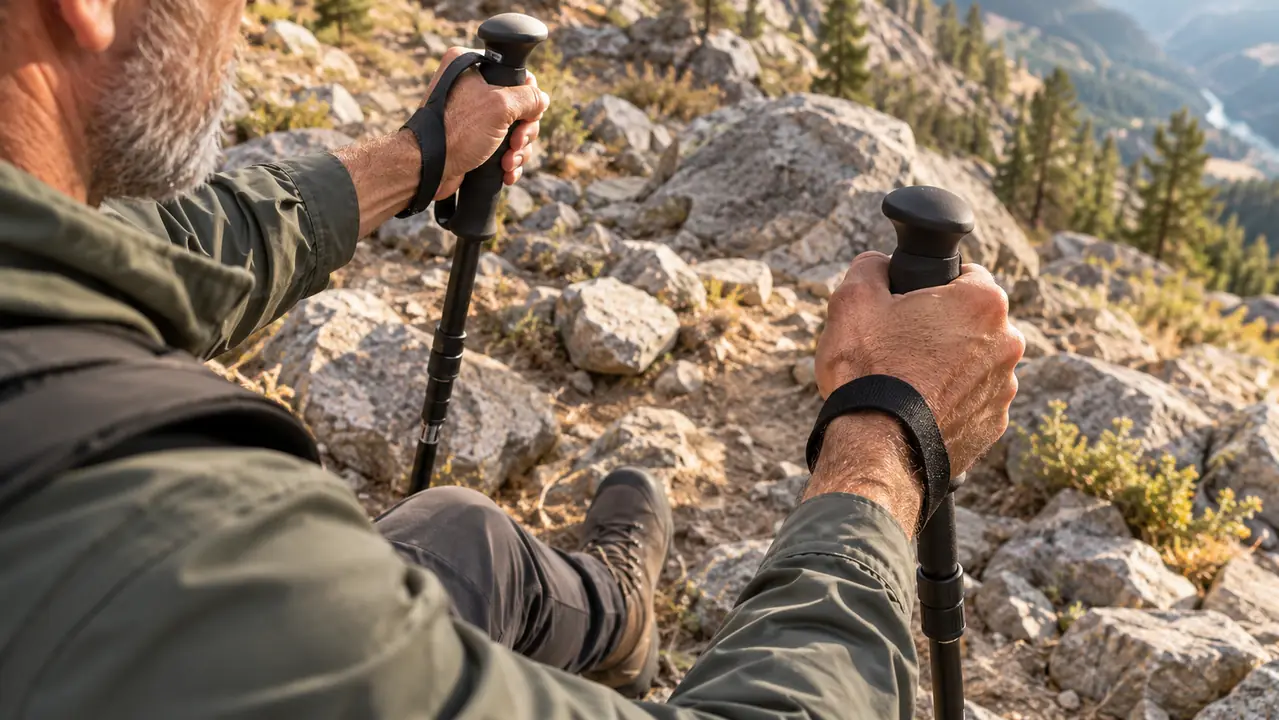
The adjustment range is the part that matters most and the part nobody puts in a spec comparison. These go from 26 inches to 54 inches, and the lock is a quick flip: no twisting, no tools, no swearing. Uphill I want them short. Downhill I want them long. With a flip lock I can change both while walking, with gloves on, without breaking stride. Ray's carbon poles adjust in a much narrower window, and his adjustment takes more attention than mine does. We stop. He fiddles. I wait.
The extended lower grip matters more than the spec sheet makes it sound. On a steep climb, or when a rock step turns into a scramble and I want one hand free for a second, I choke down onto that lower section and push from there instead of shortening the pole. On the descent into a basin in the Uintas last August I probably used the lower grip a dozen times in a mile. Ray's poles have a much shorter grip section, so he shortens the pole instead, which means he stops. Both approaches work. One of them keeps me moving.
The grip is cork and EVA with that long lower section, and the lower section is the reason I would not go back to the rubber-grip pair I borrowed. In the box you get tungsten carbide tips, rubber tips, mud baskets, snow baskets, a tip kit, a clip and a carry bag. I have replaced one rubber tip in three seasons and the carbide is still biting.
Here is the honest difference between aluminum and carbon. Aluminum bends. Carbon cracks. One morning on a talus slope in the Uintas, the left tip jammed between two stones the size of dinner plates and the pole took my full weight at an angle it was never built for. It bent, maybe ten degrees, just below the middle section. I stopped, held the bend against a boulder, leaned on it with both hands, and got it back to nearly straight. Then I finished the day on it. A carbon pole in that same moment is a different story. It does not bend, it cracks, and a cracked pole is finished. I have seen one come apart at a trailhead, a shaft split just above the lower section, and the owner carried it out strapped to his pack instead of walking on it. That is the trade in one sentence: aluminum costs you a little weight, carbon costs you a little margin. The Cascade poles are 10.08 ounces each. That is not a feather, but it is not an anchor either, and I have never once finished a day thinking about the difference.
Three seasons, one replaced rubber tip, zero failures, and a flip lock I can work with gloves on. That is the whole case.
Where Carbon Fiber Wins
Carbon is lighter and you feel it in the first hundred yards. The swing is quicker, the recovery is easier, and if you walk with any rhythm at all, carbon keeps that rhythm better than aluminum does. Ray hands me his poles at a trailhead and I notice. There is no argument to make here. On a long day, lighter poles are a real pleasure.
They also pack smaller. A carbon pair folds down tighter than the 26 inches my Cascade poles collapse to, which matters if you are strapping them to a daypack for a trip where you only want them for one section. Carbon takes some of the chatter out of rocky ground, too. On a long stretch of embedded rock, my hands feel more of the trail than his do.
Ray handed me his pair at the start of a climb out of a basin in the Wasatch in August, and I noticed the difference before we had gone a hundred yards. The poles are lighter in the hand, they come back quicker, and the rhythm is easier to hold. I climb slower than Ray does and even at my pace the lighter swing was pleasant. His poles also break down smaller, which is the real advantage on a trip where the poles ride on the pack for most of the day instead of in your hands. On the long apron of embedded rock above the basin, his took some of the chatter out of the ground that mine pass straight along to my wrists.
Where I stop agreeing is the assumption that lighter is always better. The weight gap between these two pairs is measured in ounces, and my pack, my water and my sleeping pad are all heavier than they need to be. Saving a few ounces on poles while carrying a heavier pack, a heavier bag and a heavier pad is not a weight strategy. It is a feeling. The feeling is nice. It just does not get me up the trail.
The pair I actually carry, three seasons running
The Cascade Mountain Tech poles adjust from 26 to 54 inches, lock without tools, and come with carbide tips, rubber tips, mud and snow baskets and a tip kit. Two poles, a carry bag and a clip, living behind the seat of my truck.
Amazon Check Today's Price on Amazon →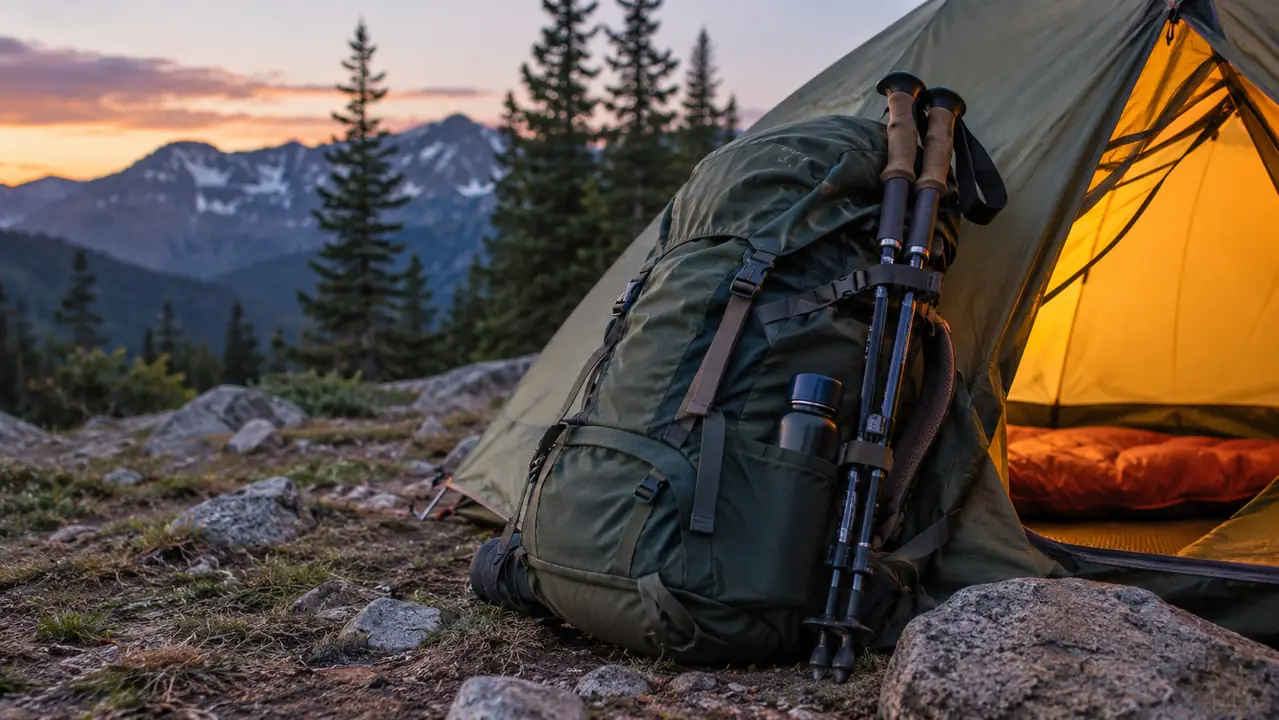
What Still Bugs Me About the Cascade Mountain Tech Poles
The folded length is 26 inches and that is longer than I would like. They do not slide into my pack cleanly, so I usually strap them outside, and on a brushy stretch they snag. If I were doing trips where the poles ride inside the pack all day, that would bother me more than it does.
The cork gets slick when it is wet, so I dry my hands on my pants before a long descent. The flip locks need a glance to make sure they are seated, especially in cold weather when my fingers are stupid. And 10.08 ounces per pole is honest weight, not carbon weight. Nobody is going to call these featherweight. They are just dependable, which is a different compliment.
Who Should Buy Which
Buy the Cascade Mountain Tech poles if your trips look like mine. One or two nights. A pack that is heavier than a forum would approve of. Rough ground, long descents, a knee or a back that has opinions. You want to set the length and forget it, you want a lock you can work with gloves, and you want a pole that fails by bending rather than by cracking. You are not counting grams, and you would rather spend the difference on a better night's sleep.
The question I would ask myself is what my Sunday morning looks like. If it looks like mine, four or five miles down a rocky trail with a loaded pack and a knee that has already told you what it thinks, then the pair that adjusts easily and takes a hit and keeps going is the pair you want, and the weight is not the deciding factor. If your Sunday looks like Ray's, twelve or fifteen miles with a light pack, mostly on established trail, and you care about how the poles feel in your hands over the last three miles, then carbon is a reasonable thing to spend on. Neither of those is more serious than the other. They are just different trips, and it took me two seasons to stop pretending otherwise.
Buy carbon fiber if you are covering big miles with a light pack, you notice swing weight, and you want the poles to disappear into a daypack. That is a real use case and carbon serves it well. Just go in knowing what you are trading: a narrower adjustment range on many models, a higher cost, and a shaft that does not forgive a hard fall. If your trips are once or twice a season on established trail, that trade is easy to live with. If you are heavier, slower and harder on gear, it is not.
For the trips I actually take, aluminum wins
Loaded pack, rocky descent, a left knee that files complaints. The Cascade Mountain Tech poles have handled three seasons of that without a failure. Check the current price and the available options before your next trip.
Amazon Check Today's Price on Amazon →