
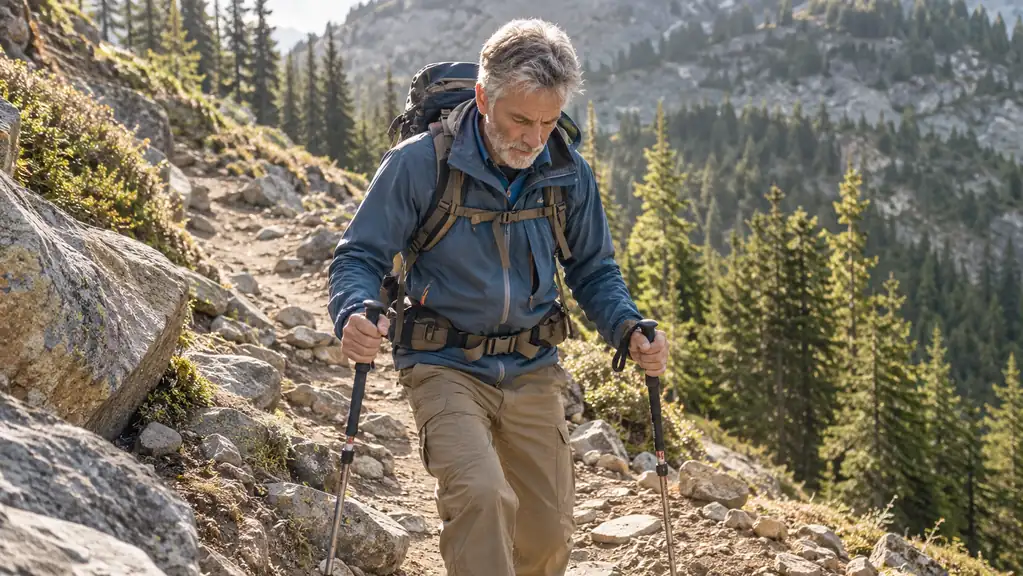
I have a left knee that keeps a grudge. It started on a long descent in the Uintas in the summer of 2023, and by the time I got back to the truck the joint was swollen and hot and stayed that way for the better part of a week. I am 58. I am not built like a mountain goat, and most of my trips are one or two nights squeezed between weekdays spent looking after my mother. I cannot afford to lose a month to a cranky knee.
So I bought a pair of Cascade Mountain Tech Trekking Poles and started using them on every downhill, both hands, no exceptions. Three seasons later the knee still complains on a big descent, but it no longer swells, and I no longer spend the drive home wondering whether I have wrecked something. Here are ten reasons that happened, in the order I noticed them.
My left knee filed a complaint in 2023. This is what I bought in response.
Aircraft-grade aluminum, adjustable from 26 to 54 inches, cork and EVA grip, tungsten carbide tips with rubber boots included. Three seasons of hard use behind mine.
Amazon Check Today's Price on Amazon →They move the braking from your leg to your arms
On a descent, every step lands on one leg and that leg is braking. Do it for an hour and the front of your thigh burns and the knee starts taking the slop. Poles give you two more contact points, so part of that braking moves up into your arms and shoulders. I am 5 feet 11 and about 190 pounds, and at the bottom of a long downhill my legs now feel tired instead of destroyed. Tired is fine. Destroyed is what cost me that week in 2023.
Two poles beat one pole, every single time
I tried the single-pole thing for one trip and it made me walk crooked. With one pole you lean, you favor a side, and your good hip starts picking up the extra work. With two, you plant them alternately and your stride stays even, which matters more than any weight savings. If your knee is the reason you are reading this, buy the pair and use the pair. Half a solution is still a limp.
You can shorten them for the downhill in about ten seconds
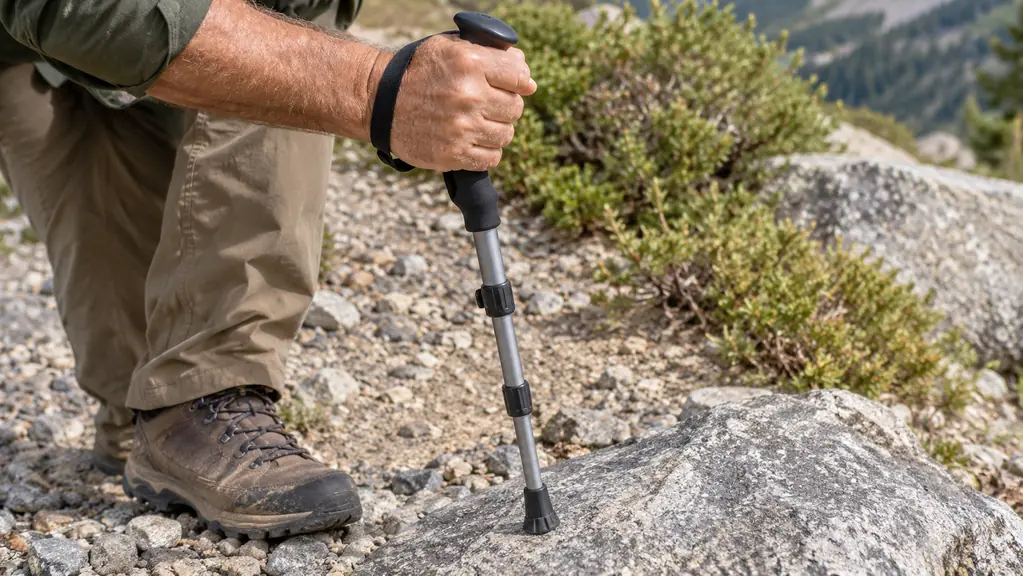
This is the part most people skip. Poles set for flat ground are too long going down, and poles that are too long push you upright and back onto your heels. I take a few inches off each pole before a descent, which lets me stay over my feet and plant the tips ahead of me. These adjust anywhere from 26 to 54 inches and the quick locks make it a two-second job, even with a pack on. Long for the climb, short for the drop.
The grip stays usable when your hand is wet
My hands sweat on climbs and get rained on in the afternoon, and a slick handle is worse than no pole at all. The Cascade Mountain Tech grip is cork and EVA, and it stays grippy enough that I am not re gripping every fifty steps. It also does not go cold and clammy the way bare metal or hard plastic does on a 40 degree morning in the Uintas. Small thing. You notice it around mile four.
The extended grip lets you choke down without stopping
There is an extended section of grip below the main handle, and it earns its keep on steep steps. When the trail tips up hard, I slide my hand down onto that lower part and keep walking instead of stopping to shorten the poles. Same trick going down a set of rock stairs. It sounds minor until you are on a grade where stopping every thirty feet is the difference between a rhythm and a grind.
Three seasons, both poles on every downhill, and the knee has not swelled once since that first week in 2023.
Carbide tips bite on dirt, rubber boots handle the rock slabs
The tips are tungsten carbide, and on packed dirt and loose gravel they hold. On smooth granite, where carbide skates, I put the rubber boots on and get quiet traction instead. Both came in the box, along with mud baskets, snow baskets and a tip kit. I have used the carbide tips and the rubber boots and nothing else, which tells you something about how much of the kit you actually need.
The quick locks hold at my weight
I am not a small man and I lean on these more than I should on the last mile of a long day. The quick locks have not slipped on me in three seasons. That is the whole review of the lock, honestly. I check them at the trailhead, I set them once, and they stay where I put them. A pole that collapses mid-step is how people get hurt, so this matters more than any number on a spec sheet.
They fold to 26 inches and live behind the truck seat
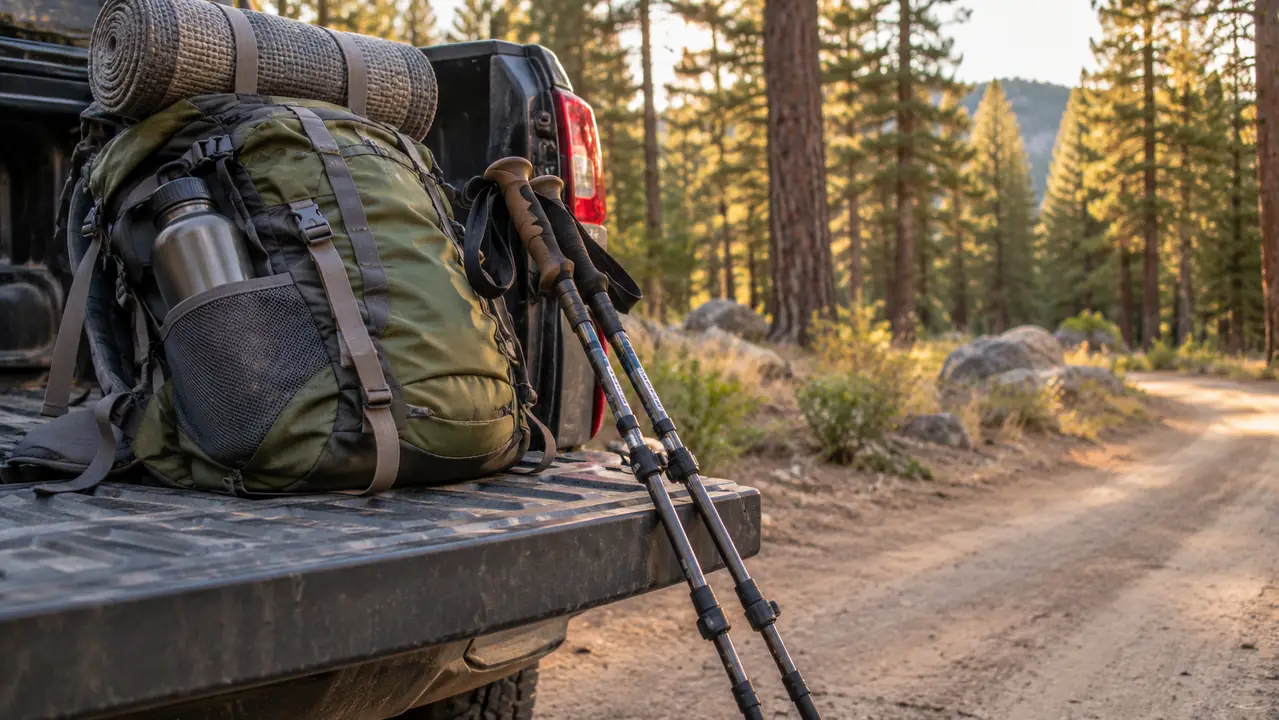
Collapsed, they are 26 inches and about 10 ounces each, so they strap to the side of my pack on the climb and ride behind the seat of the Tacoma the rest of the year. I do not baby them. They get thrown in with the cooler and the camp chairs and they have held up. There is a carry bag included and I have never once used it, but the small folded size is the reason they come along on trips where I would otherwise leave them home.
They save your toes as much as your knees
This one surprised me. On a steep descent without poles, you brake with your legs and you slide forward inside your boots until your toes are jammed into the front. With poles planted ahead of you, you can set your foot down instead of catching yourself, and most of the toe bang stops. My boots are nothing special. The poles are the reason my toenails survived the last two seasons.
They make a two-night trip fit inside a tight week
I get a short window between weekdays looking after my mother, so a trip I cannot recover from is a trip I cannot take. That is the real reason these stay in the truck. It is not about shaving ounces or keeping up with anybody on a gear forum. It is that I want to be able to walk the dog and carry groceries on Tuesday. Poles are the cheapest thing I have found that buys me that.
What I'd Skip
Skip the snow baskets unless you are genuinely walking on snow. Mine are still in the bag they came in. Skip the carry case too, unless you fly with the poles, because they live behind my seat and the case just adds a step between me and the trailhead.
Skip carbon if you are hard on gear and honest about what you want to spend. Aluminum takes a bend and keeps working. Carbon can crack, and a cracked pole on a descent is worse than a heavy one. And skip the habit of setting the Cascade Mountain Tech poles once in June and never touching them again. The downhill adjustment is the entire point of owning them.
Set them long for the climb, short for the drop, and stop thinking about your knee
Adjustable from 26 to 54 inches with quick locks, about 10 ounces a pole, carbide tips and rubber boots in the box. Mine have three seasons on them.
Amazon See the Cascade Mountain Tech Trekking Poles on Amazon →