
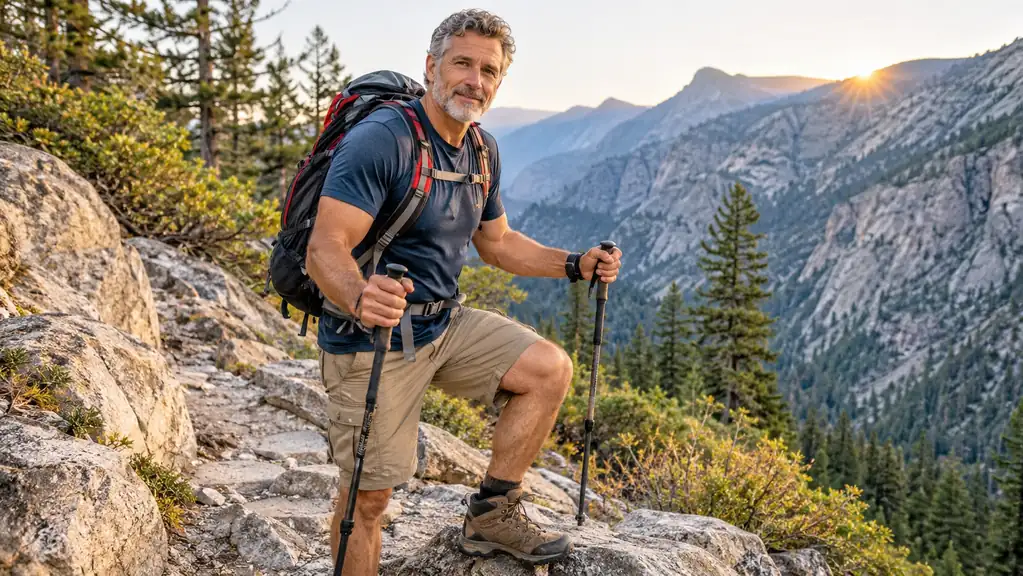
The knee is what got me. Not the climb. I came off a ridge in the Uintas in the summer of 2023, six miles of steady downhill, and by the time I reached the truck my left knee was swollen and hot and I could not bend it all the way. I am 58 years old and I have a lower back that files complaints. The knee was new, and it worried me more than the back ever did.
I had walked without poles for thirty years. Part of that was pride. Poles looked like an admission that something had already gone wrong, and the people I saw carrying them on the Mirror Lake Highway trails were usually the ones who wanted to tell you about their base weight. I did not want to be that guy either. So I did nothing for a month and limped around Ogden instead.
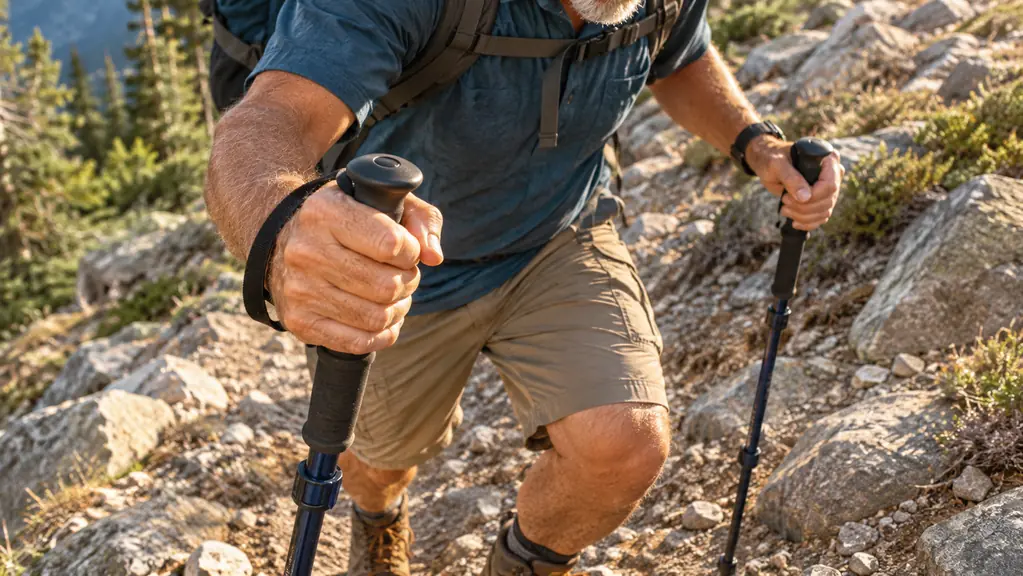
Then I bought a pair of Cascade Mountain Tech trekking poles. The aluminum ones. Not because a forum told me to. They were on the rack and the design was not complicated. That is the entire origin story. I have used them for about three seasons now, both poles on every descent.
Here is what actually changed. Going downhill, my left knee had been taking the whole load, one step at a time, thousands of times an hour. With both poles planted ahead of me, a share of that load goes into my arms and shoulders instead. The swelling stopped. I am not going to sit here and tell you my knee is fixed, because it is not. It still grumbles around the third mile down. But it stopped blowing up like a softball, and that was the difference between a weekend trip and a week of limping around my mother's kitchen.
It stopped blowing up like a softball, and that was the difference between a weekend trip and a week of limping around my mother's kitchen.
Both poles, every descent, three seasons of it
The pair that lives behind the seat of the truck: 6061 aluminum, 26 to 54 inches, quick locks, and a tip kit in the box.
Amazon Check Today's Price on Amazon →The adjustment range is the part I underrated. The poles go from 26 inches to 54, and the quick lock holds where I set it. I run them long on the flats and I shorten them a few inches for the downhill, which is what everyone told me to do and what I ignored for the first month. One slip in three seasons, and that was my fault for not seating the lock all the way.
The other thing I did not expect to use is the extended grip below the handle. On a steep stretch I choke down and hold the lower part of the shaft instead of stopping to shorten the pole. Sounds like a small thing. When you are picking your way down loose rock with a tired knee, not stopping is worth something.
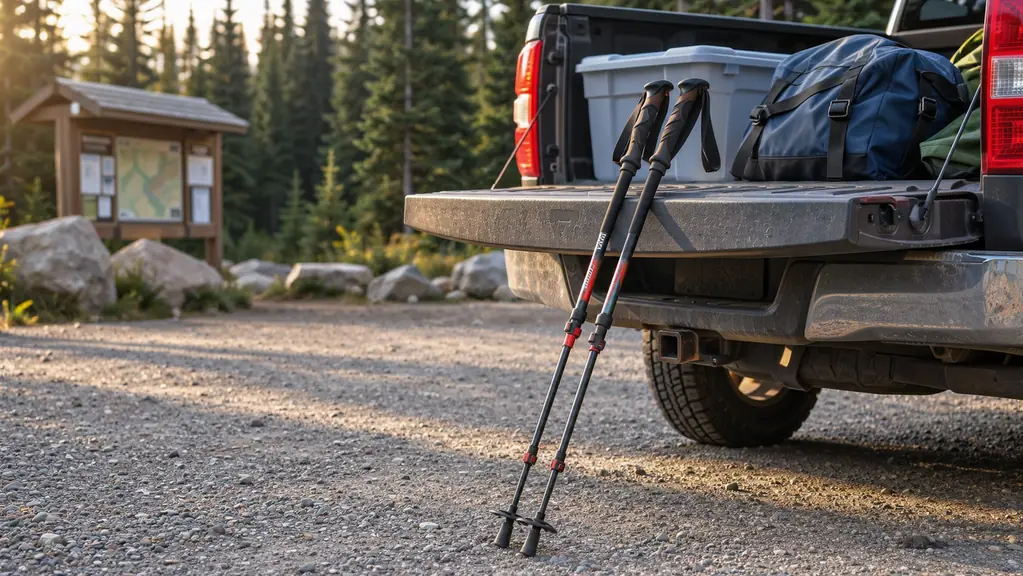
The box from Cascade Mountain Tech came with two poles, tungsten carbide tips, rubber tips, mud baskets, snow baskets, a clip and a carry bag. I run the carbide tips almost all year and switch to the rubber tips on the paved path near my mother's place, which keeps the tips from chewing up the concrete and keeps her from telling me about it. The rubber tips are the first thing to wear out. That is the honest weakness. The tip kit in this version is the reason I would buy this one again rather than the plain pair.
What bugs me: each pole weighs a bit over ten ounces, and there are lighter poles out there. I do not care, because I am not racing anyone and the difference is not what makes my back hurt. Folded, they run 26 inches, which does not drop into the side pocket of my pack the way I wanted, so they ride strapped on the outside. And cork gets slick when my hands are sweaty, so I wipe my palms on my pants at the top of a descent. Small irritations. None of them have cost me a trip.
They live collapsed behind the seat of the 2014 Tacoma now, along with a spare pair of socks I keep forgetting about. There is a limited manufacturer's warranty on them. I have never needed it. Three seasons, no bent shaft, no lock that gave up.
What I'd Tell You If We Were Sitting at My Kitchen Table
I would tell you that nobody needs poles to walk. Plenty of people walk fine without them their whole lives and never think about it. But if you are past fifty and your knee swells after a downhill, or if you are carrying a pack on a two-night trip and the last two miles are the ones that ruin you, then a pair of Cascade Mountain Tech poles is the cheapest fix on the list. I would skip the carbon ones, at least at first. Carbon is lighter and it is fine, and it is also the thing I would rather not have snap on me at 9,000 feet. Aluminum bends and forgives. I would buy the version with the tip kit, because you will go through the rubber tips and you will be annoyed when you have to order them separately. I would practice with them on a flat gravel path before trusting them on a real descent, and I would set the downhill length a few inches shorter than the flat length from the start, because that one habit is most of the benefit. And I would not expect them to make the hike easy. They make it less expensive the next morning. That is all I ever wanted from them.
Three seasons, one swelling, none since
Aircraft-grade 6061 aluminum, 26 to 54 inches, quick locks, extended grip, and the tip kit already in the box.
Amazon Check Today's Price on Amazon →