
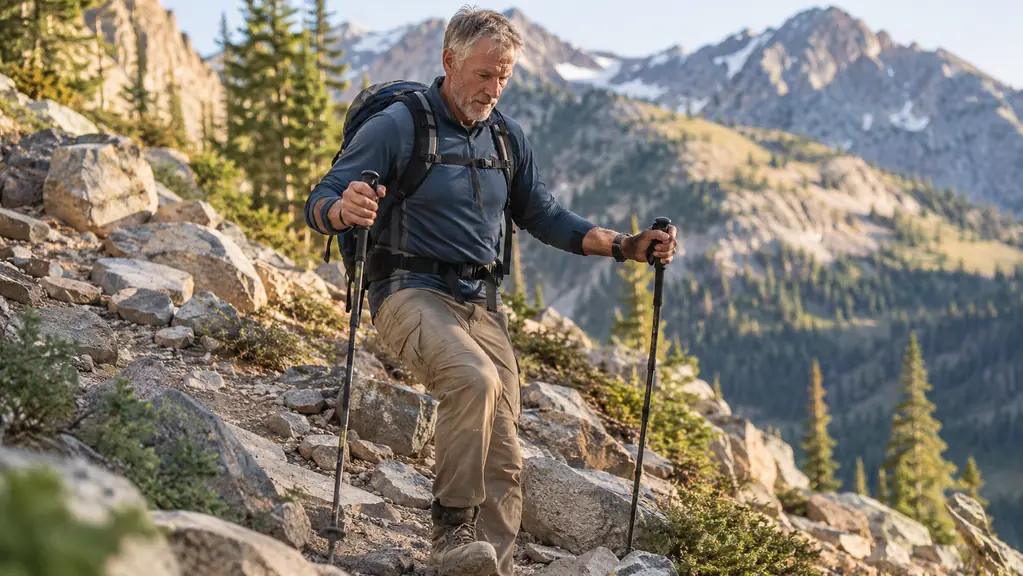
I bought the Cascade Mountain Tech trekking poles in summer 2023 after a long descent in the Uintas left my left knee swollen for a week. I was 58, about 190 pounds, with a lower back that stiffens if I sit too long and a knee that has opinions about downhill rock. The poles were not a hobby purchase. They were a practical response to a body that had started sending invoices.
Three seasons later, I have used them on every descent I have taken, both poles, shortened a few inches when the trail drops. They live collapsed behind the seat of my 2014 Toyota Tacoma, which is either good storage or a sign that I do not baby them. This is not a love letter. It is the honest review I wish I had read before I bought them: what works, what does not, and who should skip them. The short version is that the Cascade Mountain Tech poles are a solid choice for a weekend backpacker who wants support on descents, but they are not the lightest, not the most refined, and not the last pair you will ever buy.
The Quick Verdict
A dependable aluminum pole for short backpacking trips, with a weight penalty and a few rough edges that matter more the longer you walk.
Amazon Check Today's Price →If your knee is the reason you are reading this, start here
These are the poles I have trusted for three seasons on Wasatch descents. They are not fancy. They are the reason I can walk to the truck after a long downhill without holding onto Ray's shoulder.
Amazon Check Availability on Amazon →How I've Used These Poles
I am not a gear tester. I am a 58-year-old man in Ogden who spends most weekdays caring for my mother, which means my trips are short: one or two nights, usually off the Mirror Lake Highway or somewhere in the Wasatch above town, with a spring or fall desert trip near Moab when the window opens. Carla comes on car-camping trips but does not backpack. Ray is the friend who goes with me when I need a second person. That is the whole test lab. If a piece of gear only works on a sponsored trip, it does not work for me.
I use both poles on every descent. On flat ground I sometimes carry them, which is a bad habit I have not fixed. Going downhill I shorten them a few inches, and that one adjustment made more difference to my knee than any brace I tried. The first time I did it, I noticed by the time I reached the truck that I was not limping. The poles did not fix my knee. They bought me time, and on a bad descent that is the same thing.
I have used the carbide tips on dirt and rock, the rubber tips on pavement and hard packed trail, and the mud baskets in spring when the Uintas turn soft. The snow baskets have stayed in the carry case because I do not do much snow travel. The tip kit and the extra boots are still with the poles, which says more about my organization than about the kit. I check the quick lock at the trailhead, set the length, and go.
What Nobody Tells You About the Weight
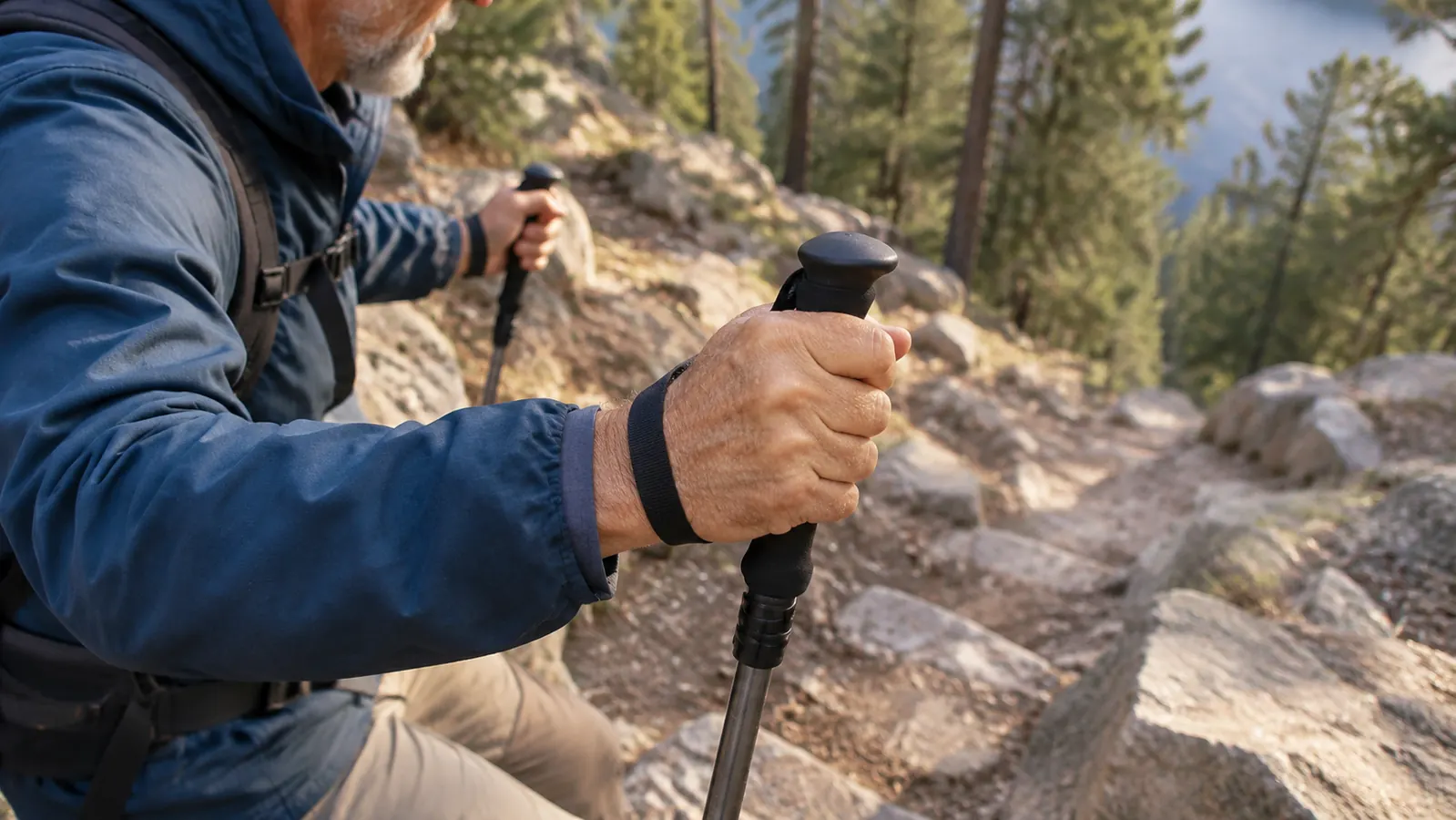
The listing says 10.08 ounces, and the feature copy says each pole is about 10 ounces. That is one pole, not the pair. A pair is about 20 ounces before you add baskets or the carry case. For a day hike, that is nothing. For a two-night backpack, you will feel it on the first climb, especially if you are coming from a lighter pair or from no poles at all. I noticed the weight more in my hands than on my back, because you are swinging it with every step.
The poles are 6061 aluminum. That is not a fancy material, and it is not the lightest. It is also why I have not broken one. I have jammed a tip between rocks, dropped a pole off a log, and sat on one in the truck bed. The aluminum has scratches and the finish has worn where the poles rub together, but there are no bends and no cracks. I cannot say the same for every piece of gear I have owned.
The folded size is 26 inches and the extended length is 54 inches. I am 5 feet 11 inches, and I use them around 48 inches on flat ground, shorter on descents. The adjustment range runs from 26 to 54 inches, so a taller or shorter hiker has room. The quick lock is the part I check before every trip. It has held, but it is not the kind of lock you set once and forget for a season. If you are the sort of person who never checks gear, check this one.
The poles did not fix my knee. They bought me time, and on a bad descent that is the same thing.
The Lock, the Tips, and the Small Failures
The quick lock has been reliable, but it is not silent. On a cold morning I hear a click when I set the pole, and I check it again because I am that person now. In the first season I had one pole slip about an inch on a steep section. I tightened the lock at the next flat spot and it has not slipped since. That is not a disaster. It is a reminder to set the locks at the trailhead, not halfway down a scree field with your weight on the pole.
The carbide tips are the reason I trust these poles on dirt and rock. They bite. The rubber tips are quieter on pavement and hard rock, and I use them when I walk the ditch bank near my mother's house. The rubber wears faster than the carbide, which is normal. The tip kit is useful, but it is a bag of small parts. Mine lives in the carry case, and the carry case lives in the garage. That is the only reason I still have all the pieces.
The grips are cork and EVA. The cork has molded to my hand and does not get slick when I sweat. The extended down grip is the feature I did not think I needed. On a steep descent I choke down on the lower part of the grip instead of stopping to shorten the pole. That saves me a stop. It is a small thing that becomes a big thing when your knee is already talking and your back is stiff from a pack.
The baskets are the weak point in my routine. The mud baskets are easy to lose if you swap them on a cold morning and set one down. I have not lost one, but I have come close. The snow baskets have stayed in the case because I do not do much snow travel. If you backpack in the shoulder season, put them on before you leave the truck. That is not a product flaw. It is a cold hands flaw.
Comfort Over Three Seasons
The first thing I noticed was the weight in my hand. At about 10 ounces per pole, they are not feathery. They are also not heavy enough to bother me on a one-night trip. The second thing I noticed was the cork grip. It is comfortable without a glove, and it has not given me a blister. I have used them bare-handed in August and with light gloves in October. No hot spots, no slippery handle.
The poles have been comfortable on long descents, but they are not magic. My left knee still complains on a hard downhill. The difference is that I can walk the next day. Before the poles, a long descent meant a week of swelling and ice. Now it means a day of taking it easy. That is the honest result. If you expect the poles to erase a bad knee, you will be disappointed. If you expect them to take the edge off, they will.
I have not had a blister from the grips. I have had a hot spot on my palm when I gripped too high on a cold day. That was my fault, not the pole's. The extended grip gives you options, but you still have to use them. The same goes for the adjustment range. You can set the poles for your height, but you have to actually set them. The poles do not know your body. You do.
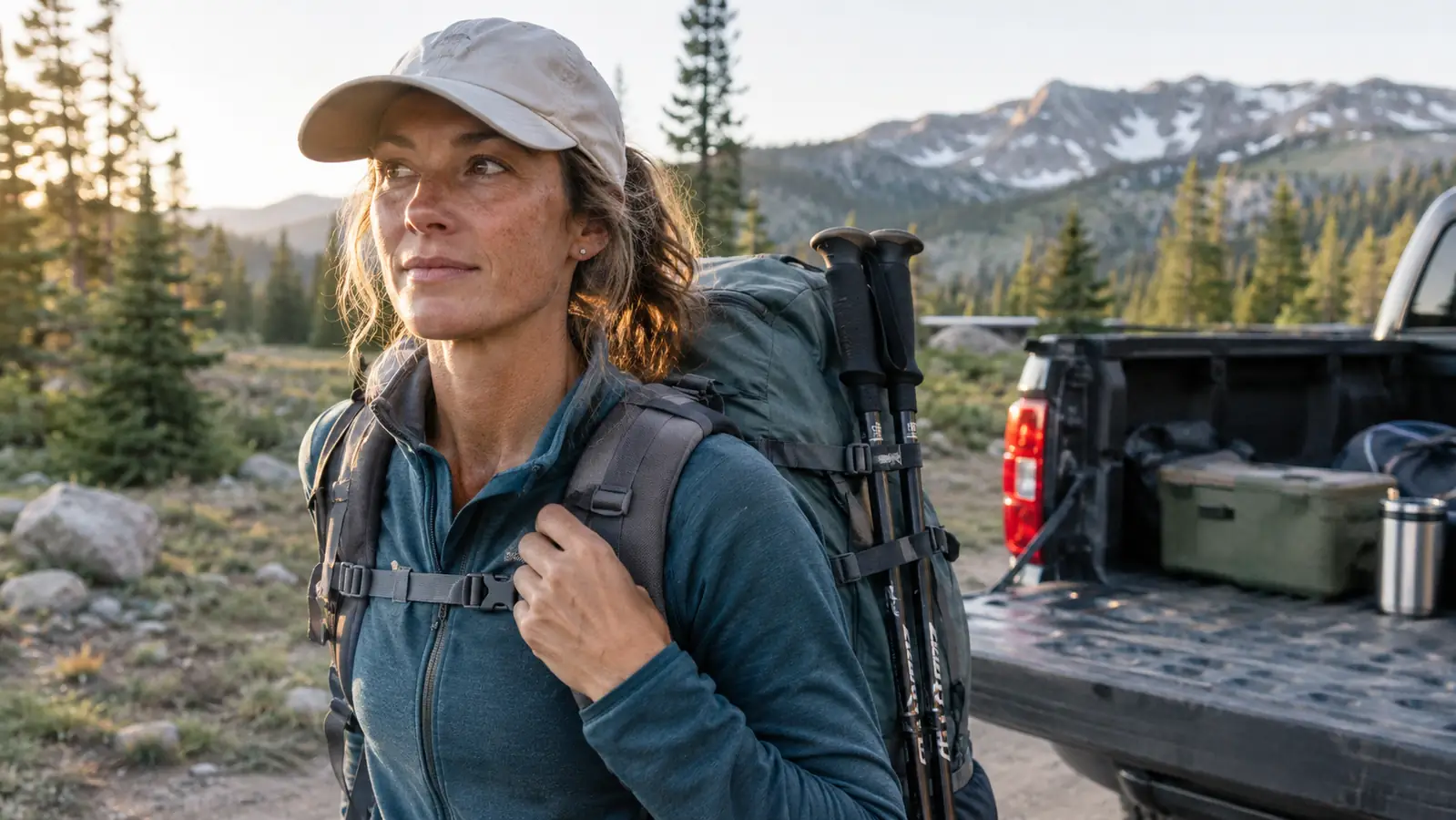
I also appreciate that the poles collapse to 26 inches. That is short enough to strap to the side of my pack when I want my hands free on a scramble. It is not short enough to disappear into a small daypack, but I do not expect that from an adjustable pole. They go behind the truck seat when I am home, which is the real test of whether a piece of gear is annoying. These are not annoying.
The Details That Matter on a Real Trip
On a real trip, the poles are not the star. The star is the sleeping pad and the dry socks. The poles are the thing that keeps you from falling when you are tired. I notice them most on the last hour of a descent, when my knee is warm and my back is stiff and the truck is still a mile away. That is when the extended grip and the quick lock earn their place. I choke down on the grip, I keep moving, and I do not stop to fiddle with the length.
I also notice them when I cross a creek. I am not a confident rock hopper. The carbide tips give me a third and fourth contact point, and I use them. The poles have kept me out of the water more than once. They have also kept me from sitting down hard on a slippery slab. That is not a spec you can list. It is the reason I carry them.
The mud baskets are useful in spring, but they are not a substitute for paying attention. The snow baskets are for snow, and I do not hike much snow. The rubber tips are for pavement and hard rock, and I use them around town. The kit covers the bases. You still have to choose the right tip for the day. That is true of every pole.
When I get home, I collapse them, wipe them down if they are muddy, and put them behind the seat. I do not oil them. I do not take them apart. I do not treat them like a precision instrument. They have handled that neglect. If you are the kind of person who maintains gear, they will last longer. If you are not, they will still work.
The Tradeoffs I Live With
The biggest tradeoff is weight. A pair of these poles is about 20 ounces. If you are counting grams, you can do better. If you want a pole that survives being treated like a tool, this is a reasonable place to land. I am not going to pretend that 20 ounces is nothing. On a steep climb, I feel it. On a descent, I do not care. The poles are doing a job then, and the job is worth the weight.
The second tradeoff is refinement. The quick lock works, but it is not the smoothest I have handled. The finish has worn where the poles rub. The carry case is basic. The tip kit is a bag of small parts you will lose if you are not careful. None of that makes them bad. It makes them a tool rather than a piece of jewelry. I want a tool. I have enough jewelry I never wear.
The third tradeoff is the one nobody likes to admit: these poles are popular because they are a good compromise. They are not the lightest, not the stiffest, not the prettiest. They are aluminum poles that adjust from 26 to 54 inches, have a quick lock, cork and EVA grips, carbide tips, and a set of baskets. For a weekend backpacker, that is enough. For a thru-hiker, it might not be. There is no shame in either answer.
What Three Seasons Have Actually Changed
The poles have not changed. I have. I used to think trekking poles were for people who had already given up. Now I think they are for people who want to keep going. That is a small shift in attitude, but it is the real result of three seasons. I take them on every trip, even the short ones. I notice when I leave them behind. That is the best review I can give a piece of gear.
The wear I see is honest wear. The finish is rubbed where the poles slide against each other in the truck. The rubber tips have lost some tread. The cork has darkened. The locks still hold. The tips still bite. The baskets are still in the case. Nothing has failed in a way that made me want to replace them. That is not the same as perfect. It is the same as good enough for the trips I take.
I have thought about buying a lighter pair. I have not, because I know what these do and I know what they cost me in weight. If I were planning a longer trip, I might change my mind. For a one- or two-night trip in the Uintas or the Wasatch, I would rather spend the weight on a better sleeping pad or a warmer layer. That is the trade I make. The Cascade Mountain Tech poles fit that trade.
What I Liked
- About 10 ounces per pole, light enough for short backpacking trips
- 6061 aluminum has survived three seasons of rocky descents
- Quick lock holds once set and is easy to check at the trailhead
- Cork and EVA grips stay comfortable bare-handed
- Includes carbide tips, rubber tips, mud baskets, snow baskets, tip kit and carry case
Where It Falls Short
- A pair is about 20 ounces, which is noticeable on steep climbs
- Quick lock is reliable but not silent or the smoothest
- Finish wears where the poles rub together
- Baskets and tip kit are easy to lose if you swap them on the trail
Who This Is For
This is for the weekend backpacker or car camper who wants support on descents without spending a lot. If you are 40 or older, if your knees talk to you, if you take one or two nights at a time, and if you want a pole that can be shoved behind the seat of a truck and forgotten until next month, these are a sensible choice. They are also good for a day hiker who wants a pair for rocky trails and does not want to baby them.
Who Should Skip It
Skip them if you are a thru-hiker counting every ounce, or if you want the stiffest, lightest pole on the market. Skip them if you need a pole that packs down smaller than 26 inches. Skip them if you are hard on locks and want something you can rebuild on trail. And skip them if you expect a pair of poles to fix a knee that needs a doctor. These are tools, not treatment.
If you want the same poles I trust on Wasatch descents, here they are
Three seasons, one knee that still complains, and a pair of aluminum poles that have done their job. Check the current listing and see if they fit your trips.
Amazon See the Listing on Amazon →