
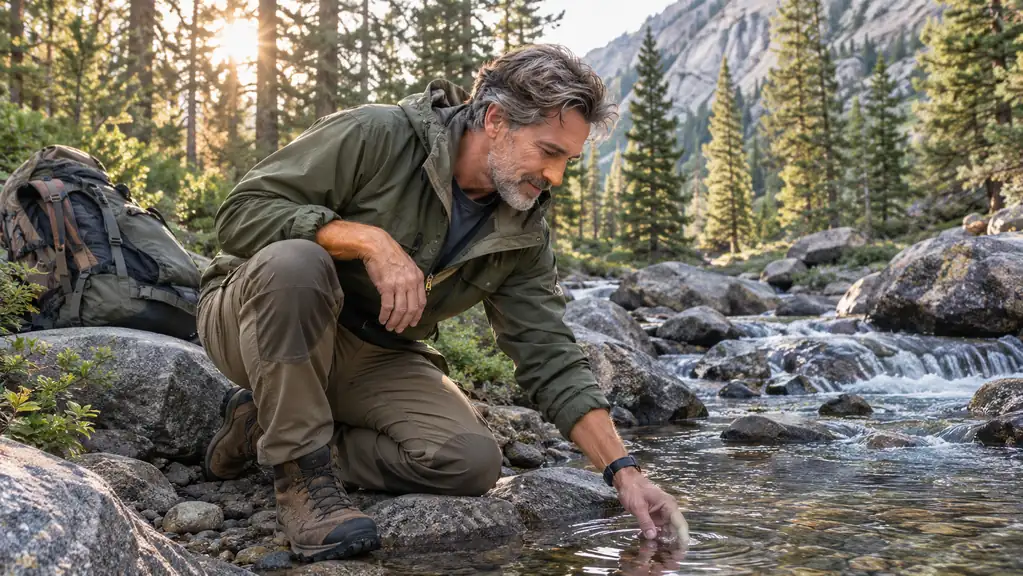
Short answer: for the trips I actually take, one or two nights out of a trailhead off the Mirror Lake Highway, the Sawyer Mini is the filter in my pack. It weighs two ounces, it has been with me since 2021, and it has never made me sick or left me without water. That is the whole verdict. If you want a single sentence, take that one and go pack.
The longer answer is that a pump filter does two things better, and if either of those things describes your trips, my advice flips. My friend Ray carries a pump. He is the one I backpack with, and he has carried that thing for as long as I have known him. Last August in the Uintas I borrowed it for a weekend to make sure I was not remembering it wrong. He filled a four-liter pot for the two of us while I was still working on my second bottle. So this is not a piece about one filter being junk. It is a piece about which of two good tools fits a short trip and a sore back.
| Sawyer Mini | A pump filter | |
|---|---|---|
| Weight and packed size | Two ounces, fits in a palm, no hoses | Pump body, handle and two hoses, several times the bulk |
| Speed for one liter | About five minutes of steady squeezing | Roughly a minute of cranking |
| Filling a big pot for a group | Slow, one pouch at a time | What it was built for |
| Murky or shallow water | Needs water deep enough to fill the pouch | Intake hose reaches a seep or a puddle |
| Parts to lose or break | Filter, pouch, straw, plunger, nothing to assemble | Hoses, handle, cartridge, prefilter |
| Maintenance | Backflush with the included plunger, no parts to buy | Cartridge is a wear item you replace |
| Rated life | 100,000 gallons per the manufacturer | Whatever the cartridge gives you before replacement |
| Freezing | Hollow fiber membrane is ruined if water freezes inside | Drain and shake it out, still a risk |
| People it feeds | One or two | Three or four without much waiting |
| Best for | Solo and duo weekend backpacking | Groups, base camps, silty sources |
Where the Sawyer Mini Wins
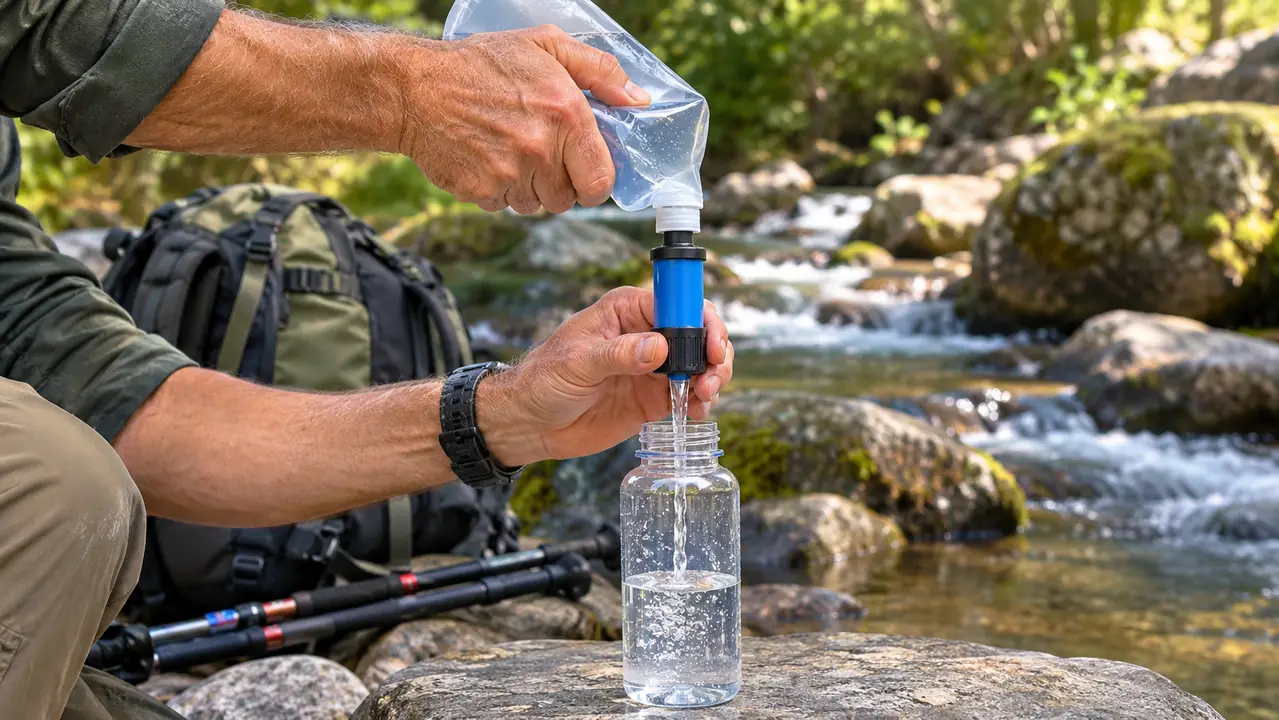
Weight is the first thing, and at 58 it is not a small thing. The Sawyer is two ounces and fits in the palm of your hand. Mine lives in the hip belt pocket of my pack, which means I never dig for it and never have to stop and unpack. There is no assembly at the creek. You unscrew the cap on the pouch, scoop it full, screw the filter on and squeeze. That is the entire procedure, and I can do it in the dark because there is nothing to line up.
The second advantage is that there is nothing to lose. The kit is the filter, a 16-ounce pouch, a drinking straw and a cleaning plunger. No hoses, no handle, no cartridge to seat properly with cold hands. I have watched people at a trailhead lay out six pieces of a pump on a tailgate and still not get water out of it. Two summers ago, at a pullout off the Mirror Lake Highway, the man parked next to me spent ten minutes on his knees chasing a hose end that kept popping loose while his family stood there holding empty bottles. I filled my pouch, screwed the filter on, and was drinking. I did not feel smug about it. Much. With the Sawyer the failure point is the pouch, and I will get to that honestly in a minute.
The numbers matter if you are the sort who wants them. It is a 0.1 micron absolute hollow fiber membrane. The manufacturer rates it to remove 99.999999% of bacteria, including Salmonella, cholera and E. coli, 99.9999% of protozoa including Giardia and Cryptosporidium, and 100% of microplastics. It is rated for 100,000 gallons. I will not live long enough to test that last claim, but five seasons in, the flow is still fine after a backflush, which tells me more than the spec sheet does.
It also connects to more than the pouch it ships with. It screws onto a standard 28 mm disposable water bottle, it splices into a hydration pack line, or you can drink straight through the straw. On a day hike where I know I will pass three creeks, I carry the filter and the straw and no bottle at all. There is a lake above Ogden I walk up to a few times each summer, and on that walk the whole water plan is the filter in one hip pocket and the straw in the other. I drink at the outlet on the way up, fill the pouch once for the walk down, and never carry a bottle. That sounds like a small thing until you count how many day hikes I have taken in five years.
Where the Pump Filter Wins
Speed, and it is not close. The pump moves water as fast as you can crank the handle, which works out to roughly a bottle a minute. The Sawyer is not fast. Two ounces of hollow fiber does not care that you are thirsty. A one-liter bottle takes a little over two pouch fills and about five minutes of hand work. Ray and I came off a ridge last August into camp at dusk, both of us out of water. He cranked out a full four-liter pot for dinner and drinking while I was still on my second bottle, and he had his boots off before I had the stove lit. I have timed my five minutes since, out of curiosity. On a good day it is four. On a cold evening with tired hands it is closer to six.
The second advantage is ugly water. A pump has an intake hose with a prefilter on the end, so it can pull from a two-inch-deep seep, a stock tank, or a mud puddle you would not want to touch. The Sawyer needs water deep enough to fill a pouch. On the Mirror Lake Highway in July that is never a problem. On a fall trip near Moab where the water is a trickle moving between rocks, it is a real problem, and I have carried extra water because of it. What I do now in the desert is simple. I carry two liters more than I think I need and treat the filter as a backup for a source I can actually scoop from, not as the plan.
The third is that you can stand up straight. That sounds like a joke and it is not. With a stiff lower back, crouching over a creek squeezing a pouch for five minutes is the least pleasant part of my evening. Ray stands at the bank and cranks, which is easier on the body and easier on the knees. When we hike together he still gets his pot filled before I finish my bottle, and I have made my peace with that. What I have changed is where I filter. If there is a log or a flat rock at the right height, I sit down and work from there. Standing in the water bent at the waist is what makes my back complain the next morning, so I stopped doing it out of stubbornness.
If you are filling one bottle, not a pot, this is the one
The Sawyer Mini has been in my pack for five seasons. Two ounces, no assembly at the creek, and a backflush plunger that comes in the box. It attaches to the included pouch, a standard 28 mm bottle or a hydration pack line.
Amazon Check Today's Price on Amazon →What Five Seasons With the Sawyer Actually Looked Like
I bought the Sawyer in 2021 to replace iodine tablets. The tablets worked. They also made every bottle taste like a swimming pool, and they needed half an hour of waiting, which on a trip built around a tight window is a genuine cost. The first morning with the filter I drank water a minute after filling the pouch, and that was the end of the tablets.
My routine has not changed in five years. I fill the 16-ounce pouch from a creek or the edge of a lake, screw the filter on, and squeeze into a spare one-liter bottle. A little over two pouches fills it. On a one-night trip I do that once in the evening and once in the morning before I break camp. I have never carried a second filter and I have never had to boil water as a backup.
One morning last July is the clearest picture I have of it. I was camped a short walk off a trailhead on the Mirror Lake Highway, up early because the light was good and because getting the water done before breakfast means one less chore at the end of the day. The creek was maybe eight inches deep where it widened out, which is enough to fill a pouch if you set the mouth downstream and let the current push into it. I filled the pouch, squeezed it into the bottle, filled it again, and had a full liter in five minutes with my coffee still hot. No kneeling in the water, no waiting half an hour for a tablet to dissolve. That is the entire argument for this filter, and it is a boring one, which is how I like my water treatment.
After every trip I backflush it with the plunger, which takes about two minutes, then let it dry on a shelf in the garage with the caps off. When the flow slows, and it does after a few trips, the backflush brings it back. I have not replaced a single part in five seasons, which is the quiet argument for this filter over anything with a cartridge. The one time the flow really dropped was after a trip where I pulled from a lake edge with a lot of suspended grit in it. It took three backflushes instead of one, and by the third the stream looked like it had on the first trip. That was the closest I have come to thinking I had ruined it.
The part I do baby is the pouch. It is the soft spot in the system. I had a seam start to go on one, and now I carry a spare one-liter bottle as backup and treat the pouch like it is made of something fragile, because it is. Cold is the other thing. Hollow fiber membrane is ruined if water freezes inside it, and in the Uintas in late September that is a real risk. On cold nights the filter goes in the bottom of my sleeping bag with my socks. Small habit, saves a filter.
Five seasons, one filter, two ounces, and not a single replacement part.
What Bugs Me About It
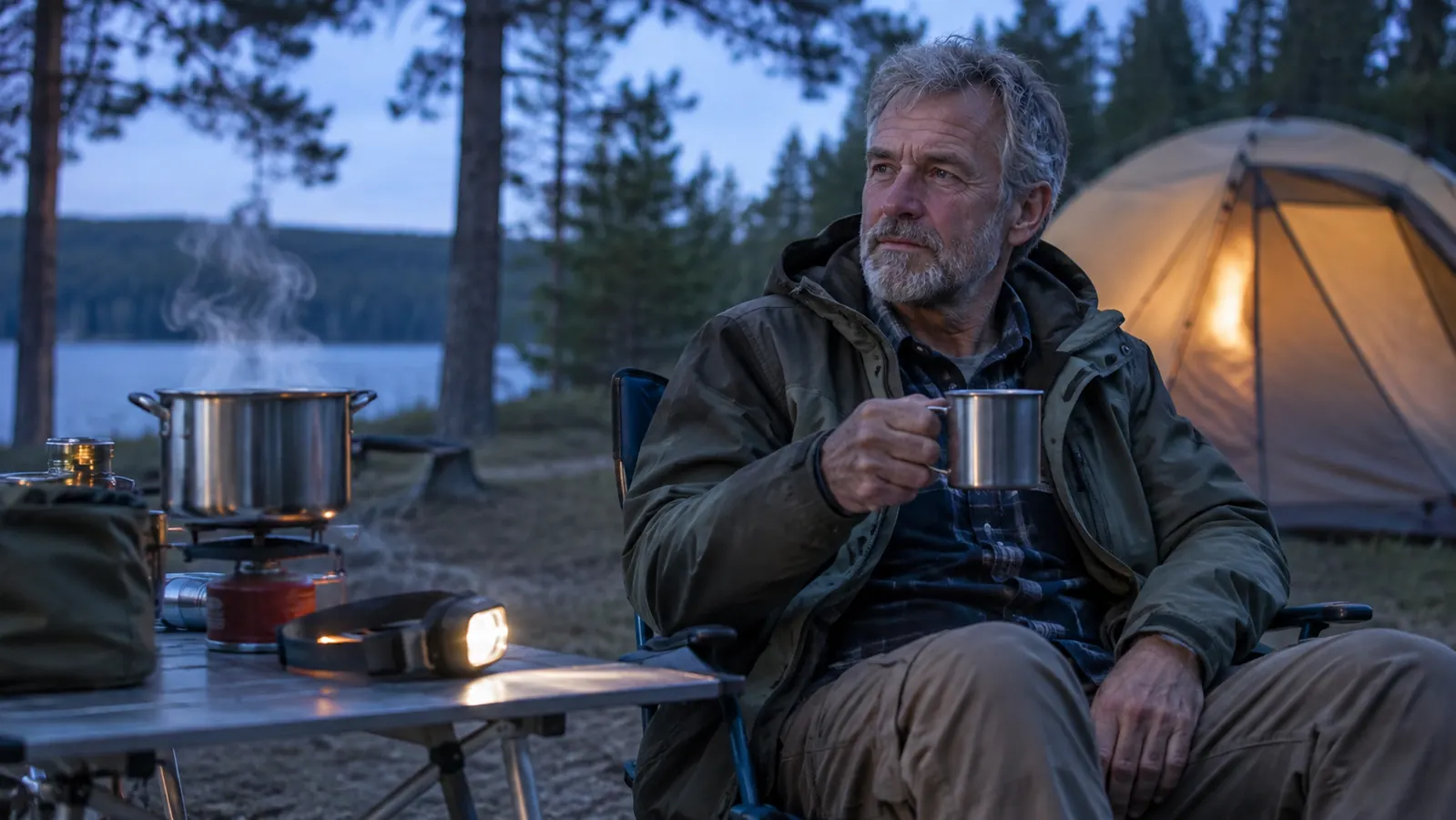
The squeezing. Five minutes per liter does not sound like much until it is the third liter and your hands are cold and your back has been in the same position for a while. I filter as I go during the day so that camp is easier, but on the evening where I arrive late and tired, I notice every squeeze. There was a night in September where I got into camp later than I meant to, headlamp on, and the creek was a ten-minute walk down a slope. I filled and squeezed three times in the dark, hunched over a rock, and by the end I was saying unkind things about a filter that has never once let me down. That is not the filter's fault. It is still what the filter costs you.
In five seasons I have also never had a way to know how much life is left in it. A pump with a cartridge at least gives you a replacement schedule you can write on a calendar. The Sawyer just keeps going until the flow stops coming back after a backflush, and the rated 100,000 gallons is so far past anything I will ever use that it does not help me plan a thing. I backflush it, I compare the stream to what it did on the first trip, and I go. That is guesswork, and I would rather it were not.
And it is not a group tool. If Carla were ever to backpack with me, or if Ray and I ever brought a third person, I would want the pump in the party somewhere. One Sawyer feeding four people at breakfast would turn a twenty-minute job into most of an hour.
What I Liked
- Two ounces, palm sized, lives in a hip belt pocket
- Nothing to assemble, so it works in the dark and with cold hands
- Backflush plunger is included and no parts need replacing
- Rated for 100,000 gallons
- Works with the included pouch, a standard 28 mm bottle, a hydration pack line or the straw
Where It Falls Short
- Slow, about five minutes of squeezing per liter
- Needs water deep enough to fill the pouch
- Hollow fiber membrane is damaged if it freezes with water inside
- The pouch is the part that wears, not the filter
- No way to tell how much filter life is left except watching the flow
Who Should Buy Which
Buy the Sawyer Mini if you backpack solo or with one other person, if your trips are one or two nights, and if your water comes from creeks and lakes that are actually liquid. Buy it if pack weight matters to your knees and back, or if you like the idea of never ordering a replacement cartridge. Buy it if you are willing to spend five minutes at the water source in exchange for a filter you will forget you are carrying.
Buy the pump if you feed three or four people, if you cook with a big pot at a base camp, or if your water sources are shallow, silty or hard to reach. Buy it if squeezing a pouch makes your hands or shoulders unhappy. A pump is a tool with a job, and that job is volume. I would not talk a group leader out of one, and I would not pretend the Sawyer does that job well.
For my own trips the split is simple. Backpacking solo, the Sawyer goes in the hip belt pocket and the pump stays home. Car camping with Carla, the water comes out of a jug and the filter only comes out for day hikes to a lake. If I ever led four people into the Uintas, I would borrow Ray's pump and leave my pride in the truck.
The filter that goes in a pocket and gets forgotten
Two ounces, five seasons, still flowing after a backflush. If your trips look like mine, one or two nights and clear mountain water, this is the one to pack.
Amazon Check Today's Price on Amazon →