
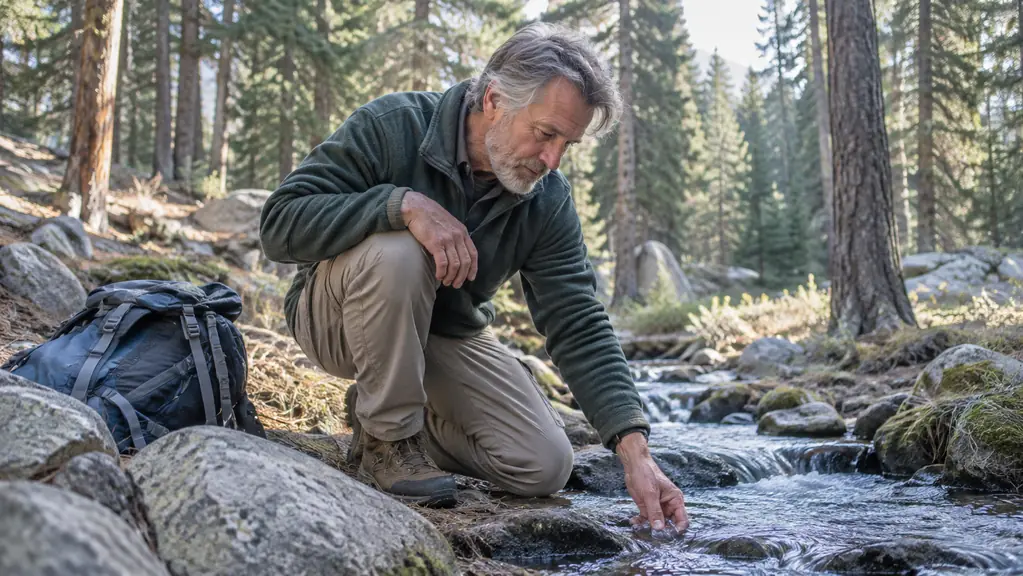
Two nights in the Uintas, one night on the Wasatch bench above Ogden, and back at the truck before lunch on Sunday. That is most of my season now. There was a time when a longer trip meant a pump filter and a hose and a handle I had to crank, and I did not think twice about the space it took. These days every trip fits in a narrow window between weekday obligations, and I have gotten particular about what earns a place in the pack. The Sawyer Mini has been in mine since 2021, five seasons now, and it is the one piece of water gear I no longer think about at all.
Here is the short version. A squeeze filter weighs almost nothing, has no moving parts, and turns a creek you would hesitate over into water you can drink. I use the Sawyer Mini as the example throughout because it is the one I own and the one I have carried on every trip since I replaced my iodine tablets with it. Ten reasons this covers what a weekend hiker actually needs, then a few honest notes about what it will not do for you.
Two ounces, no moving parts, nothing to fix on the trail
The Sawyer Mini ships with the filter, a 16-ounce pouch, a drinking straw and a cleaning plunger. That is the entire water kit for a one or two night trip.
Amazon Check Today's Price on Amazon →It weighs two ounces and fits in a shirt pocket
The filter itself is 41 grams, which is two ounces, and Sawyer built it to sit in the palm of your hand. I keep mine in the top lid pocket of my pack with the pouch folded around it, and I forget it is there until I need it. Compare that to the iodine tablets it replaced: a bottle of tablets, a waiting period, and water that tasted like a swimming pool. For a trip where every item has to justify itself, this one justifies itself quietly.
There is nothing to pump and nothing to break
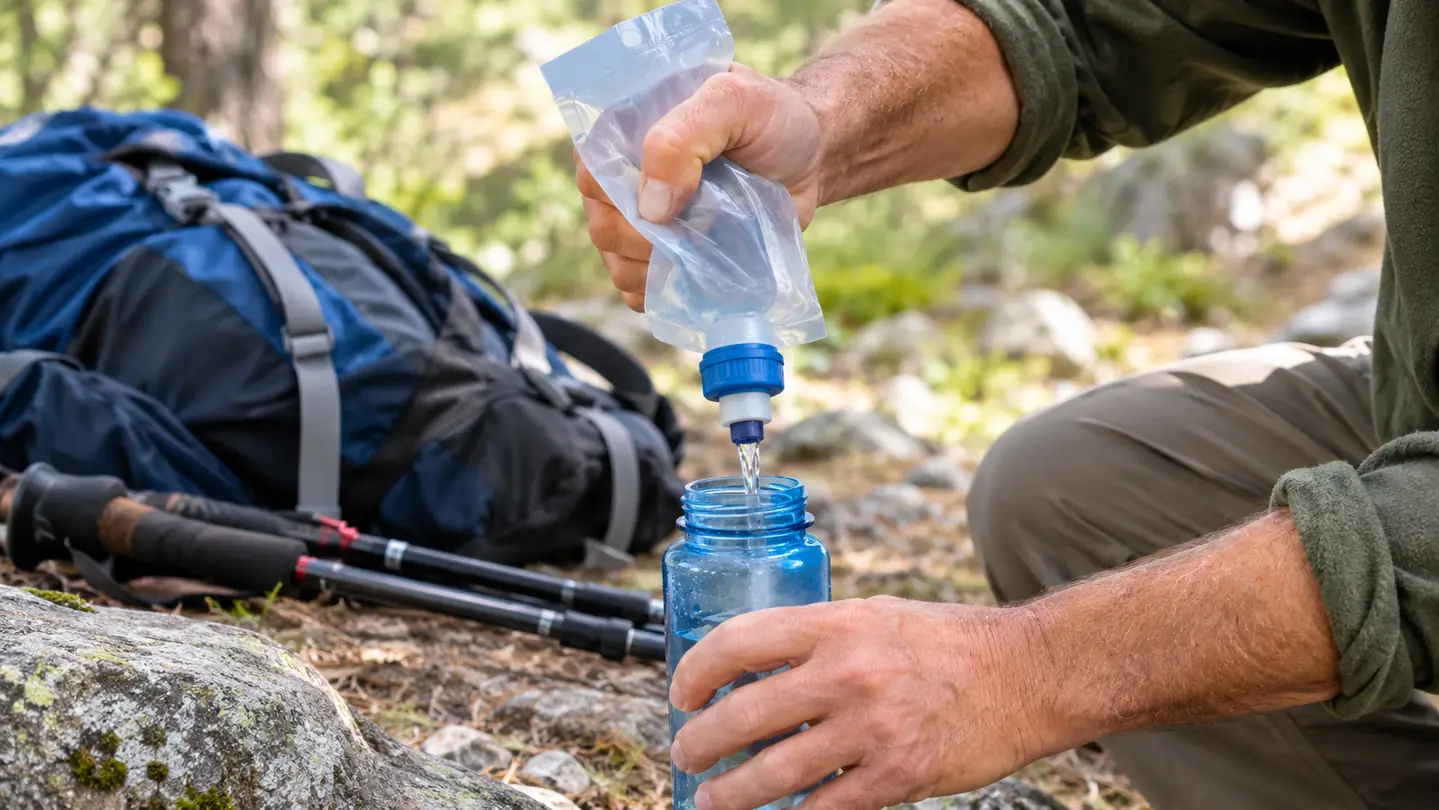
Manual operation means your hands, not a handle. I have watched people at a creek working a pump filter like they were inflating a raft, and I have done it myself. There is no lever on the Mini, no hose to crack, no ring to lose in the grass. You fill the pouch, screw the filter on, and squeeze. If your hands are cold and stiff, which mine are by October in the Uintas, that matters more than the weight difference.
The 16-ounce pouch squeezes straight into a spare bottle
The kit comes with a 16-ounce pouch, and my habit is to fill it, screw the filter on top, and squeeze the water into a one-liter bottle I carry empty until I reach a source. Two pouch loads gets the bottle most of the way full. It is not fast the way a tap is fast. It is fast enough that I am not standing there long, and my back is grateful for it because I am not bent over a creek for twenty minutes.
It threads onto a standard disposable bottle
The filter attaches to any standard 28 mm disposable water bottle. That sounds like a small thing until you are driving the Mirror Lake Highway and stop at a gas station in Kamas, or until a friend hands you a bottle at a trailhead. Now you have a dirty-water container that did not cost you anything and that you can throw away at the end of the trip. I keep one crushed in the side pocket of my pack for exactly this.
The straw lets you drink straight from the source
There is a drinking straw in the box. Screw the filter onto the pouch, drop the straw in, and drink through the filter like a juice box. I do this on hot afternoons on the Wasatch when I am not carrying any water at all and I just want a drink before I keep climbing. It is also how I top off a bottle I have already filled. Small feature, and I use it every trip.
The filtration numbers are the reason to trust it
The filter is a 0.1 micron absolute hollow fiber membrane. Sawyer rates it to remove 99.999999 percent of bacteria, including Salmonella, Cholera and E. coli, and 99.9999 percent of protozoa such as Giardia and Cryptosporidium. It also removes microplastics. I am not a lab and I cannot verify those numbers in my kitchen. What I can tell you is that I have drunk from Uinta creeks and desert seeps through this filter for five seasons and I have never once gotten sick from it, and that is the kind of evidence I trust.
One filter is rated for 100,000 gallons
The rated capacity is 100,000 gallons. I will never drink 100,000 gallons of creek water in my lifetime, and neither will you. What that number actually buys you is the end of a calculation. I do not wonder whether the filter is near the end of its life. I do not carry a spare. I backflush it after every trip and put it back in the lid pocket, and the question does not come up again.
Cleaning it is a two-minute job at the kitchen sink
The kit includes a cleaning plunger, and backflushing is exactly what it sounds like: fill the plunger with clean water, push it through the filter the wrong way, watch the grit come out. I do that at the sink after every trip, then let the filter air dry before it goes back in the pack. Two minutes, no tools, no soaking, no chlorine. There is no maintenance schedule to remember and nothing to replace.
Cold nights will not kill it if you plan for them
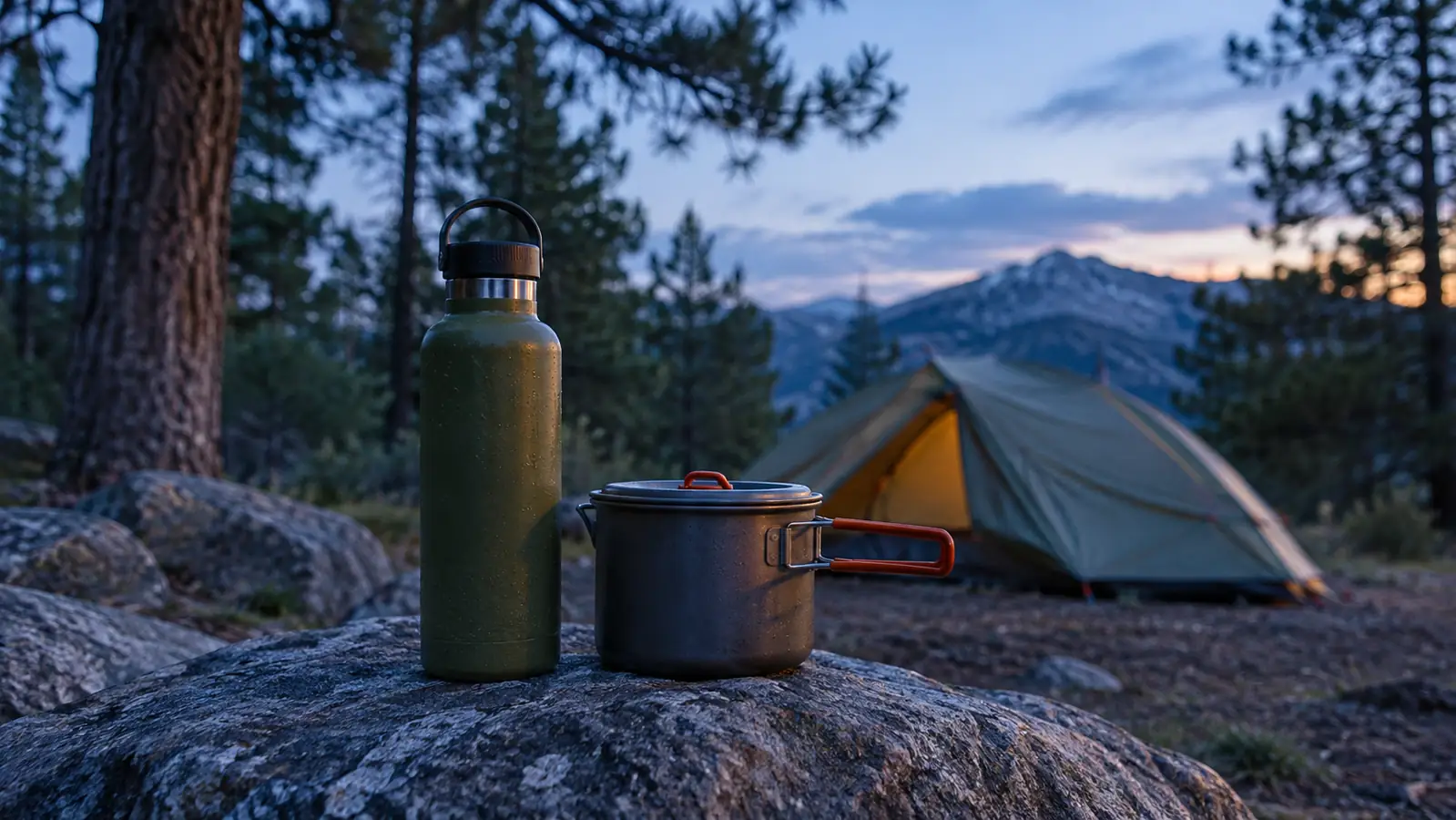
A wet filter that freezes can be ruined, and September nights in the Uintas get cold enough to do it. This is the one piece of gear I actively manage. I shake the water out, and on nights that are going to dip below freezing I put the filter in the bottom of my sleeping bag with me. It is not a burden. It is one small habit, and it is the difference between a filter that works in the morning and one you have to throw away.
It settles the question of how much water to carry
This is the part that changed my packing. I used to carry two liters up and two liters back because I did not want to run out and I did not want to filter. Now I carry one bottle, refill it at the creek on the way up, and refill it again on the way down. On a stiff climb that is a couple of pounds off my back, and with a lower back that complains on long descents, a couple of pounds is not nothing. The filter made carrying less water a reasonable choice instead of a gamble.
The Sawyer Mini has been in my pack for five seasons. I have never had to stop on a trail and fix it.
What I'd Skip
Things I would not bother with for a weekend trip. A UV pen needs batteries, and I have forgotten batteries. A gravity bag is a fine thing for four people sitting in camp, but for one person walking it is more bag than I want to hang from a tree. A pump filter is what I carried for years, and I do not miss the handle, the hose, or the ten minutes of cranking for a liter.
I also would not carry a second filter as a backup. The one thing I will say plainly is that the Mini is a solo tool. If you are filtering for a family at a car camp, the flow rate will have you standing there a while, and you should look at something with a bigger reservoir. And the pouch is the part that wears out, not the filter, so treat it like a piece of gear and not a plastic bag.
One small filter, one less thing to plan around
If your trips are one or two nights and you are tired of either carrying all your water or cranking a handle for it, this is the simplest version of the solution I have found. Five seasons, no failures, and it still lives in my pack lid pocket.
Amazon Check Today's Price on Amazon →