
The first night I slept in the Naturehike Cloud-Up 2 was in the Uintas in June 2024, at a site off the Mirror Lake Highway. I had bought it that spring to replace a 7-pound dome tent I had dragged around since the early 2000s. I am 58, my lower back is stiff in the morning, and my left knee does not enjoy long descents. I am not trying to win a weight contest. I wanted a tent I could carry for one or two nights, pitch without a fight, and sleep in without waking up wet. The Cloud-Up 2 has done that. It has also reminded me that a tent listing and a tent in the rain are two different things.
Here is the short version, because most reviews bury it. The Naturehike Cloud-Up 2 is a three-season, two-person, freestanding tent that weighs 4.3 pounds and packs to 15.7 by 5.1 by 5.1 inches. It has a 210T polyester shell with a 3000mm+ waterproof coating, an inner tent, a fly, a set of poles, five wind ropes, and a footprint. It is a good tent for one person who wants room to sit up, or for two people who pack light and do not mind being close. It is not a cabin, not a four-season shelter, and not the place to store two packs, two chairs, and a dog. That is the honest frame. The rest of this review is the detail behind it.
The Quick Verdict
A weatherproof, freestanding three-season tent that is easier to live with than its price suggests, as long as you treat the two-person rating as a tight two and not a room for gear.
Amazon Check Today's Price →The Tent I Keep Reaching For on Short Trips
If you want a freestanding three-season tent for one or two nights, the Cloud-Up 2 is worth a look at the current price. It is not the lightest tent in the catalog, and it is not a four-season shelter. It is a practical shelter that pitches fast and kept me dry in Uinta weather.
Amazon Check Today's Price on Amazon →How I've Used It
I bought the Cloud-Up 2 in spring 2024. It has been out for about three seasons now, mostly in the Uintas off the Mirror Lake Highway, a few times in the Wasatch above Ogden, and twice in the desert near Moab in spring and fall. I use it solo when I backpack with my friend Ray, and I use it with my wife Carla on car-camping weekends. Carla does not backpack, so those trips are base-camp trips with the Tacoma nearby. The tent has been pitched on forest duff, hardpan, and once on a sandy site that tested every stake. It has been rained on, winded on, and left to dry in my garage after every trip.
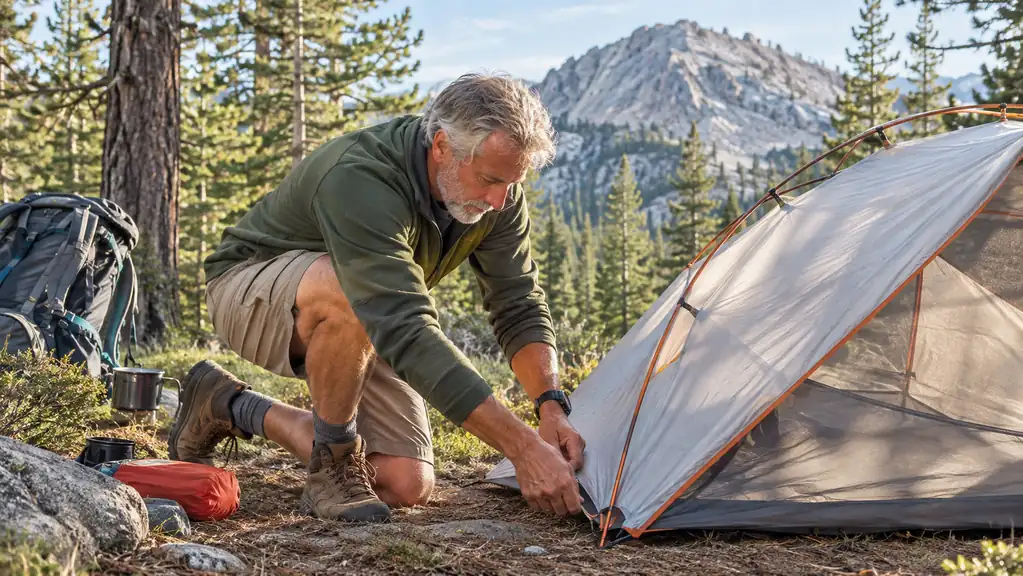
I pitch it with the included footprint. The poles clip to the tent, and the fly goes over the top. I can set it up alone in about ten minutes if the wind is not trying to help. The first time took longer because I had the fly inside out and because I was being careful with the zipper. I store it loose in a plastic bin in the garage, not stuffed in the carry bag, because I want the fabric to last. The carry bag is for the truck and the trail. The packed size is 15.7 by 5.1 by 5.1 inches, which slides into my pack beside a sleeping bag and a pad without turning the pack into a puzzle.
Two things I got wrong early, in case they save you the same trouble. The first was leaving the footprint folded in the truck on a hardpan site near Mirror Lake because the ground looked soft enough. Two nights later the floor had picked up grit and I spent a morning wiping it out with a wet cloth. The footprint goes down first now, every time, no exceptions. The second was the sequence. I was clipping the poles to the inner tent before staking the corners, and on a breezy afternoon the whole thing tried to fold up on me like a paper bag. Stake the corners first, then clip, then the fly. That order alone cut my setup time in half.
At 4.3 pounds, it is not a tent for someone counting ounces. I am 5 feet 11 inches and about 190 pounds. My back and knee have made me less interested in shaving grams and more interested in sleeping through the night. The Cloud-Up 2 is light enough for the one- and two-night trips I actually take. If I were doing a week on the Appalachian Trail, I would look at a different tent. For a Friday-to-Sunday trip, the weight is a fair trade for a shelter that stands up without a lot of fuss.
What the Cloud-Up 2 Does Well
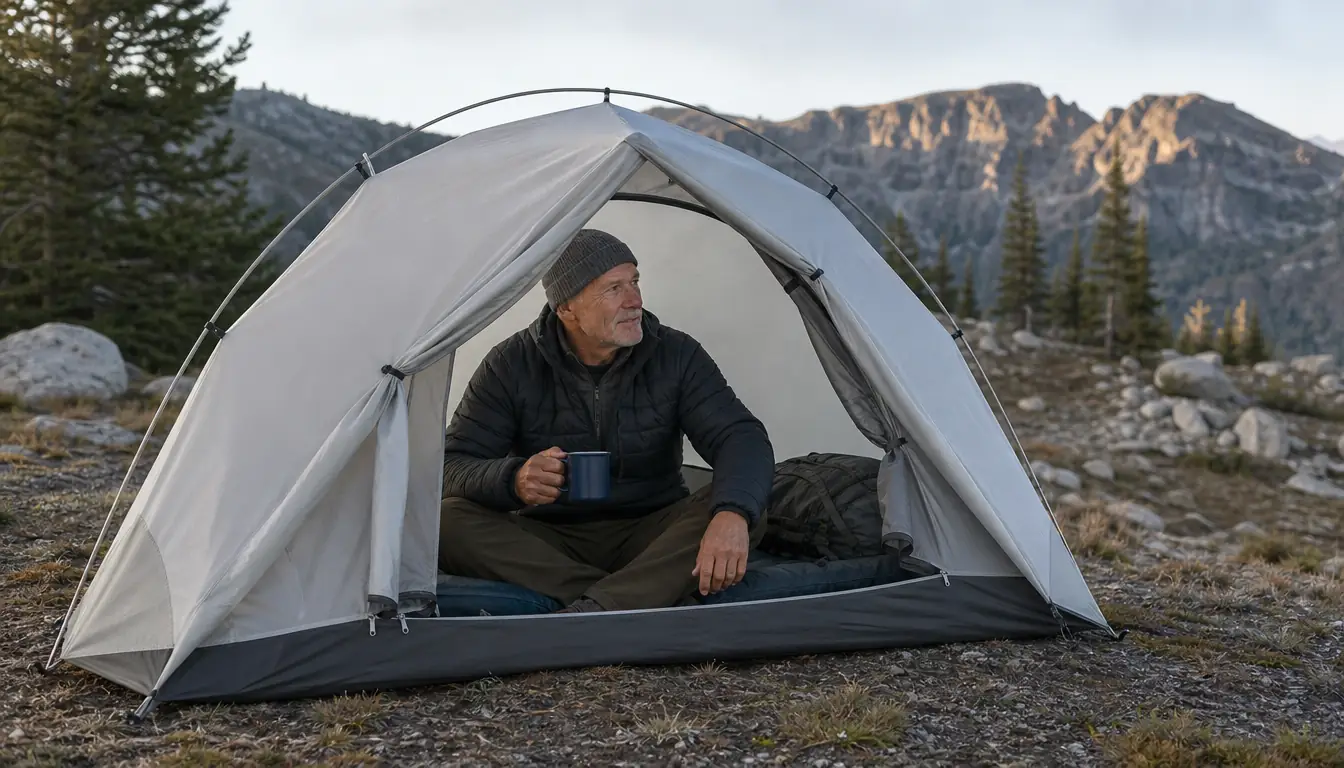
The best thing I can say about the Naturehike Cloud-Up 2 is that I have not gotten wet in it. The shell is 210T polyester with a 3000mm+ waterproof coating, and the fly covers the inner tent. I got caught in a Uinta thunderstorm in July 2024 that dropped hail and rain for about an hour. I sat inside and watched water run off the fly. The floor stayed dry. The seam at the front door was the only place I watched closely, and it held. I am not going to call any tent stormproof. I will say this one handled a normal mountain storm better than I expected.
The ventilation window above the front door helps more than I thought it would. On a cool night in the Wasatch, I left the window open a few inches and the inside of the fly stayed mostly clear. When I zipped everything tight on a still night, I got condensation on the fly by morning. That is not a defect unique to this tent. It is what happens when warm air meets cold fabric with no place to go. I wiped the fly down with a microfiber cloth and dried it at home. If you hate condensation, you will hate camping.
The tent is freestanding, which matters to me more every year. On a hard site near Moab, I was able to pick it up and move it two feet to avoid a rock under my hip. A tent that needs four perfect stakes is a tent that makes me cranky. The clips make setup quick, and the five wind ropes give me enough options when the weather turns. I do not use all five on a calm night. I use them when the forecast says wind, and I am glad they are in the bag.
The wind ropes deserve their own note because they are the part nobody practices. Five of them come in the bag, and the line locks are the simple slide kind rather than fancy tensioners, which suits me fine. I ran them out once in my driveway before I ever left home so I would not be learning the system in the dark with a headlamp in my teeth. On a gusty night above Ogden I ran three, two on the windward side and one at the foot, and the tent sat still while a tarp two sites over snapped all night. That is not a scientific test. It is the kind of test I actually run.
I sat through an hour of hail and rain in the Uintas and the floor stayed dry.
The Fit Is the Whole Story
The Cloud-Up 2 is listed as a two-person tent with a floor size of 82.7 inches long, 49.2 inches wide, and 41.3 inches high. That sounds generous until you put two adults and their gear in it. Two 20-inch sleeping pads fit side by side with a little room to spare. Two 25-inch pads touch and leave no gap for a pack. At 5 feet 11 inches, I can sit up to pull on a layer, but I cannot kneel without brushing the ceiling. The length is fine for me. If you are 6 feet 4 inches, you will want to measure before you commit.
Before I ever took it out, I set the tent up in the living room and put both pads inside. Naturehike gives the floor as 82.7 by 49.2, and I wanted to see what that looked like with real pads on it rather than a drawing. Two 20-inch pads left about four inches between the outer pad and the wall on each side. My pack, stood up on end, came within an inch of the ceiling at the head end. That ten-minute exercise told me more than any photo on a listing page, and I would suggest you do the same with your own pad, because pad widths vary more than tent widths do.
Solo, the tent feels roomy. I put my pad in the middle, my pack at my feet, and my boots in the corner by the door. I can sit up, read for a few minutes, and change clothes without a wrestling match. With Carla, it is a different tent. We are both adults, and we like each other, but we do not want to spend a rainy evening playing footsie with two packs. On car-camping trips, we leave the extra gear in the Tacoma. On a backpacking trip for two, I would want a strict packing plan and a forecast with no rain.
There is not a lot of room for two full packs inside. I put one pack at my feet and the other under the fly on the side where I can reach it. If rain is coming, I bring the essentials inside and leave the rest in the truck or under a pack cover. That is not a flaw in the tent. It is a flaw in the idea that a two-person label means two people plus all their stuff.
Where It Falls Short
The first shortfall is the two-person rating. It is honest if you read it as two sleeping bodies, not two campers with gear. The second is condensation on still nights. The third is the zipper. It is a standard zipper, and it catches if I pull it at an angle. I have learned to use two hands and to keep the fabric taut. The fourth is wind. The five wind ropes help, but this is a three-season tent, and I would not push it in a serious blow. I would rather retreat to the truck than test the limits of a tent this size.
The door takes some getting used to, and I will be plain about why. It is zippered, the pull is small, and in cold weather with stiff fingers I have fumbled with it more than once, usually at 5 a.m. when what I wanted was out. I have been meaning to tie a short loop of cord to the pull for two seasons now and have not done it, which tells you how much it actually bothers me. The other thing is that getting in and out with two people inside means one of you moves. Carla and I worked out assigned sides on the first trip and stopped negotiating.
The Cloud-Up 2 is a three-season tent. That is not a marketing disclaimer. It means it is built for rain and bugs and summer wind, not for snow loading and serious winter cold. I used it in late September in the Uintas and was comfortable with a 20F bag and base layers. I would not take it into a winter storm. The fly and the inner tent are not designed for that kind of weather, and I do not want to find out how they fail. If you camp in snow, buy a four-season tent and accept the weight.
The tent is also not as light as the internet wants it to be. At 4.3 pounds, it is a backpacking tent for people who are not obsessed with grams. My old dome was 7 pounds, so this is an improvement. A dedicated ultralight tent can be lighter. It will also cost more and ask for more care. I am at a stage where a tent that pitches fast and keeps me dry is worth more than a tent that saves a pound and makes me nervous. That is a personal calculation, not a universal rule.
What I Liked
- Freestanding and quick to pitch with clips
- 3000mm+ waterproof coating and fly kept me dry in a Uinta storm
- Packs to 15.7 by 5.1 by 5.1 inches and weighs 4.3 pounds
- Roomy enough for one person to sit up and spread out
- Five wind ropes give you options when weather turns
- Included footprint saves buying one separately
Where It Falls Short
- Tight for two adults plus gear
- Condensation on still nights when the fly is zipped tight
- Zipper catches if pulled at an angle
- Three-season only, not for snow
- Heavier than dedicated ultralight tents
What Nobody Tells You
One listing detail is unhelpful: the floor area is listed as 2.73 square feet. Ignore that number. It cannot be right for a tent this size, and it does not help you decide anything. Use the floor dimensions instead. At 82.7 by 49.2 inches, you can lay out two pads and see what fits. That is the number that matters when you are deciding whether to share the tent with another adult or take it solo. The other number that matters is 41.3 inches of height. It is enough to sit up, not enough to stand, and that is the honest trade.
The included footprint is a bigger deal than it sounds. I have bought footprints separately for other tents, and I have also gone without one and regretted it on rough ground. Having it in the bag means one less thing to order and one less thing to forget. The tent is still not a bargain if you need a four-season shelter or a palace for two. It is a fair value for a three-season tent that does the basic job. I would rather have a simple tent that keeps me dry than a complicated one that asks me to babysit it.
Who This Is For
This tent is for the solo camper who wants a little room to move and does not want to pay for a one-person coffin. It is for the adult who takes one- or two-night trips and values sleep over a gram count. It is for the couple who car camp and can leave the extra gear in the vehicle. It is also for the backpacker who wants a freestanding tent that does not require a perfect stake placement. If you are in your forties, fifties, or sixties and your back has opinions, the ability to sit up and move around is worth more than a lighter stuff sack.
Who Should Skip It
Skip it if you need a true two-person backpacking tent with room for two packs and a rainy evening inside. Skip it if you camp in snow or take trips in late fall and early spring in the high country. Skip it if you are counting every ounce and already own a lighter shelter. And skip it if you want a tent that feels like a cabin. This is a three-season shelter with a tight two-person rating. It is honest about that, and you should be honest with yourself about how you camp.
A Fair Shelter for Short Trips, Not a Four-Season Promise
If your trips are one or two nights and you want a freestanding tent that pitches fast and keeps you dry, the Cloud-Up 2 is worth checking at the current price. If you need snow protection or room for two packs, keep looking.
Amazon Check Today's Price on Amazon →