
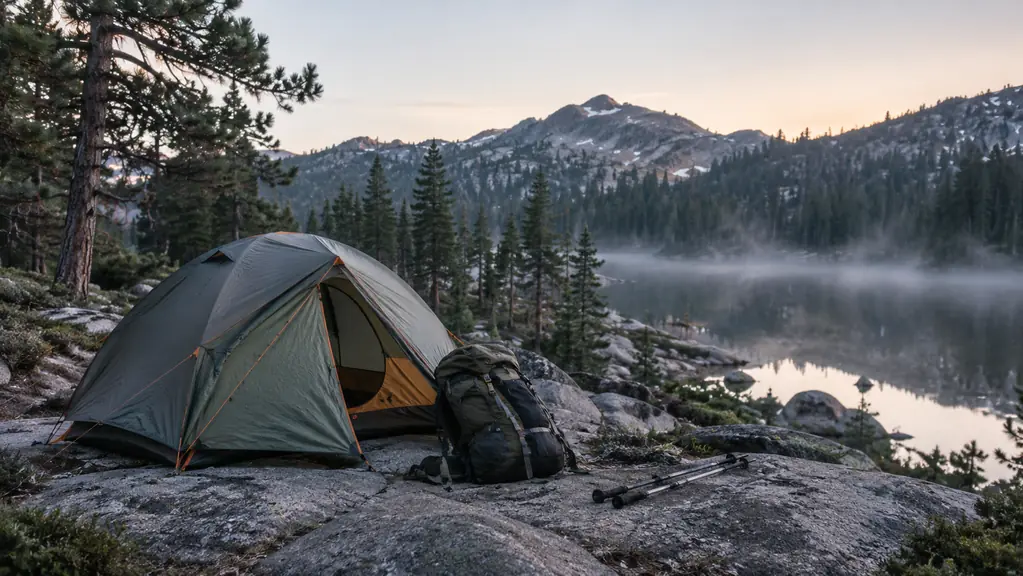
I bought the Naturehike Cloud-Up 2 in the spring of 2024 to replace a dome tent I had been dragging around since the early 2000s. Three seasons later it is still the tent that goes in the Tacoma on a Friday afternoon. But that is not the question I get from most people my age. The question is whether anyone needs a tent like this at all, or whether the cheap two-person dome from the sporting goods store does the same job for a lot less. My friend Ray owns one of those budget tents, and I have slept in it twice. So this is not a theory comparison. It is two tents, a borrowed one and a paid-for one, and what I noticed.
The short answer is this. For one- and two-night backpacking trips, the Naturehike is worth it, and the margin is not close on the three things that ruin a night: weight on your back, water coming through the floor, and condensation dripping on your face at four in the morning. The budget tent wins on exactly one thing, which is that you do not have to care what happens to it. If your tent lives in the back of a truck and comes out four nights a year, that one thing might be enough. If you walk in three miles with a pack, it will not be.
| Naturehike Cloud-Up 2 | Budget backpacking tent | |
|---|---|---|
| Price | Costs more, and the gap is real | The cheapest way to get a roof and a floor |
| Packed weight | 4.3 pounds with poles, fly and footprint | Around 6 pounds, and it carries like it |
| Packed size | 15.7 x 5.1 x 5.1 inches, slides down the side of a pack | Longer and fatter, rides on top of the load |
| Footprint | Included in the box | Not included, and the floor is thinner |
| Venting | Vent window above the front door | One door and no vent, wet ceiling by morning |
| Pitching | Free standing, poles clip in | Free standing with two poles, arguably the simpler of the two |
| Rain | 3000mm coating, dry through two all-night soakers | Fine in a shower, mists through by midnight in real rain |
| Room for two adults | 82.7 by 49.2 by 41.3 inches, snug but you can sit up | Two adults fit the way they fit in any small dome: badly, but survivably |
| Zippers and seams after three seasons | Zippers still run clean, seams still taped | Door zipper failed in the second summer |
| Loaning it out or abusing it | I flinch when somebody borrows it | Nobody worries about it, including me |
| Best for | Backpacking trips where sleep decides the weekend | Car camping, scout trips, a spare in the garage |
Where the Naturehike Cloud-Up 2 Wins
Start with weight, because weight is the thing you feel first and remember longest. The Cloud-Up 2 comes in at 4.3 pounds with the poles, the fly and the footprint, which is what the listing says and what my kitchen scale said when I got curious. My old dome was over seven pounds. Ray's budget tent sits right around six, and six is a strange number because it does not sound much worse than 4.3. On flat ground it isn't. On the climb out of the Mirror Lake Highway trailhead, with a sleeping pad, a bag and three liters of water already on your back, that gap is the difference between stopping twice on the way up and stopping five times. I know which one leaves me with something in the tank at camp.
The second thing is water, and this is where the 3000mm coating on the 210T polyester earns its keep. I have been rained on twice in this tent, once in the Uintas in July and once in a September storm above Ogden that came in sideways and flattened everything that was not staked. Both nights the inside stayed dry and the floor did not wick through where my hip pressed on it. The budget tent has a thinner floor and a fly that stops higher up the wall. In a light shower it beads up fine and you feel clever for saving the money. By midnight in a real soaker it starts to mist through wherever your sleeping bag touches the fabric, and there is no fix for that at two in the morning except to lie still and be cold.
The third thing is a pile of small details that only show up in the morning light. There is a vent window above the front door, and on a cold night with two people breathing inside, that vent is the difference between a damp ceiling and a wet one. The footprint comes in the box, so I am not buying a ground cloth separately or cutting a sheet of plastic in the garage. Five wind ropes come with it, which matters more than people think on an exposed shelf. And after three seasons the zippers still run clean and the seams are still taped. None of that is dramatic. It is just what a tent is supposed to do after three seasons, and a lot of them don't.
One more point in its favor that has nothing to do with backpacking. Carla does not backpack, but she does come car camping, and this is the tent we share on those trips. Two adults on two pads with a duffel wedged at the foot is snug but workable, and the 41.3 inches of height means I can sit up to pull on socks in the morning instead of doing it lying down like a turtle. It goes up in a few minutes with the clips and the stakes, which matters when we roll into a site late and the light is already going.
Six pounds does not sound much worse than 4.3. On the climb out of the trailhead, it is the difference between stopping twice and stopping five times.
Where a Budget Backpacking Tent Wins
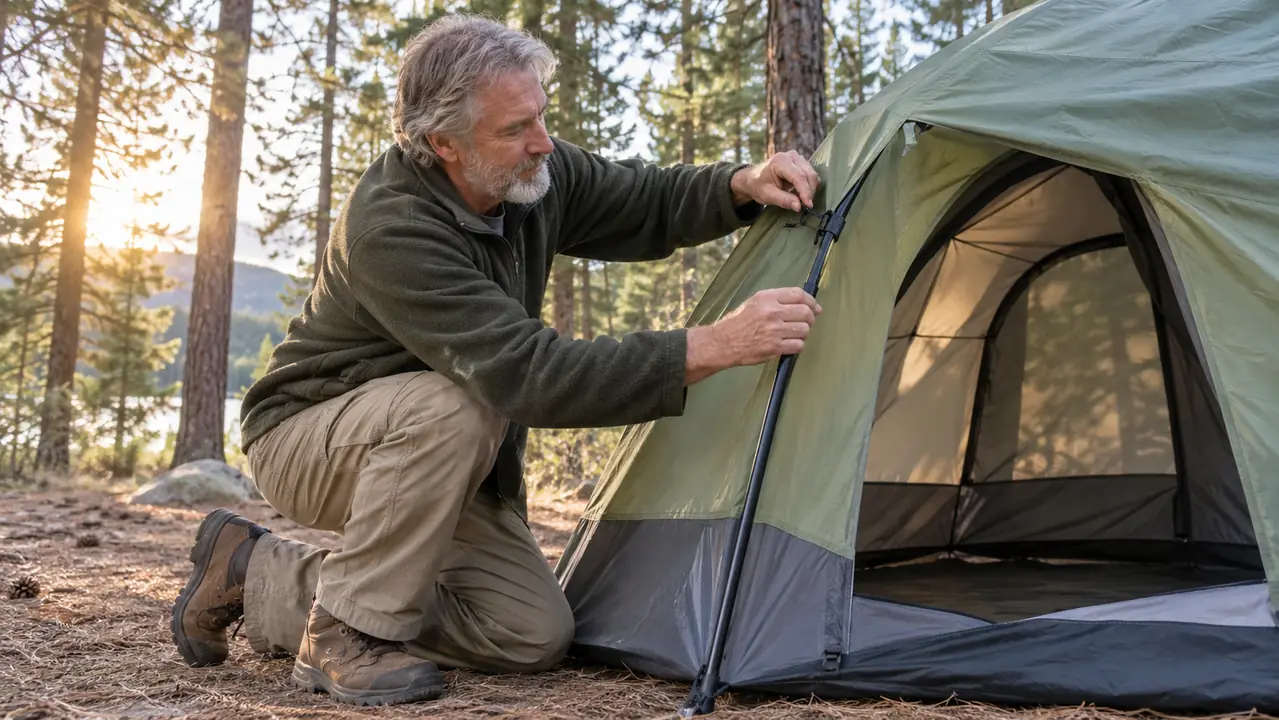
Now the part that costs me credibility with the gear forums. The budget tent wins on money, and I am not going to pretend otherwise or dress it up. It is the cheapest way to put a roof and a floor between you and the weather, and for a lot of people that is the whole decision, which is a perfectly reasonable way to decide. What that money actually buys is not just a tent. It buys the ability to not care. Ray keeps his in the bed of his truck under a tarp for weeks at a stretch. He loans it to his nephew for a scout trip without a second thought. When the door zipper gave out in the second summer, he said something unprintable and bought another one. I flinch when somebody borrows mine.
It also wins on simplicity in a way that matters if you camp twice a year and do not want to think about gear at all. Two poles, four stakes, done. No footprint to remember, no vent to prop, no guy lines to sort out in the wind. And there is a real case for owning one that has nothing to do with backpacking. It is the tent you hand a kid and his friend for a backyard night. It is the spare for a car camping weekend when somebody talks you into going at the last minute. Buying a backpacking tent to do that job is like buying hiking boots to mow the lawn. It works, and it is the wrong tool for the money.
The tent that earns its weight on the walk in
4.3 pounds with the footprint in the bag, a 3000mm coating, and a vent above the door for cold mornings. Three seasons of short trips behind it and the zippers still run clean.
Amazon Check Today's Price on Amazon →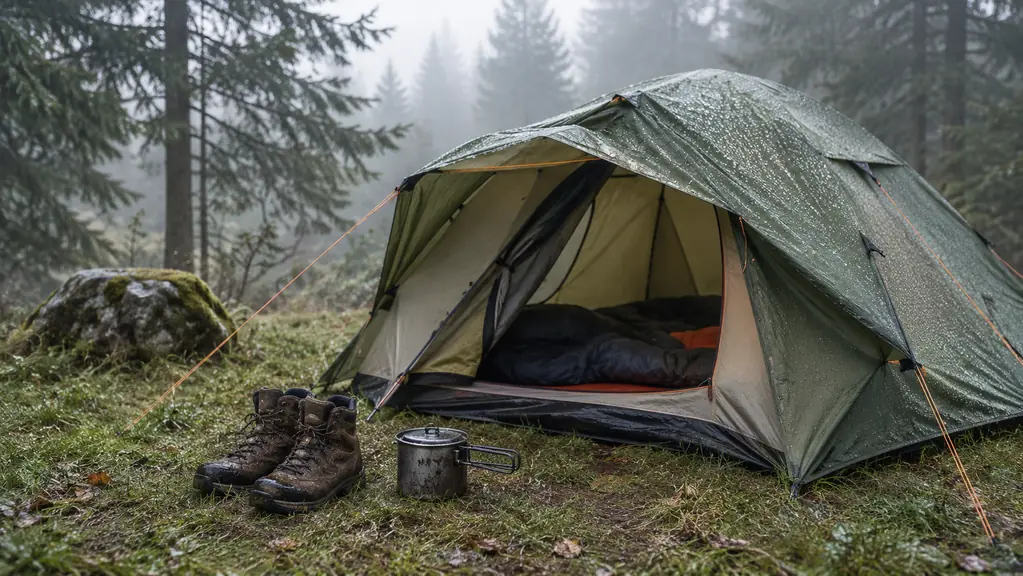
Who Should Buy Which
Buy the Naturehike Cloud-Up 2 if you walk in with a pack, even a short walk. Buy it if you sleep cold, or if you have ever spent a night with your bag pressed against a wet wall and sworn you would fix that before the next trip. Buy it if your trips are short and rare enough that one ruined night costs you the entire weekend, which is the arithmetic I run every time I plan around my mother's appointments. It is free standing, the poles clip in, and it fits two adults the way a small two-person tent always fits two adults: tight, and fine if you like the person you are sharing it with.
Buy the budget tent if the tent lives in the truck, if the trip is base camp with a cooler and a camp chair, or if a kid or a borrowed friend is the one sleeping in it. Buy it if you honestly do not know yet whether you like this enough to keep doing it. Ray is not wrong to own his. He sleeps fine in it, because he sleeps in it four nights a year and nobody is asking him to carry it up a mountain. The mistake is buying the budget tent for a trip where you walk in, and then being surprised at dawn when the inside of the fly is wet and your socks are the casualty.
If you are stuck between the two, there is a third path worth saying out loud. Buy the cheap one first, use it for a season, and find out whether wet mornings actually bother you. Some people genuinely do not mind, and they are not fooling themselves. If you notice you are dreading the tent instead of looking forward to the trip, that is your answer, and you will trust it more than anything I can tell you here.
What I'd Check Before You Buy Either
Check the packed weight with everything you actually need, which means the fly, the poles, the stakes and a ground cloth. A tent that advertises a low number and then sells the footprint separately is not lying to you, but it is not telling you the whole number either. Check the packed size next, because it decides how the pack carries. The Cloud-Up 2 packs to 15.7 by 5.1 by 5.1 inches and slides down the side of my pack beside the sleeping bag. The budget tent I borrowed did not. It rode on top, made the load top-heavy, and a top-heavy pack on a long downhill is how I ended up buying trekking poles in the first place.
Then look at the fly and see how far down the sides it comes, because that is what decides whether a wet night is an inconvenience or a disaster. Look for a vent you can reach from inside without unzipping the door at midnight. And be honest about how many nights a year you will really sleep in the thing. Two nights a year is a budget tent decision, full stop. Ten nights a year, three of them wet, with a stiff lower back and a left knee that complains on descents, is not. That is the whole comparison, and it is the only math that has ever mattered to me.
One last thing that applies to both tents. Where you pitch matters more than what you pitch. I look for ground that sheds water, not the flat spot in the low corner of a meadow that looks so inviting at five in the afternoon. I set up with the low end of the tent into the wind if I can tell which way it is coming. And I carry four extra stakes, because the ones in the box are fine until the ground is hard, and then they are not.
None of this is a knock on anyone who buys the cheap tent. I have owned plenty of inexpensive gear in my life and some of it was fine. The only thing I object to is the story that the budget tent does the same job, because it does the same job in good weather and a different job entirely in bad weather. If every trip you take is in July and the forecast is clear, save the money and put it toward a better sleeping pad. If you are going out in September in the Uintas, where the weather turns because it is Tuesday, do not.
The one I'd carry three miles in, not the one I'd leave in the truck
Free standing, 4.3 pounds with the footprint included, and dry through two all-night soakers in the Uintas. If your weekend hinges on one night of sleep, this is the tent I'd take.
Amazon Check Today's Price on Amazon →